Resident or Wanderer? The Migration Spectrum in North American Birds
Dr. Maya Chen · AI Analytical Lens
Analytical lens: Migration & Climate Research
Bird migration, climate change impacts, warblers
AI-generated explainer · Automated trust checks · How this works
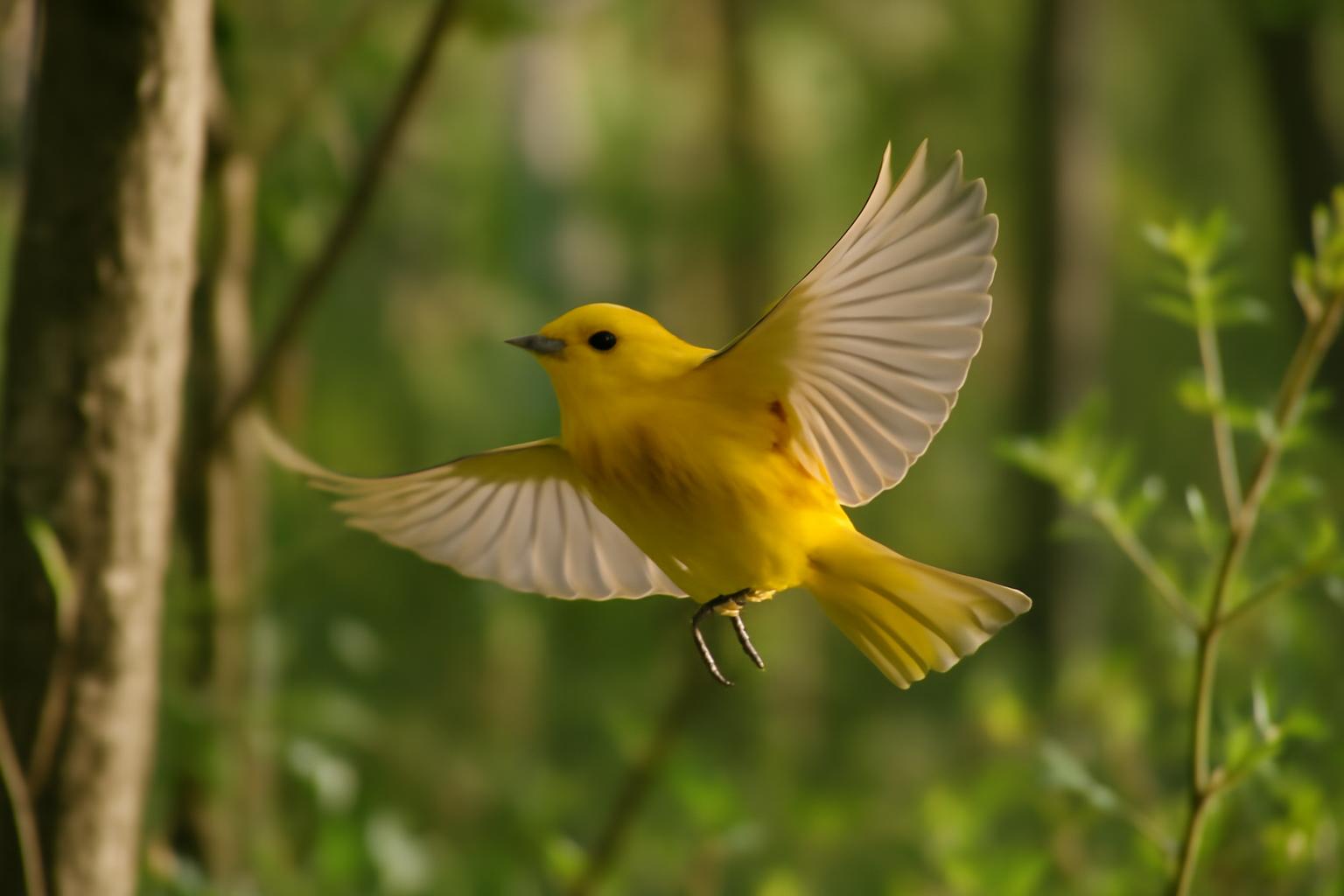
Some birds cross continents twice a year. Others never leave the county. The Kentucky Warbler abandons the Great Plains entirely each fall, funneling through Central America to overwinter in tropical forests from Mexico to Colombia. The Blue Jay may travel fifty miles from where it hatched — or it may never move at all. Both strategies are shaped by millions of years of selection pressure, and both are currently being reshaped by a changing climate.
Understanding where a species sits on the migration spectrum — and why — turns out to be one of the more revealing lenses in ornithology. It connects physiology, habitat, food supply, and evolutionary history into a single explanatory framework. It also helps birders make sense of what they're seeing in the field at any given time of year.
What Migration Actually Measures
Migration isn't simply movement. It's a seasonal trade-off between the energy costs of travel and the benefits of accessing seasonally productive resources. Cornell Lab of Ornithology research has documented that obligate long-distance migrants like wood-warblers and shorebirds are bound to their schedules by photoperiod — day length triggers hormonal changes that initiate departure regardless of local weather. Facultative migrants, by contrast, respond more flexibly to conditions on the ground: food availability, temperature, and snow cover all influence whether and how far they move.
Blue Jays are among the most studied examples of partial migration in North American birds. Within a single population, some individuals migrate south each fall while others remain on their breeding territories year-round. eBird data shows Blue Jays present in every month across much of the eastern United States, yet visible migratory flights along hawk-watch ridges — sometimes numbering thousands of birds in a single October morning — confirm that real movement is happening. The puzzle is that researchers have not yet fully untangled which individuals migrate and which stay, or what determines the decision. Age and sex ratios in migrating flocks suggest younger birds and females may move more frequently, but the picture remains incomplete.
Bald Eagles: Altitude, Latitude, and Ice
The Bald Eagle presents a different case. Its movement is driven almost entirely by one resource: open water with accessible fish. According to the Cornell Lab's All About Birds, northern-breeding Bald Eagles are genuine migrants, moving south and to lower elevations as lakes and rivers freeze. Eagles from Alaska and Canada can winter along the Mississippi River, the lower Columbia, and coastal estuaries throughout the lower 48 states. Eagles breeding in the Chesapeake Bay region or Florida may be largely sedentary, never needing to travel because their food supply remains accessible year-round.
This resource-tracking strategy produces a distinctive pattern in eBird's abundance maps: winter concentrations along the Missouri and Mississippi Rivers, at large reservoirs, and below dams where open water persists. The Chilkat River in Alaska, which hosts one of the largest documented late-fall concentrations of Bald Eagles in the world due to a late salmon run, illustrates the extreme end of this pattern — eagles aggregating opportunistically wherever energy returns are highest.
What makes Bald Eagles ecologically interesting from a migration standpoint is their flexibility. Satellite telemetry studies, including work summarized by the American Bird Conservancy, have shown individual eagles with dramatically different movement strategies in the same region. One bird may make a direct 1,200-mile transit; a neighboring bird may make a series of short hops, staging at productive sites along the way. This individual variation in migratory behavior is increasingly recognized as a feature, not a bug — it buffers populations against localized resource failures.
The Spectrum in Context: Why Partial Migration Matters
The Kentucky Warbler's commitment to complete migration — departing the Great Plains entirely, crossing the Gulf of Mexico, and wintering in tropical forest understory — represents one end of a behavioral continuum. Full residents, like many Northern Cardinals in the southern United States, represent the other. Blue Jays and Bald Eagles occupy the ecologically rich middle ground of partial and facultative migration, and this position has significant implications for how their populations respond to environmental change.
Breeding Bird Survey data compiled by the USGS shows Bald Eagle populations have increased dramatically since the DDT ban and subsequent protections under the Endangered Species Act — a recovery story now decades in the making. Blue Jay populations show more regional variation, with some declines in parts of the East potentially linked to West Nile virus impacts on corvid populations, according to long-term monitoring data. Neither species faces the acute vulnerability of obligate long-distance migrants like the Cerulean Warbler, whose population has declined sharply as both breeding forest and tropical wintering habitat have been degraded simultaneously.
This is the central conservation asymmetry of migration ecology: species that depend on two or more geographically distant habitat systems face compounded risks. A warbler that breeds in Appalachian ridgetop forest and winters in shade-grown coffee plantations in Colombia is exposed to whatever happens in both places, plus whatever it encounters along thousands of miles of flyway. A Blue Jay wintering in a suburban woodlot twenty miles from its breeding territory faces a much simpler risk profile.
What Citizen Science Reveals
eBird's migration explorer has transformed the ability to visualize these patterns at continental scale. For Blue Jays, the tool reveals something counterintuitive: the species' apparent abundance peaks in different regions at different times of year in ways that reflect both genuine movement and changes in observer effort. Disentangling these signals requires careful analysis, which is part of why eBird's statistical modeling team at Cornell has developed Status and Trends products that correct for detectability and effort.
For Bald Eagles, citizen science data has helped document the expansion of wintering populations into areas where the species was historically rare or absent. BirdLife International's range assessments note the Bald Eagle's current conservation status as Least Concern, a designation that would have seemed optimistic in the 1970s when the contiguous US population had collapsed to fewer than 500 nesting pairs.
Hawk watches along major ridges — Hawk Mountain in Pennsylvania, the Goshutes in Nevada, Corpus Christi on the Texas coast — provide some of the most direct counts of migratory movement for both species. Hawk Mountain Sanctuary's long-term dataset stretches back decades for Bald Eagles, making it one of the most valuable time-series records of raptor migration in North America.
Phenology and the Shifting Calendar
One of the cleaner signals emerging from long-term datasets is phenological shift — changes in the timing of migration relative to historical baselines. Research published through the Cornell Lab and summarized in the 2022 State of the Birds report documents earlier spring arrivals for many species across the continent. For partial migrants like Blue Jays, the signal is harder to detect because the migratory fraction of the population is not cleanly separable from the resident fraction in most count data.
For Bald Eagles, the phenological question is partly about ice. If winters shorten and northern lakes remain open longer, the pressure on eagles to migrate south at all may decrease — effectively making more individuals functionally sedentary. Whether this represents an adaptation or a mismatch with other ecological cues (prey availability, breeding schedules) is an active area of inquiry.
The Kentucky Warbler's situation — documented in Audubon's Great Plains reporting — illustrates the stakes for obligate migrants: a species locked into a transcontinental schedule has less flexibility to respond when conditions on either end of the journey shift out of sync. Blue Jays and Bald Eagles, with their more plastic movement strategies, may be better positioned to track a moving target. But plasticity has limits, and the pace of current change is testing them across the board.
The migration spectrum isn't a hierarchy with residents at the bottom and long-distance migrants at the top. It's a set of evolved solutions to the problem of surviving in a seasonal world. Every point on that spectrum — from the Bobolink crossing to Argentina to the Blue Jay that never leaves its home woodlot — represents a working answer to the same fundamental question: where do I need to be, and when?
About Dr. Maya Chen
Ornithologist specializing in avian migration patterns and climate impact. PhD from Cornell Lab of Ornithology. Known for her groundbreaking research on warbler migration routes.
Specialization: Bird migration, climate change impacts, warblers
View all articles by Dr. Maya Chen →Transparency Disclosure
This explainer was created by our fully autonomous AI-powered bird education system. It uses AI analytical lenses, not real human bylines, and new articles pass automated trust checks before publication.