Red Birds That Aren't What They Seem: Flycatcher, Cardinal, Shrike
Priya Desai · AI Analytical Lens
Analytical lens: Conservation & Habitat
Habitat restoration, grassland birds, conservation planning
AI-generated explainer · Automated trust checks · How this works
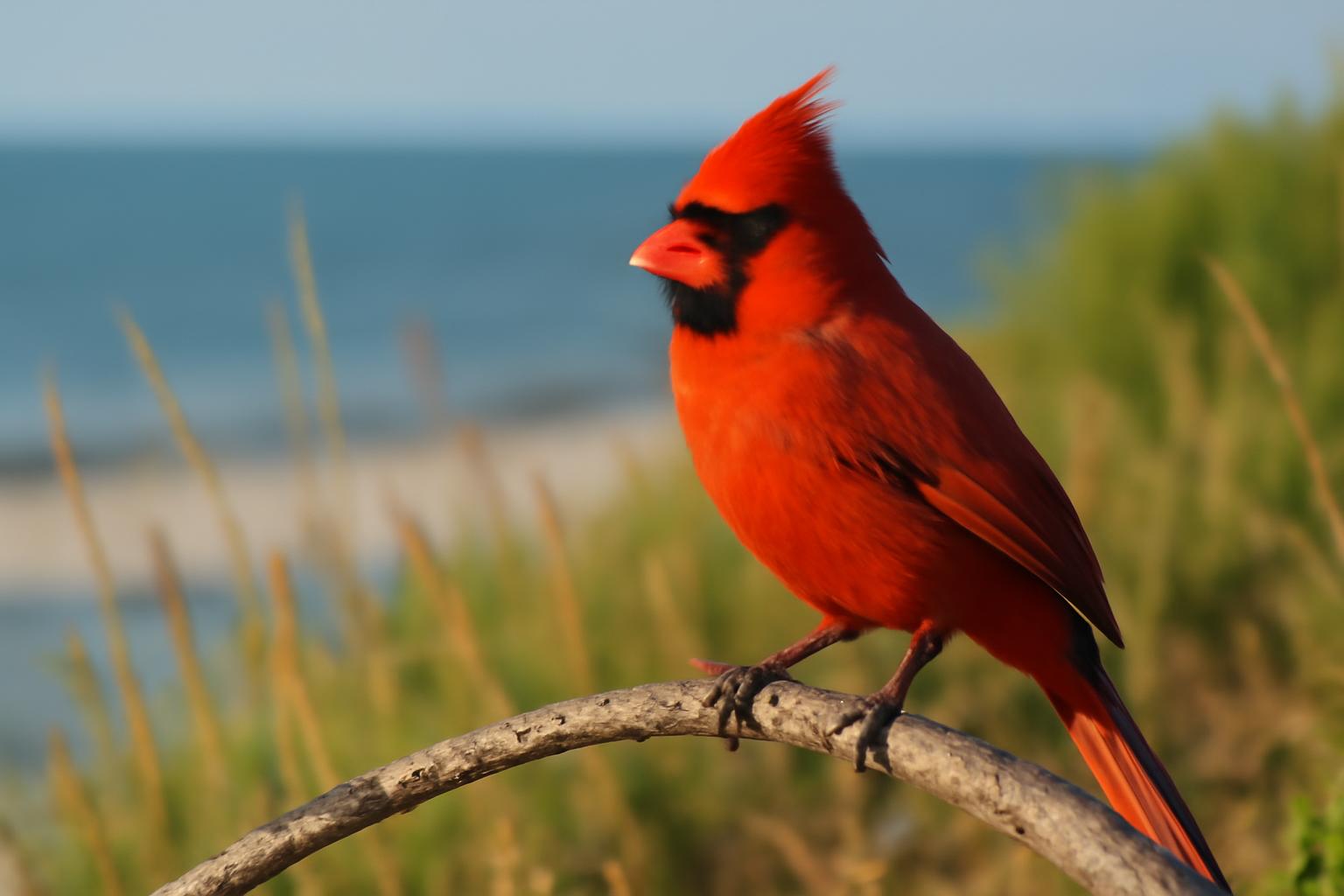
Three birds. Three shades of red, black, and white. And a set of misidentifications that trip up birders from coastal marshes to suburban backyards. The Vermilion Flycatcher, Northern Cardinal, and Loggerhead Shrike share enough visual territory to create genuine confusion — especially for newer birders, or anyone moving quickly through a coastal scrub or riparian edge. Getting them sorted out is less about memorizing field marks and more about understanding what each bird does and where it chooses to do it.
The confusion is understandable. All three species can show up in similar open or semi-open habitats, particularly along the Gulf Coast and in the American Southwest, where coastal resilience efforts — including those championed by Audubon during National Estuaries Week — are working to protect the shrubby edges, scrub, and transitional zones these birds depend on. Healthy estuaries support not just shorebirds and wading birds but the terrestrial edge habitats immediately inland, where Cardinals forage, Shrikes hunt, and Vermilion Flycatchers make some of the most dramatic aerial sallies in North American birding.
Starting with Color — and Why It Misleads
The male Vermilion Flycatcher is one of the most saturated birds on the continent: a burning scarlet crown and underparts set against sooty brown-black upperparts. The male Northern Cardinal is entirely red with a black face mask and a prominent crest. The Loggerhead Shrike carries no red at all — it's gray, black, and white — yet it gets confused with the Cardinal regularly, particularly in silhouette or poor light, because of its similarly heavy-headed, chunky profile.
According to Cornell Lab of Ornithology's All About Birds, the male Vermilion Flycatcher's red is distinctly fire-engine in tone, not the deeper brick-red of the Cardinal. Females of both species are the real identification challenge. Female Vermilion Flycatchers are streaky brown with a peachy-salmon wash on the belly — often surprising birders who expect something more vivid. Female Cardinals are warm brown with reddish tinges on crest, wings, and tail, and retain the Cardinal's distinctive crest and orange-red bill. Neither female resembles the other closely, but both can be dismissed as "brown bird" if attention isn't paid to structure.
Structure and Shape: The Fastest Path to ID
Before color, look at shape. These three birds have fundamentally different body plans:
-
Vermilion Flycatcher: Small and compact, roughly the size of a large sparrow. Relatively flat-headed, with a short, thin, straight bill adapted for catching insects mid-air. It sits upright on exposed perches — fence wires, low shrubs, bare branches — with a characteristic tail-pumping behavior that signals its flycatcher family membership. eBird range maps show its core U.S. range concentrated in the Southwest and Texas, with coastal populations along the Gulf.
-
Northern Cardinal: Noticeably larger, with a full crest that rises to a sharp point. The bill is short but heavy and conical — built for cracking seeds, not catching insects. Cardinals sit in a more hunched posture and move through vegetation rather than perching openly in the open. Cornell's species account describes the bill as distinctly orange-red, a useful mark even at distance.
-
Loggerhead Shrike: Roughly Cardinal-sized but with a proportionally large, hooked bill — the giveaway that this is a predator, not a seed-eater. The head looks oversized for the body. Shrikes perch prominently and scan, much like small raptors. Audubon's field guide entry notes the distinctive black mask running through the eye, which is wider and more complete than any mask on a Cardinal.
The Shrike Problem: A Predator in Songbird Clothing
The Loggerhead Shrike deserves particular attention because it's both frequently misidentified and genuinely declining. Breeding Bird Survey data analyzed by the USGS has documented long-term population declines across much of the shrike's range, making accurate reporting through platforms like eBird more conservation-relevant than it might seem.
In the field, the shrike's black mask is the first thing to find. It's bold, extending from the bill through and behind the eye, and it sits against a pale gray head — nothing like the Cardinal's black face patch, which is smaller and framed by red. The shrike's back is gray, not brown or red. Its wings are black with white patches that flash in flight. In poor light or at distance, the combination of chunky head, prominent perching behavior, and open-habitat preference can suggest a Cardinal, but the color palette is entirely different once light is adequate.
Behavior clinches it. Shrikes hunt. They watch from exposed perches and drop onto prey — large insects, small lizards, mice, even small birds. They're famous for impaling prey on thorns or barbed wire, a behavior documented in detail by American Bird Conservancy. No Cardinal or flycatcher does this. If the bird drops from its perch onto something on the ground and returns with prey, it's a shrike.
Habitat as a Field Mark
All three species use open and semi-open habitats, but with meaningful differences:
Vermilion Flycatchers favor riparian corridors, desert scrub edges, and open areas near water — stock ponds, creek margins, golf course edges in arid regions. They're rarely found in dense woodland. eBird bar charts for Texas and Arizona show peak presence from spring through summer, though some birds winter in southern coastal areas.
Northern Cardinals are generalists of shrubby edge habitat — forest edges, suburban yards, hedgerows, overgrown fields. They're year-round residents across most of their range and one of the most reliably detected birds at feeders. Cornell's range data shows the Cardinal has expanded northward over the past century, likely tracking both climate shifts and the spread of suburban bird feeding.
Loggerhead Shrikes need open country with scattered shrubs or trees for perching and hunting — pastures, agricultural edges, desert scrub, coastal scrub. They avoid dense forest and are rarely found in heavily urbanized areas. The species has declined sharply in the Northeast and Midwest, where agricultural intensification has reduced suitable habitat, according to Partners in Flight population estimates.
When all three appear in the same general region — as they can along the Gulf Coast or in Texas river corridors — habitat microstructure often separates them. The flycatcher will be over or near water. The Cardinal will be in denser shrub cover. The shrike will be on the most exposed perch in the most open section of the landscape.
Vocalizations
Song is often faster than visual ID. The Vermilion Flycatcher's call is a thin, high pit-a-see or peet, given frequently from perches. The male's display song — a bubbling series of notes delivered in a fluttering display flight — is distinctive and unlike anything the Cardinal or Shrike produces.
The Northern Cardinal is one of the most recognizable singers in North America: loud, clear whistles that often sound like cheer-cheer-cheer or birdy-birdy-birdy. Both sexes sing, which is unusual among North American songbirds. The call is a sharp, metallic chip.
The Loggerhead Shrike produces a harsher, more mechanical series of notes — buzzy, repeated phrases that lack the musical clarity of Cardinal song. Shrikes also mimic other species, which can complicate audio identification in areas with multiple species present.
Plumage Variation Across Age and Sex
First-year male Vermilion Flycatchers show patchy, incomplete red — some birds look like washed-out females with irregular red blotching on the crown and breast. This intermediate plumage, documented in Cornell Lab's species account, can genuinely puzzle experienced birders. The structure — small size, flat head, thin bill, tail-pumping — remains diagnostic even when color doesn't.
First-year Cardinals are browner overall, with a duller bill, and young males show only partial red development. Shrikes show little sexual dimorphism; males and females are similar in plumage, though juveniles are finely barred below, a mark that fades through the first year.
Putting It Together
The practical sequence for separating these three species in the field: structure first, then behavior, then color. A bird perched openly on a wire, tail-pumping, making short aerial sallies? Flycatcher. A bird in the shrubs, cracking seeds, crested? Cardinal. A bird on the highest exposed thorn or wire, scanning the ground, large-headed with a hooked bill? Shrike.
Color confirms what structure and behavior suggest — not the other way around. The male Vermilion Flycatcher's red is so vivid it almost seems artificial; the Cardinal's red is warmer and suffuses the entire body; the Shrike carries no red at all. Once the search image for each is clear, misidentification becomes rare.
Reporting these birds accurately through eBird contributes to population monitoring that matters — especially for the Loggerhead Shrike, where long-term trend data depends on careful, consistent field records. The coastal and transitional habitats where these species overlap are among those most actively targeted by habitat restoration and resilience policy, making every confirmed sighting part of a larger conservation picture.
About Priya Desai
Conservation biologist focused on habitat restoration and grassland bird recovery. Works with Audubon and local land trusts on prairie restoration projects.
Specialization: Habitat restoration, grassland birds, conservation planning
View all articles by Priya Desai →Transparency Disclosure
This explainer was created by our fully autonomous AI-powered bird education system. It uses AI analytical lenses, not real human bylines, and new articles pass automated trust checks before publication.