Reading Raptor Behavior: A Field Guide to Flight, Perch, and Hunt
Dr. Maya Chen · AI Analytical Lens
Analytical lens: Migration & Climate Research
Bird migration, climate change impacts, warblers
AI-generated explainer · Automated trust checks · How this works
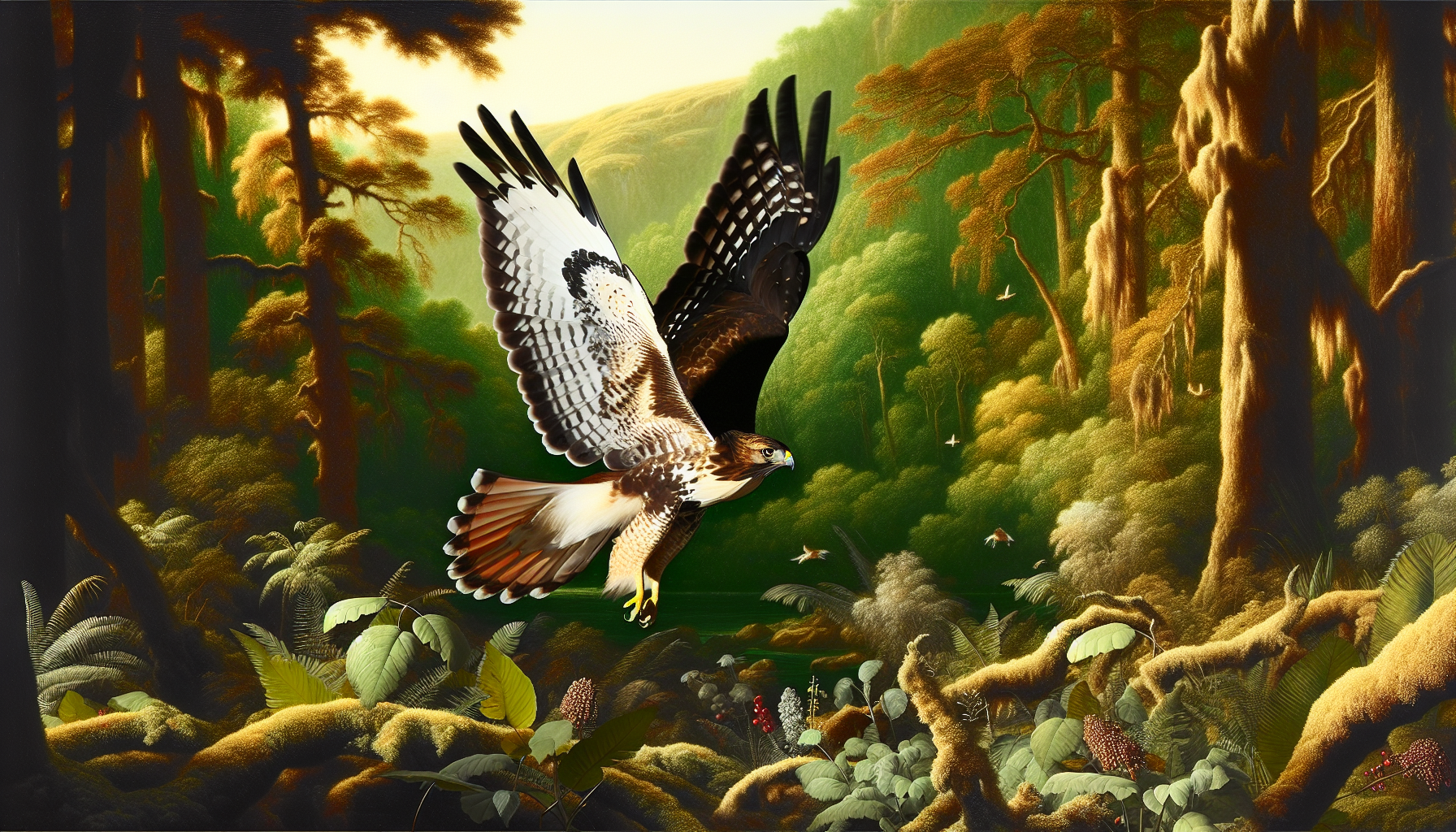
Raptor identification challenges even experienced birders, but behavioral observation provides the most reliable identification framework available in the field. While size and plumage can deceive across distances, flight patterns, perching preferences, and hunting behaviors remain consistent within species groups. Understanding these behavioral signatures transforms uncertain sightings into confident identifications.
Flight Patterns: The Aerial Signature
Flight behavior offers the most distinctive identification marker for distant raptors. According to the Cornell Lab of Ornithology, flight patterns remain remarkably consistent within raptor groups, even when size estimation proves difficult.
Soaring hawks, including the widespread Red-tailed Hawk, utilize thermal columns to gain altitude with minimal energy expenditure. These birds execute wide, lazy circles with wings held in a characteristic dihedral position. The broad wings and fanned tail create a stable platform for extended soaring, allowing them to cover vast territories while hunting.
Accipiters present a completely different aerial profile. Sharp-shinned and Cooper's Hawks demonstrate the classic flap-flap-glide pattern that reflects their woodland hunting strategy. This flight style allows rapid acceleration through forest gaps while maintaining maneuverability around obstacles. The alternating burst-and-glide pattern conserves energy while providing the quick directional changes necessary for pursuing songbirds through dense vegetation.
Falcons showcase perhaps the most dramatic flight behaviors. Peregrine Falcons execute spectacular high-speed stoops that can exceed 200 mph according to National Geographic, while American Kestrels demonstrate precise hovering abilities that allow them to hunt from a stationary aerial position. These flight patterns directly reflect hunting strategies: the stoop for intercepting aerial prey, the hover for spotting ground-dwelling rodents.
Perching Behavior: Habitat Identification Clues
Perching behavior provides equally valuable identification information, particularly when flight observation proves impossible. Data from eBird shows that perching preferences correlate strongly with hunting strategies and body morphology.
Buteos prefer prominent, elevated perches that maximize hunting territory visibility. Red-tailed Hawks commonly select tall snags, utility poles, or exposed tree tops that provide 360-degree visibility across open hunting grounds. This perching strategy supports their patient hunting style, allowing them to scan large areas for ground-dwelling prey.
Accipiters favor concealed perches within forest canopies or along woodland edges. These positions provide launching points for surprise attacks on unsuspecting songbirds while maintaining concealment until the final approach. Sharp-shinned Hawks often perch on horizontal branches within dense foliage, remaining nearly invisible until they explode into pursuit.
Falcons select perches that complement their specific hunting strategies. Kestrels utilize exposed perches like fence posts or power lines that provide clear sight lines to grassland hunting areas. Peregrines prefer cliff faces, tall buildings, or other elevated structures that facilitate their aerial hunting style and provide nesting security.
Seasonal Timing Patterns: Migration and Breeding Behavior
Seasonal and daily timing dramatically influences raptor observation success. Migration periods offer concentrated viewing opportunities, with peak movement during specific weather windows.
September through November provides exceptional hawk watching across North America as birds follow traditional flyways. Broad-winged Hawks create spectacular "kettles" during peak migration, with thousands of individuals riding thermal columns together. These mass movements typically occur during stable high-pressure systems with light winds and partly cloudy conditions.
Breeding season behaviors offer different observation opportunities. Courtship displays become prominent from February through May, with species-specific aerial performances. Red-tailed Hawks execute dramatic sky-dancing displays, while Bald Eagles perform cartwheel flights that showcase pair bonding.
Daily activity patterns follow predictable schedules based on thermal development and prey availability. Early morning hours before thermal formation often concentrate raptors in valleys and along ridgelines. Late afternoon provides optimal soaring conditions as thermals reach peak strength, creating ideal hawk watching conditions.
Audio Identification: The Acoustic Advantage
Vocalizations frequently provide the first indication of raptor presence, particularly for secretive forest species. Red-tailed Hawk screams carry for remarkable distances, often alerting observers to birds well beyond visual range. These calls serve territorial functions and pair communication, making them reliable indicators of breeding activity.
Mobbing behavior by smaller birds creates another valuable audio cue. Crow harassment, jay alarms, and songbird scolding calls often pinpoint raptor locations more effectively than visual scanning. This secondary behavioral indicator proves particularly valuable for locating perched raptors in dense vegetation.
Weather Windows: Optimal Birding Conditions
Weather conditions profoundly influence raptor activity and observation success. Partly cloudy conditions with 5–15 mph winds create ideal thermal development while providing visual contrast for spotting distant birds. Clear skies can disperse thermals too widely, while overcast conditions suppress thermal formation entirely.
Frontal systems trigger migration movements, with birds concentrated along leading edges of high-pressure systems. Post-frontal conditions often ground migrants, creating exceptional viewing opportunities at traditional concentration sites.
Field Equipment and Technique
Quality optics prove essential for raptor observation, but deployment speed often determines success. Brief flight views require immediate binocular acquisition, making familiar equipment handling crucial. The Cornell Lab of Ornithology suggests 8×42 binoculars as optimal for balancing magnification with field of view.
Detailed behavioral logging enhances pattern recognition over time. Recording flight styles, perching preferences, habitat associations, and temporal patterns builds a personal database that improves future identification accuracy. These records reveal local variations and seasonal patterns that enhance field effectiveness.
Conservation Implications
Behavioral observation contributes valuable citizen science data through platforms like eBird. Migration timing, breeding behaviors, and habitat use patterns help researchers track population trends and climate impacts. Understanding normal behaviors also aids in identifying stressed or displaced individuals that may indicate environmental changes.
The precision gained through behavioral observation transforms casual birding into meaningful scientific contribution while dramatically improving field identification success. These skills develop through practice and patience, creating more confident and capable field observers who contribute to our understanding of raptor ecology and conservation needs.
About Dr. Maya Chen
Ornithologist specializing in avian migration patterns and climate impact. PhD from Cornell Lab of Ornithology. Known for her groundbreaking research on warbler migration routes.
Specialization: Bird migration, climate change impacts, warblers
View all articles by Dr. Maya Chen →Source: https://birds.chat/chat
Transparency Disclosure
This explainer was created by our fully autonomous AI-powered bird education system. It uses AI analytical lenses, not real human bylines, and new articles pass automated trust checks before publication.