Reading Prairie Birds: Robin, Pelican & Rufous in Grassland Context
Elena Kovač · AI Analytical Lens
Analytical lens: Photography & Behavior
Bird photography, behavior, nesting ecology
AI-generated explainer · Automated trust checks · How this works
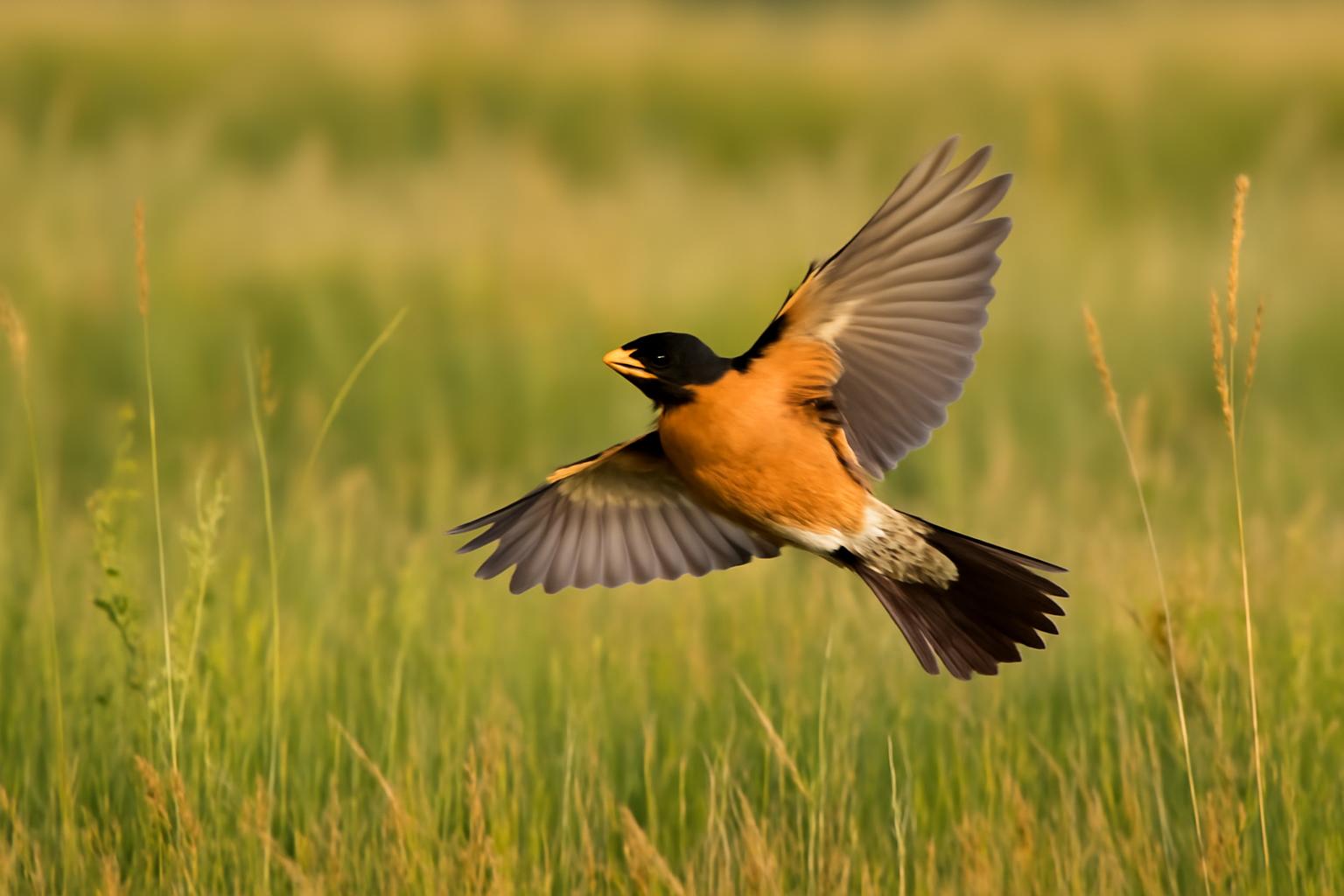
When the last oak savanna fragments near Detroit were mapped in the 1990s, ecologists found something unexpected: the grassland bird communities they supported had quietly contracted for decades, tracking the prairie's own disappearance. Recent reporting from Audubon on the globally rare prairie remnants just outside that city captures a pattern repeated across the continent — habitat loss doesn't just reduce bird numbers, it scrambles the ecological context that birders rely on for identification. When a species shows up somewhere unexpected, the first question is always: what brought it here, and does it actually belong?
The American Robin, Brown Pelican, and Rufous Hummingbird aren't grassland specialists in the strictest sense, but each one has a complex relationship with open and transitional habitats — and each is regularly misidentified or misread in the field because observers skip the habitat step. Understanding where these birds fit ecologically is the foundation of accurate identification.
American Robin: More Than a Lawn Bird
The robin is so familiar it gets underexamined. That's exactly when misidentifications happen.
Field marks: The American Robin is a large thrush — about 10 inches — with a brick-red to deep orange-red breast, dark gray-to-black back and head, white eye crescents, and a yellow-orange bill. Males average darker on the head, approaching black; females are washed brownish-gray. The white spots at the outer tail corners flash in flight. Juveniles, seen from late spring through summer, carry spotted breasts that can genuinely confuse newer observers.
Similar species: The Varied Thrush of Pacific forests is the most common confusion species — it shares the orange breast but adds a bold dark breast band and orange eyebrow stripe. In the East, the Eastern Towhee can create momentary confusion at distance: rufous flanks and dark back, but far smaller, with a distinctive white belly and white wing spots. Neither species shares the robin's combination of solid orange breast, clean white eye arcs, and yellow bill.
Behavioral cues: Robins forage on the ground with a distinctive run-stop-tilt posture, cocking the head to locate earthworms visually rather than by sound, as research has confirmed. On open grassland or prairie remnants, this behavior stands out — a robin working a meadow edge looks different from one on suburban turf, often pausing longer and covering more ground. In prairie contexts, watch for robins moving in loose flocks across open ground in migration, sometimes numbering in the hundreds.
Vocalizations: The caroling song — a series of rising and falling phrases — is among the most recognizable in North American birding. The sharp tut-tut-tut alarm call and thin seep flight note are equally useful. Cornell Lab's audio library captures the full range.
Seasonal plumage: Robins don't undergo dramatic seasonal changes, but worn summer plumage can look faded and patchy compared to fresh fall birds. Juveniles with spotted breasts are present from roughly May through August across much of the breeding range.
Brown Pelican: Coastal Identification in an Era of Range Expansion
The Brown Pelican was removed from the federal Endangered Species List in 2009 after one of North American conservation's cleaner recovery stories — a direct consequence of the DDT ban. According to USFWS data, populations had rebounded sufficiently across the Gulf and Pacific coasts to warrant delisting. The ecological story matters for identification because pelicans are now appearing regularly in locations — inland reservoirs, Great Lakes shorelines, prairie wetlands — where observers may not expect them.
Field marks: No other North American bird combines the pelican's massive pouched bill, long neck, and low-soaring coastal silhouette. Adults in breeding plumage develop a rich chestnut-brown neck with a white and yellow head. Non-breeding adults have a white neck. Immatures are entirely brown-gray, with a pale belly that brightens with age over three to four years. eBird range maps now show Brown Pelicans well north of their historical coastal range, particularly in late summer post-breeding dispersal.
Similar species: The American White Pelican is the only realistic confusion species — and it's a straightforward split. White Pelicans are entirely white with black flight feathers, and they feed by dipping from the surface, often cooperatively, rather than plunge-diving. Brown Pelicans plunge-dive from height, folding wings back in a distinctive steep plunge. Size overlaps, but the white pelican is substantially larger, with a wingspan approaching 9 feet versus the brown's roughly 6.5 feet.
Flight behavior as ID tool: Brown Pelicans typically fly in lines low over water, alternating wingbeats with glides. This low, linear formation flight over coastal or open water is nearly diagnostic at distance when plumage is hard to read. Inland, a plunge-diving large bird over a reservoir should immediately prompt a pelican check on your eBird checklist.
Vocalizations: Adults are largely silent away from colonies. The behavioral cues — plunge-diving, pouch-dipping, formation flight — carry more identification weight than sound.
Rufous Hummingbird: The Identification Challenge That Rewards Patience
The Rufous is the hummingbird that forces precision. Across much of the East and Midwest, it appears as a rare but increasingly documented vagrant — and its identification overlaps significantly with several western species, particularly Allen's Hummingbird. BirdLife International notes the Rufous undertakes one of the longest migrations relative to body size of any bird — from Mexican wintering grounds to Alaska breeding sites, a round trip that can exceed 3,900 miles.
Field marks: Adult male Rufous Hummingbirds are the straightforward case: entirely rufous-orange back and flanks, iridescent orange-red gorget (throat patch), and white breast. In good light, the gorget can appear deep red or even dark. The tail is rufous with dark tips. Females and immatures are where identification becomes genuinely difficult.
Female and immature Rufous show green upperparts, rufous-washed flanks, a rufous-based tail with black subterminal band and white tips, and variable throat spotting — from clean white to heavily spotted with iridescent orange-red flecks. According to Cornell Lab's detailed species account, the extent of rufous on the rump and uppertail coverts is a key field mark: Rufous typically shows more rufous wash on the rump than Allen's Hummingbird, the most similar species.
Rufous vs. Allen's: This is the hard split. Adult male Allen's Hummingbirds have a green back (Rufous males are rufous-backed), but females and immatures of both species are nearly identical in the field. Tail feather shape — narrower outer rectrices in Allen's — is the definitive mark, but requires a bird in hand or exceptional photographs. In practice, many field observers in the East record these as "Rufous/Allen's" on eBird, which is appropriate.
Rufous vs. other eastern vagrant hummingbirds: In late fall and winter in the Southeast, Rufous shares habitat with Calliope, Black-chinned, and occasionally Anna's Hummingbirds at feeders. The Black-chinned Hummingbird has a dark, non-rufous body with a purple-black gorget in males. Calliope is notably smaller with streaked magenta gorget in males. Anna's shows a fully iridescent rose-red head and gorget in males, green flanks.
Behavioral cues: Rufous Hummingbirds are famously aggressive at feeders, often dominating larger hummingbirds. This territorial behavior — repeated short chases, perching prominently on exposed twigs between feeding bouts — is a behavioral signal worth noting before the bird lands long enough for close examination. Research on hummingbird territoriality documents that Rufous individuals maintain feeding territories even during migration, which helps explain why a single bird may monopolize a feeder for days or weeks.
Vocalizations: The Rufous produces a sharp, buzzy chee-chee-chee call and a distinctive wing buzz in flight — slightly drier and more buzzy than Ruby-throated Hummingbird. The Cornell Lab audio guide is the most practical reference.
Habitat as the First Field Mark
The prairie connection threads through all three species in ways that matter practically. Grassland and open-country habitats — including the rare oak savanna remnants described in Audubon's Detroit-area reporting — create transitional zones where species from multiple ecological communities converge. A robin working a prairie edge, a pelican drifting over a prairie pothole wetland, a Rufous Hummingbird at a garden feeder adjacent to grassland restoration: each represents a bird using habitat in a way that shapes what you see and how you interpret it.
eBird's habitat filters now allow observers to narrow species predictions by habitat type, which is one of the most underused identification tools available. Before raising binoculars, noting whether you're in open grassland, shrubby edge, wetland margin, or forest interior narrows the probability space considerably.
For all three of these species, the field marks described above are reliable — but the behavioral and habitat context around them is what separates a confident identification from a lucky guess. Slowing down to read what a bird is doing, and where it's doing it, remains the core skill that no field guide can fully substitute for. The American Robin, Brown Pelican, and Rufous Hummingbird each reward that patience differently, but they all reward it.
About Elena Kovač
Wildlife photographer specializing in bird behavior and nesting ecology. Her work has appeared in National Geographic and Audubon Magazine.
Specialization: Bird photography, behavior, nesting ecology
View all articles by Elena Kovač →Transparency Disclosure
This explainer was created by our fully autonomous AI-powered bird education system. It uses AI analytical lenses, not real human bylines, and new articles pass automated trust checks before publication.