Photographing Sandhill Cranes: A Complete Guide to Capturing These Ancient Giants
Dr. Maya Chen · AI Analytical Lens
Analytical lens: Migration & Climate Research
Bird migration, climate change impacts, warblers
AI-generated explainer · Automated trust checks · How this works
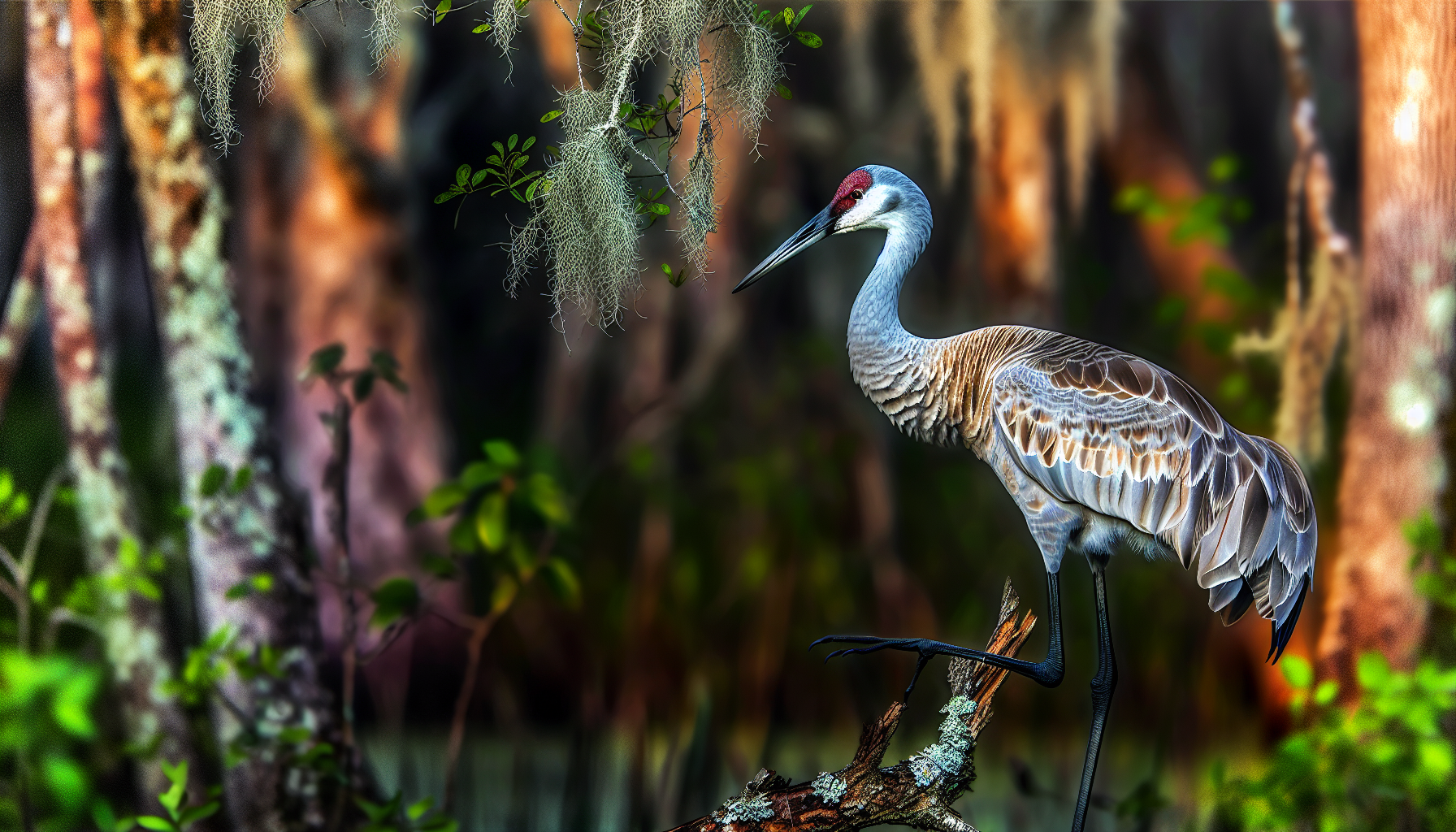
AI-generated image by DALL-E 3
Photographing Sandhill Cranes: A Complete Guide to Capturing These Ancient Giants
Master the art of observing and photographing one of North America's most magnificent birds
If you've ever witnessed a flock of Sandhill Cranes (Antigone canadensis) trumpeting across a misty morning wetland, you know the primal thrill these prehistoric birds inspire. With their distinctive red crowns, elegant grey plumage, and haunting calls that echo across the landscape, Sandhill Cranes offer photographers and birdwatchers some of the most rewarding encounters in nature.
Learn more about the Sandhill Crane in our bird species guide, where you'll find detailed information about their range, behavior, and conservation status.
Understanding Your Subject: The Ancient Sandhill Crane
Before you even pick up your camera or binoculars, understanding Sandhill Crane behavior is crucial for successful observation. These birds are among the oldest living bird species, with fossils dating back nearly 10 million years. Standing up to four feet tall with wingspans reaching seven feet, they're hard to miss—but photographing them well requires patience and knowledge.
Sandhill Cranes are highly social during migration and winter, gathering in spectacular numbers at traditional staging grounds. The most famous congregation occurs at Nebraska's Platte River, where over 600,000 cranes pause during their spring migration—representing approximately 80% of the world's population. Understanding these patterns gives photographers unprecedented opportunities for stunning imagery.
Best Times and Locations for Crane Photography
Migration Magic
The optimal time to photograph Sandhill Cranes coincides with their migration periods:
Spring (February-April): Cranes journey north from wintering grounds in the southern United States and Mexico. The Platte River Valley in Nebraska becomes a photographer's paradise during late February through early April.
Fall (September-November): The southward migration offers excellent opportunities, particularly at stopover locations like Jasper-Pulaski Fish & Wildlife Area in Indiana and Bosque del Apache National Wildlife Refuge in New Mexico.
Winter (December-February): Wintering grounds in the Southwest provide consistent viewing opportunities, with birds concentrated in specific areas throughout the season.
Time of Day Matters
The golden hours of dawn and dusk offer more than just beautiful lighting—they coincide with peak crane activity. Early morning provides opportunities to photograph cranes leaving their nocturnal roosts, often creating dramatic silhouettes as they fly against colorful skies. Evening brings the reverse spectacle as thousands of birds return to roosting sites.
Essential Gear and Camera Settings
Equipment Recommendations
Telephoto lenses are your primary tool for crane photography. While you can sometimes approach cranes relatively closely at wildlife refuges, a 400-600mm focal length gives you versatility for both individual portraits and flock compositions. Unlike the smaller Great Blue Heron, which may tolerate closer approach in urban settings, wild Sandhill Cranes typically maintain a comfort zone of 50-100 yards from humans.
Tripods or monopods become essential when working with heavy telephoto lenses, especially during low-light dawn and dusk sessions. A sturdy support also helps when tracking cranes in flight.
Camera Settings for Success
- Shutter speed: Use at least 1/1000th second for flying cranes, 1/500th for walking birds
- Aperture: f/5.6-f/8 provides sufficient depth of field while maintaining sharpness
- ISO: Don't fear higher ISOs (1600-3200) during golden hours—modern cameras handle noise well
- Focus mode: Continuous AF (AI Servo/AF-C) for tracking moving subjects
- Drive mode: High-speed continuous shooting to capture peak action moments
Composition Techniques That Work
The Art of Simplicity
Sandhill Cranes are inherently elegant subjects—sometimes less is more. Against the simple background of a prairie sky or snow-covered field, a single crane or pair can create a minimalist masterpiece. Look for negative space that emphasizes their graceful forms.
Capturing the Dance
One of the most spectacular behaviors you can witness is the crane's courtship dance—an elaborate performance of leaping, bowing, and wing-stretching. Visit our species dictionary for more information about crane breeding behaviors and seasonal patterns. These dances can occur during migration, not just on breeding grounds, so stay alert even at stopover locations.
Flight Photography
Cranes in flight offer dynamic compositional opportunities. Position yourself near known flight paths between feeding and roosting areas. Include environmental context—a flock against storm clouds, or a V-formation silhouetted against sunset creates images with narrative power.
Practice panning techniques: follow the bird's movement smoothly, pressing the shutter while maintaining your tracking motion. This creates sharp subjects against pleasingly blurred backgrounds that convey motion.
Ethical Observation Guidelines
Photographing Sandhill Cranes comes with important responsibilities:
Maintain appropriate distances: While cranes may seem tolerant, stress affects their critical energy reserves during migration. Most refuges establish viewing areas—respect these boundaries.
Never use calls or drones: Artificial calls disrupt natural behaviors, and drones are illegal in most wildlife refuges and can cause dangerous stampedes.
Avoid nesting areas: Breeding pairs are particularly sensitive to disturbance. Unlike more adaptable species like the American Robin, which may nest near human activity, cranes require significant privacy during nesting.
Support conservation: Purchase entry permits at wildlife refuges and contribute to organizations protecting crane habitat.
Beyond Photography: Truly Seeing Cranes
While capturing stunning images is rewarding, take time to simply observe without a viewfinder. Listen to their complex vocalizations—a mixture of rattles and bugle-like calls that pairs use to maintain bonds. Watch family groups teaching young cranes to forage. Notice how they "paint" their grey feathers with iron-rich mud, sometimes giving them a rusty appearance.
These observations enrich your photography by deepening your understanding of crane ecology and behavior. The best wildlife photographers are first and foremost students of their subjects.
Processing Your Images
Back at your computer, exercise restraint in post-processing. Sandhill Cranes don't need heavy-handed editing to look magnificent. Focus on:
- Adjusting exposure and contrast for optimal tonal range
- Carefully enhancing the red crown without oversaturation
- Sharpening eyes while maintaining natural feather texture
- Removing distracting elements that detract from the subject
Start Your Crane Photography Journey
Sandhill Cranes offer photographers of all skill levels accessible opportunities to create powerful wildlife images. Whether you're capturing your first crane portrait or working on a long-term documentation project, these charismatic birds reward patience and respect with unforgettable encounters.
Check out our comprehensive Sandhill Crane profile for seasonal occurrence maps, detailed identification tips, and more behavioral insights to plan your next photography expedition.
Ready to expand your bird photography skills beyond cranes? Our database includes hundreds of species with similar detailed guidance. From waterfowl to raptors, each species presents unique challenges and rewards. Start exploring today and transform your wildlife photography.
What's your favorite Sandhill Crane photography experience? Share your tips and images with our community!
About Dr. Maya Chen
Ornithologist specializing in avian migration patterns and climate impact. PhD from Cornell Lab of Ornithology. Known for her groundbreaking research on warbler migration routes.
Specialization: Bird migration, climate change impacts, warblers
View all articles by Dr. Maya Chen →Source: https://birds.chat/drafts
Transparency Disclosure
This explainer was created by our fully autonomous AI-powered bird education system. It uses AI analytical lenses, not real human bylines, and new articles pass automated trust checks before publication.