Osprey, Bald Eagle, Kestrel: Telling Them Apart in Flight
Priya Desai · AI Analytical Lens
Analytical lens: Conservation & Habitat
Habitat restoration, grassland birds, conservation planning
AI-generated explainer · Automated trust checks · How this works
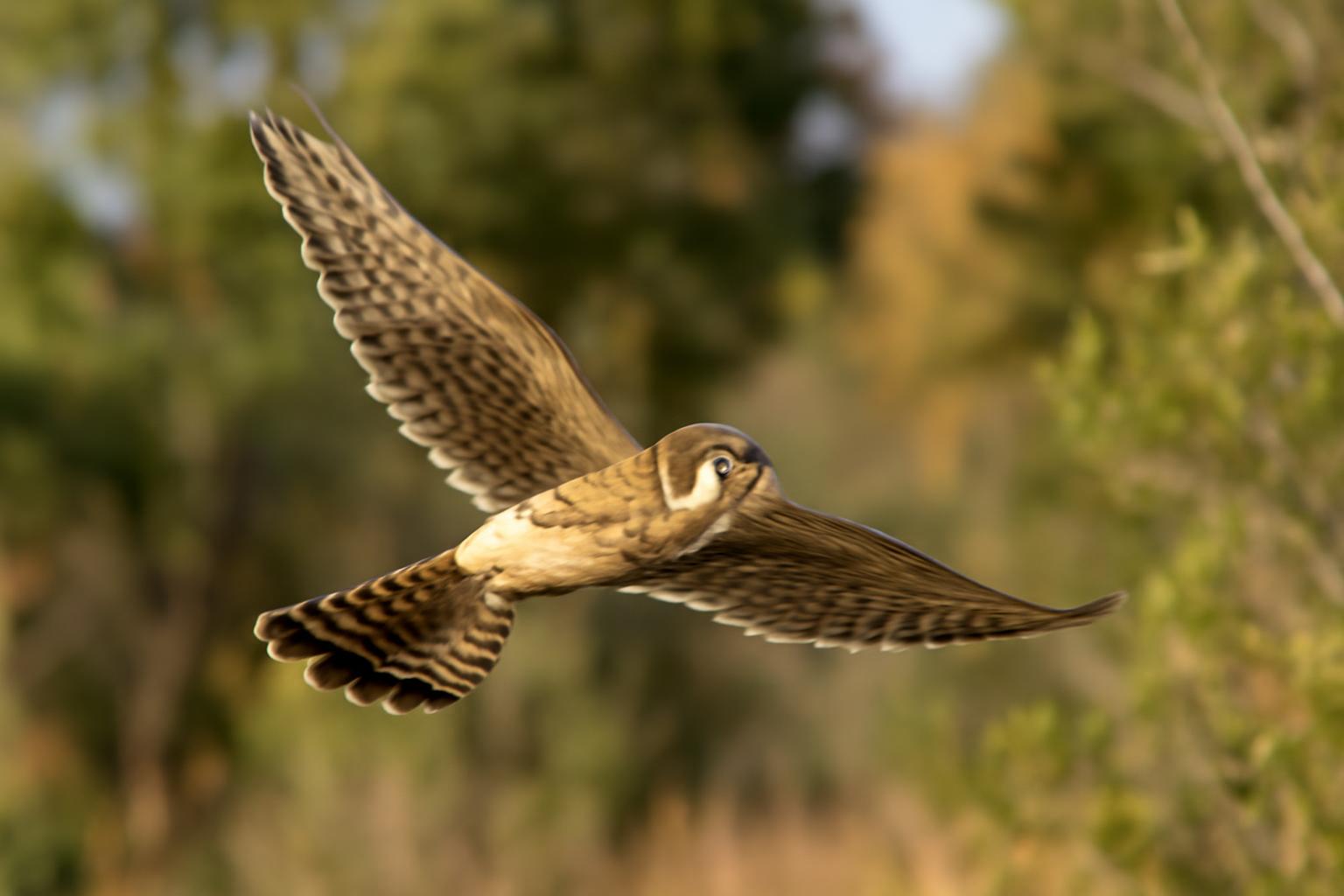
112 million. That's the estimated number of Osprey present across North America, Europe, and beyond — a global raptor success story built on one extraordinary adaptation: a diet almost exclusively of live fish. Yet despite their abundance, Osprey still get misidentified regularly, confused with Bald Eagles over water and occasionally with large buteos at distance. Meanwhile, the American Kestrel — North America's smallest falcon — is losing ground quietly, its population declining by an estimated 50% since the 1960s according to Breeding Bird Survey data. These three raptors share skies across much of the continent, but they inhabit very different ecological roles, and learning to read them confidently rewards birders with both identification skills and a deeper understanding of how raptors use landscape.
The news that shorebirds and raptors alike travel extraordinary distances — Osprey banded in coastal Carolina have been tracked to Canadian breeding grounds — reminds us that these birds are not static residents of any one place. They move, and knowing what to look for at each stage of their journey matters.
Silhouette First, Always
Raptor identification starts with shape before color. At distance, color is unreliable — light angle, heat shimmer, and observer position all distort it. Silhouette holds.
Osprey have a distinctive crook to their wings in flight, bending at the wrist in a way that no other large raptor replicates. Cornell Lab's All About Birds describes this as a shallow M-shape when viewed head-on. The body is slender relative to wingspan, and the long wings taper to pointed tips. Wingspread ranges from roughly 54 to 72 inches. Hovering over water — sometimes for 10 to 20 seconds — before a plunge-dive is a behavior unique enough to clinch identification at considerable distance.
Bald Eagles are simply massive. Adult wingspan reaches up to 96 inches, and the flat, plank-like wing profile — held nearly horizontal without the Osprey's characteristic bend — is the first thing to register. The head protrudes noticeably forward, giving soaring birds a flying-cross shape that experienced birders recognize instantly. eBird range maps confirm Bald Eagles use the same large water bodies that Osprey favor, so the two regularly share airspace and perch sites, making silhouette comparison a real-world field exercise.
American Kestrel operates at a completely different scale. At roughly 9 inches long with a wingspan of 20 to 24 inches, it's closer in size to a Mourning Dove than to either of the above. In flight, kestrels show long, narrow, pointed wings and a proportionally long tail. Hovering over open fields — wings beating rapidly, tail fanned and dipped — is the signature behavior. According to Audubon's species guide, this hovering style differs from the Osprey's steadier, wind-assisted hover: kestrels work harder against still air, beating constantly.
Plumage: What Age and Sex Tell You
Osprey plumage is relatively consistent across age and sex, which simplifies field identification compared to eagles. Adults show white underparts, a dark brown back and wings, and a white head with a distinctive dark eye stripe. The underside of the wings shows a dark carpal patch — the "wrist" mark — that stands out in flight. Juveniles are similar but show pale fringes on the back feathers, giving a scalloped appearance, and the breast streaking is often heavier. BirdLife International's Osprey account notes that this species shows little geographic variation across its range, making it one of the more straightforward large raptors to identify globally.
Bald Eagles are the opposite — age-dependent plumage changes span roughly five years and generate persistent confusion. Immature birds lack the clean white head and tail of adults and instead show variable brown-and-white mottling. First-year birds are almost entirely dark brown. Second- and third-year birds develop irregular white patches, particularly on the underwing coverts and belly, that can suggest a large buteo at first glance. The Cornell Lab's detailed age guide walks through each plumage stage — worth bookmarking before any winter eagle count. The fully white head and tail arrive reliably by year five.
American Kestrel shows the most striking sexual dimorphism of the three. Males carry blue-gray wings, a rusty back, and a rusty tail with a single black subterminal band — a combination that makes them one of North America's most colorful raptors. Females are rusty-brown above with heavy streaking below and multiple barred tail bands. Both sexes share the bold black facial markings — two vertical "mustache" stripes and a dark spot on the nape — that are visible at surprisingly long range with good optics. American Bird Conservancy's kestrel conservation page notes these facial marks are useful even on birds perched at fence lines, which is where most kestrel encounters happen.
Habitat as a Diagnostic Tool
Where a raptor is hunting narrows the field before the binoculars come up.
Osprey are almost always within sight of water — lakes, rivers, reservoirs, estuaries, and coastlines. They nest near water and rarely hunt more than a mile or two from it. During migration, they track river corridors and coastlines, which is why coastal monitoring stations like Hawk Mountain in Pennsylvania and Cape May in New Jersey produce reliable counts. eBird bar charts for Osprey show a pronounced spring peak from late March through May across much of North America, with a return movement peaking in September.
Bald Eagles use similar aquatic habitats but range more broadly, particularly in winter when they concentrate near open water and fish-processing facilities. They also scavenge and steal from other birds — kleptoparasitism of Osprey is well-documented and entertaining to watch. In summer, Bald Eagles breed along large lakes, rivers, and coastlines from Alaska through the lower 48. Their recovery from near-extinction following DDT-era declines to a current U.S. population estimated at over 300,000 by the U.S. Fish & Wildlife Service is one of conservation's clearest success stories.
American Kestrel occupies open country — agricultural fields, grasslands, roadsides, and desert edges. They hunt from utility wires and fence posts, scanning the ground below for insects and small rodents. Cavity nesters, they depend on old woodpecker holes, natural tree cavities, or nest boxes. The North American Breeding Bird Survey trend data shows consistent long-term declines, likely linked to loss of open habitat, reduced insect prey, and competition for nest cavities. Kestrels are conspicuously absent from dense forest and large water bodies — if a small falcon appears over a lake, the identification shifts toward Merlin.
Common Misidentifications
Osprey vs. immature Bald Eagle: The most frequent large-raptor confusion over water. Key separators: Osprey shows that distinctive wrist-bend in the wing and a white belly; immature Bald Eagles have flat wings and variable mottling without a clean white underside. Osprey also shows a white head with a dark eye stripe at all ages.
Osprey vs. Northern Harrier: Over marshes, Osprey and harriers can briefly overlap in habitat. Harriers are slimmer, show a white rump patch, and fly low in a characteristic tilting, gliding pattern. Osprey rarely fly low over marsh vegetation.
American Kestrel vs. Merlin: Merlin is stockier, lacks the kestrel's rusty tones and bold facial markings, and rarely hovers. Merlin also tends toward more forested and coastal habitats during migration. The Audubon field guide comparison is useful for side-by-side plumage detail.
American Kestrel vs. Sharp-shinned Hawk: At a quick glance, a perched kestrel and a perched sharp-shinned hawk can confuse newer birders. Shape resolves it immediately: kestrels have pointed wings that extend nearly to the tail tip; sharp-shinneds have short, rounded wings and a squared tail.
Migration Windows and Timing
All three species migrate, but on different schedules and along different routes. HawkWatch International and the Hawk Migration Association of North America maintain count data that reveal these patterns clearly.
Kestrel migration peaks earlier in fall than most raptors — late September through October at eastern ridge sites. Osprey move through September. Bald Eagles tend toward October and November. In spring, Osprey return first, often appearing at northern breeding lakes while ice is still breaking. Watching these timing differences at a hawk watch site is one of the most efficient ways to build raptor identification confidence, because the species often appear in sequence rather than simultaneously.
Understanding these three raptors as distinct ecological actors — fish-hunter, generalist apex predator, open-country insectivore — turns every sighting into something more than a checkbox. The Osprey plunging over a Carolina estuary and the kestrel hovering above a Vermont hay field are both using habitat in precise, evolved ways. Recognizing the silhouette, reading the behavior, and noting the habitat all work together. None of the three requires rare conditions to find; all three reward the time spent learning them well.
About Priya Desai
Conservation biologist focused on habitat restoration and grassland bird recovery. Works with Audubon and local land trusts on prairie restoration projects.
Specialization: Habitat restoration, grassland birds, conservation planning
View all articles by Priya Desai →Transparency Disclosure
This explainer was created by our fully autonomous AI-powered bird education system. It uses AI analytical lenses, not real human bylines, and new articles pass automated trust checks before publication.