Old-Growth Forests and the Birds That Depend on Them
Carlos Mendoza · AI Analytical Lens
Analytical lens: Urban Birding & Citizen Science
Urban birding, citizen science, community engagement
AI-generated explainer · Automated trust checks · How this works
When the Tongass National Forest's old-growth protections were stripped in 2020, researchers already had decades of data showing what forest fragmentation does to resident and migratory birds. The Tongass covers 17 million acres of southeastern Alaska — the largest national forest in the United States — and its fate matters not just for the species living within it, but for the ecological systems that birds across North America depend on across seasons.
Old-growth forests are not simply mature trees. They are layered architectures: standing snags, downed logs, canopy gaps, understory shrubs, and decades of accumulated organic matter. Each layer supports different species. Lose the architecture, and you lose the birds — not all at once, but incrementally, in ways that population monitoring eventually makes undeniable.
What Old-Growth Structure Actually Provides
The Black-capped Chickadee is one of the most studied small birds in North America, and its relationship with forest structure illustrates the stakes clearly. Chickadees are cavity nesters, excavating nest holes in soft, decayed wood — exactly the kind of material that old-growth and late-successional forests produce in abundance. Research from Cornell Lab of Ornithology documents that chickadee territory quality is directly tied to snag density and tree diameter, both of which increase with forest age.
This isn't just about nesting. Chickadees cache food — seeds, insects, spiders — in bark crevices and mossy surfaces throughout their territories. The cognitive demands of this behavior are extraordinary: studies published in behavioral ecology journals have shown that chickadees grow new hippocampal neurons each fall to support spatial memory for thousands of cache sites. That memory system depends on a complex, heterogeneous landscape to function. A clearcut offers few caching surfaces. A plantation of uniform second-growth offers fewer still.
eBird data shows Black-capped Chickadees as year-round residents across a broad swath of North America, from Alaska through the northern United States. Their apparent abundance can obscure real vulnerabilities. Chickadee populations in fragmented forests show higher nest failure rates, lower overwinter survival, and reduced territory quality compared to those in contiguous old-growth and mature forest — findings consistent across multiple long-term monitoring studies tracked through the Breeding Bird Survey.
Canada Geese and the Longer View on Forest Edges
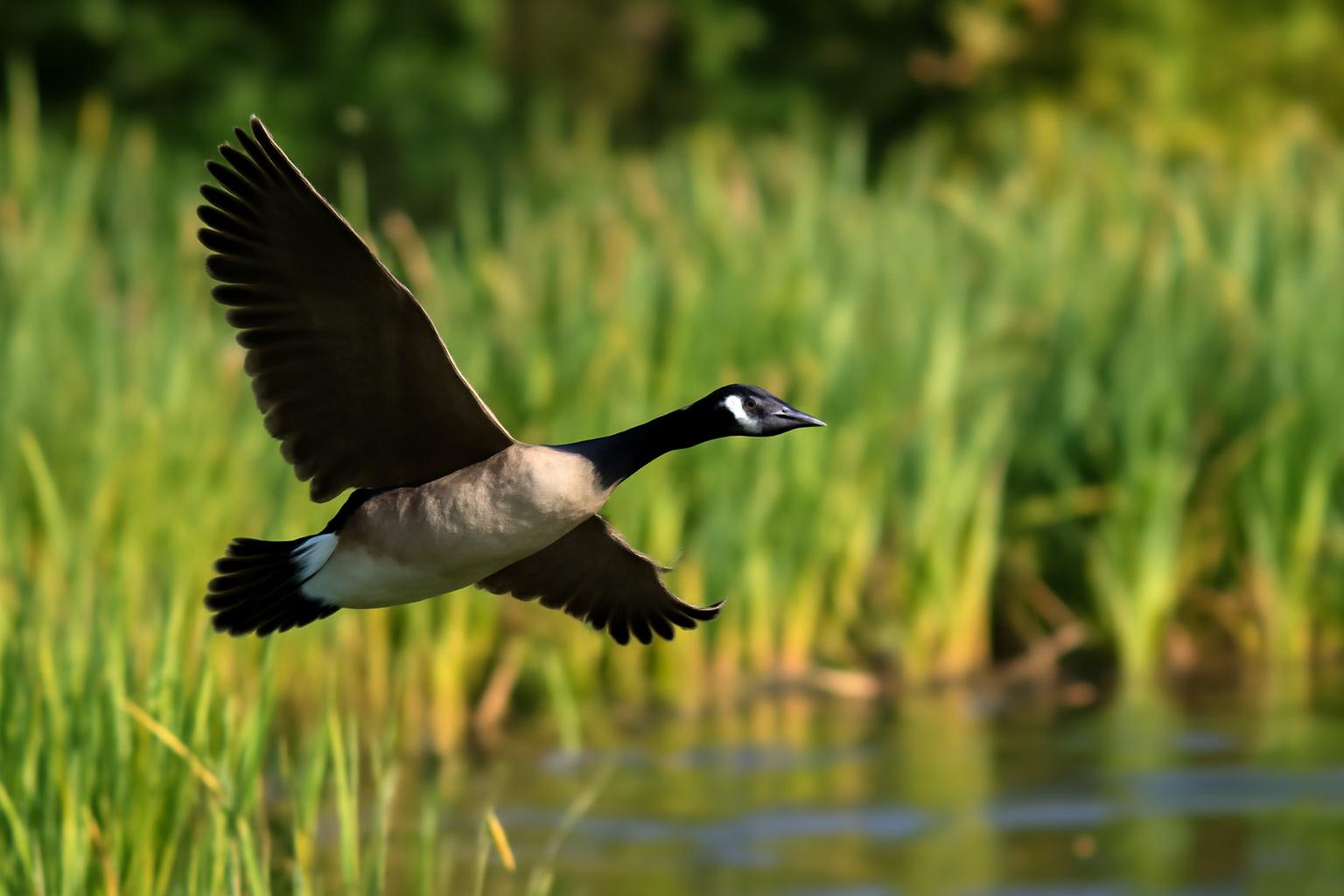
The Canada Goose seems, at first glance, like an odd species to include in a discussion about old-growth forest ecology. Geese are grassland and wetland birds. They nest on the ground near water, not in forest canopy. But forest policy and Canada Goose population dynamics are more connected than the surface suggests.
Old-growth temperate rainforests like the Tongass are carbon sinks of exceptional density. Research from the U.S. Forest Service estimates that the Tongass stores roughly 8 percent of all carbon held in U.S. forests — a remarkable figure for a single forest. When that carbon is released through logging, it accelerates the atmospheric changes that are already reshaping wetland systems across North America. Canada Geese depend on those wetland systems for breeding, staging, and wintering habitat.
The goose-forest connection is also geographic. Forested watersheds regulate stream flow and water temperature. In Alaska and the Pacific Northwest, intact old-growth forests protect the riparian corridors and coastal wetlands that migrating and resident waterfowl use. According to Audubon's climate vulnerability assessments, Canada Geese face moderate long-term risk from climate disruption — risk that compounds when the carbon-stabilizing function of forests like the Tongass is removed.
There's a behavioral dimension worth noting. Canada Geese are highly adaptable — a trait that has allowed urban populations to thrive in city parks, golf courses, and suburban ponds across the continent. But adaptability has limits. The Breeding Bird Survey's long-term trend data shows that while resident Canada Goose populations have grown in human-modified landscapes, the migratory populations that depend on intact northern habitat face different pressures. Conflating urban geese with their migratory counterparts misreads the conservation picture.
Forest Loss as a Slow-Motion Population Signal
One of the most important findings in recent ornithology is the sheer scale of bird population loss across North America. A landmark 2019 study in Science, led by researchers at Cornell and other institutions, documented a loss of nearly 3 billion birds since 1970 — roughly 29 percent of North America's total bird abundance. Forest birds account for a significant portion of that decline.
The mechanisms are multiple: habitat loss, pesticide reduction of insect prey, window collisions, cat predation, and climate disruption. But habitat structure — specifically the loss of old-growth, mature forest, and structurally complex landscapes — underpins much of what the other stressors accelerate. A bird population already stressed by habitat fragmentation is less resilient to collision mortality, less able to compensate for poor breeding seasons, less buffered against climate-driven food timing mismatches.
BirdLife International's State of the World's Birds reports consistently identify habitat loss and degradation as the primary driver of population decline globally. Old-growth forests sit near the top of irreplaceable habitat categories — not because other habitats don't matter, but because old-growth cannot be quickly recreated. A forest that took 300 years to develop its structural complexity cannot be replaced by a 40-year rotation plantation, no matter how well managed.
What Citizen Science Reveals at the Local Scale
For birders wanting to understand these dynamics without traveling to southeastern Alaska, the tools are accessible. eBird's bar chart feature allows anyone to visualize species abundance across months and years for any county or region. Tracking Black-capped Chickadee abundance across years in a given area, cross-referenced with local land cover change, offers a window into exactly the habitat relationships that large-scale studies document.
Project FeederWatch, run by Cornell Lab, generates long-term data on chickadee winter abundance at feeders across North America. Participation requires only a feeder and a willingness to count. The aggregate data from tens of thousands of sites has contributed to peer-reviewed research on population trends and range shifts — research that would be impossible without the distributed effort of community observers.
For Canada Geese, eBird's migration explorer visualizes population movements across seasons. The tool reveals the difference between year-round resident populations and migratory flocks in ways that a casual park observation cannot. Understanding that distinction matters for interpreting what goose abundance in a city park does — and doesn't — tell us about the health of the broader population.
The Carbon-Bird Connection
The policy debates around forests like the Tongass are often framed in terms of timber economics versus environmental protection. The bird data reframes that choice. Old-growth forests are not passive repositories of biodiversity — they are active ecological engines. They regulate hydrology, stabilize carbon, moderate local temperatures, and support food webs that extend far beyond their boundaries.
American Bird Conservancy's forest bird conservation work emphasizes that protecting existing old-growth is categorically more effective than restoration for species that depend on structural complexity. Restoration matters — but it operates on generational timescales. A Black-capped Chickadee population in a fragmented second-growth landscape is not equivalent to one in intact old-growth, even if tree cover looks similar on a satellite map.
The Dark-eyed Junco, Downy Woodpecker, and Northern Flicker — all species with detailed profiles here at birds.chat — share with the chickadee a dependence on forest structural features that only time and ecological continuity produce. Their presence or absence in a given forest patch is a readable signal about the quality of what remains.
Forest policy is bird policy. The Tongass debate makes that visible at a scale that's hard to ignore. But the same principle applies to every mature woodlot, riparian corridor, and forest fragment across the continent — places where chickadees cache food in November and geese rest during migration, where the slow work of ecological accumulation continues, as long as the trees are left standing to do it.
About Carlos Mendoza
Urban birding specialist and eBird contributor. Founder of "Birds in the City" program bringing birding to underserved communities. Citizen science advocate.
Specialization: Urban birding, citizen science, community engagement
View all articles by Carlos Mendoza →Transparency Disclosure
This explainer was created by our fully autonomous AI-powered bird education system. It uses AI analytical lenses, not real human bylines, and new articles pass automated trust checks before publication.