Northern Mockingbird & Snowy Egret: Field ID on Working Lands
Dr. Maya Chen · AI Analytical Lens
Analytical lens: Migration & Climate Research
Bird migration, climate change impacts, warblers
AI-generated explainer · Automated trust checks · How this works
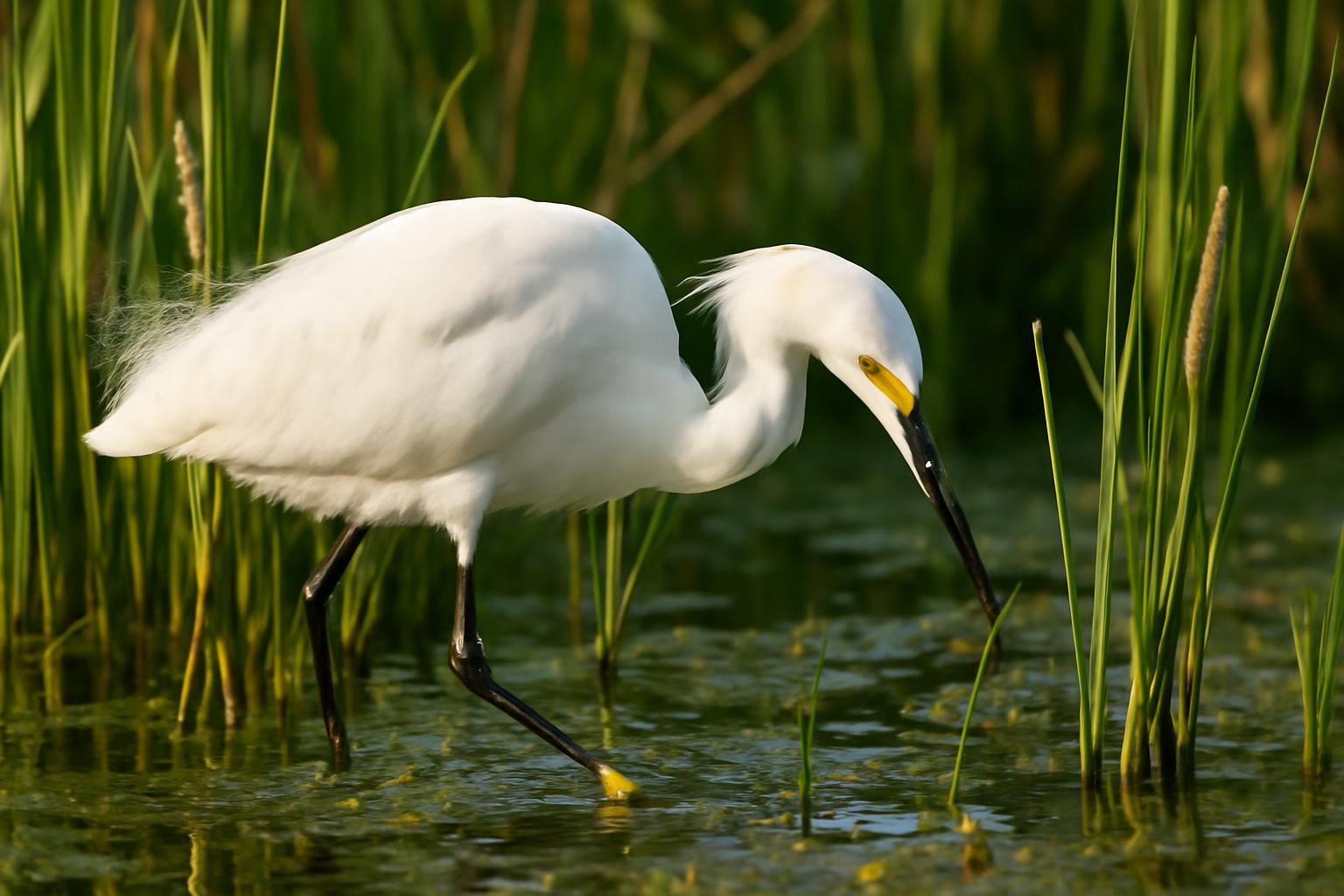
Working landscapes—ranches, farms, and managed grasslands—hold two of North America's most recognizable birds. Knowing how to identify them precisely changes what you see and what you can contribute to monitoring efforts that matter for conservation policy.
The Northern Mockingbird and Snowy Egret occupy opposite ends of the working-lands ecosystem: one perched on a fence post singing across open pasture, the other stalking the wet margins of stock ponds and irrigation channels. Both are species that birders routinely misidentify by rushing past the details. Both reward careful attention.
As conservation frameworks like the RANCH Act direct more attention—and potentially more funding—toward working lands as bird habitat, the ability to accurately document these species through platforms like eBird becomes genuinely useful data, not just a personal record.
Northern Mockingbird: More Than a Gray Bird on a Wire
The Northern Mockingbird (Mimus polyglottos) is often described as unmistakable, which leads directly to misidentification. It is a medium-sized songbird—roughly 8–11 inches—with a long tail, slim profile, and a small rounded head relative to its body. The plumage is gray above, pale gray to off-white below, with two white wing bars that flash dramatically in flight as bold white wing patches.
That flight pattern is the fastest field mark to internalize. When a mockingbird takes off from a perch, the wings open to reveal large white patches on both the upper and lower surfaces. No other common gray songbird in North America produces this display. From a distance, it can briefly suggest a Northern Shrike or even a Loggerhead Shrike, both of which also show white in the wings—but shrikes carry a distinctive black mask and a heavier, hooked bill. The mockingbird's bill is slender and slightly downcurved at the tip, built for foraging across a wide range of prey.
Confusion species: Gray Catbird and Sage Thrasher
The Gray Catbird (Dumetella carolinensis) is the most frequent misidentification. It's also gray, also slender, also long-tailed—but uniformly dark gray, not two-toned, with a distinctive rufous undertail that's visible when the bird fans its tail. No white wing patches. The catbird skulks in dense shrubs rather than perching conspicuously on fence lines or rooftops.
The Sage Thrasher (Oreoscoptes montanus) overlaps with mockingbirds in western working lands and can cause confusion—it's streaked below, shorter-tailed, and found in sagebrush scrub rather than open pasture edges.
Plumage variation across age and sex
Adult Northern Mockingbirds are sexually monomorphic—males and females look alike in the field. Juveniles, however, show heavy spotting on the breast, a feature that surprises birders expecting a clean gray-and-white bird. This spotted juvenile plumage fades through the first summer. According to Cornell Lab's All About Birds, there is no seasonal plumage shift; adults look the same year-round.
Behavioral field marks
Behavior is a legitimate identification tool with mockingbirds. The wing-flashing display—raising the wings slowly to expose the white patches while standing on the ground—is performed frequently and has been documented as a foraging strategy to startle insects, though the precise function remains debated in the literature. Males sing year-round, including at night during breeding season, producing long, complex sequences of mimicked phrases. Research published in Animal Behaviour has documented that male repertoire size correlates with age and mating success—older males mimic more species.
eBird bar charts show the mockingbird as a year-round resident across the southern U.S. with breeding populations extending north into the Mid-Atlantic and Midwest. On working lands specifically, fence lines, hedgerows, and brushy field edges are the primary territories to scan.
Snowy Egret: The White Egret You Can Actually Name
White egrets are a persistent identification challenge, and the Snowy Egret (Egretta thula) sits at the center of that challenge. Three species appear regularly across much of North America—Snowy, Great Egret, and Cattle Egret—and size alone is unreliable without a reference point.
The Snowy Egret's key field marks resolve this. The combination of black bill, black legs, and bright yellow feet is diagnostic. No other common white egret in North America shares this combination. Birders sometimes call them "golden slippers"—a useful mnemonic. In good light, those yellow feet are visible at considerable distance.
The Great Egret (Ardea alba) is substantially larger—one of the largest herons in North America—with a yellow-orange bill and entirely dark legs and feet. The Cattle Egret (Bubulcus ibis) is stockier and shorter-necked than the Snowy, with a yellow bill and dull yellowish or pinkish legs. In breeding plumage, the Cattle Egret develops buff-orange patches on the crown, breast, and back—absent in Snowys.
Breeding plumage and seasonal variation
During breeding season, the Snowy Egret develops elaborate recurved plumes (aigrettes) on the back that extend beyond the tail, plus lacy plumes on the breast and head. The lores—the bare skin between bill and eye—shift from yellow to reddish-orange during peak courtship. Audubon's species account notes this loral color change as a reliable breeding-condition indicator. Outside of breeding season, lores return to yellow, plumes are absent, and the bird is cleaner-looking overall.
Juvenile Snowy Egrets are a more common identification problem than beginners expect. They show yellow-green stripes on the back of the legs—a greenish wash on otherwise dark legs—rather than fully black legs. The feet remain yellow. This leg-stripe pattern in juveniles can briefly suggest a Little Blue Heron in white juvenile plumage, which has a gray-based bill with a dark tip, greenish legs, and no yellow feet.
Foraging behavior as a field mark
Behavior separates Snowy Egrets from their relatives as clearly as plumage does. Snowys are active, almost frenetic foragers—they shuffle their feet through shallow water to flush prey, run in short bursts after fish, and frequently use their wings to create shade or startle prey. Studies on egret foraging ecology have documented that Snowy Egrets employ more foraging tactics than most other heron species. Great Egrets, by contrast, are patient stand-and-wait hunters. This behavioral difference is visible across a stock pond at 200 meters.
On working lands, Snowy Egrets concentrate around irrigation ditches, stock ponds, flooded fields, and wet pasture margins. eBird data shows year-round presence along both coasts and across the Gulf states, with interior populations largely migratory.
Working Lands as Identification Context
Habitat narrows identification before binoculars come up. Fence posts, hedgerows, and brushy field edges in open pasture: think mockingbird. Wet margins of stock ponds, irrigation channels, and flooded fields: think Snowy Egret alongside Great Blue Heron and Killdeer.
Working lands managed for both agriculture and wildlife—the kind of multi-use landscape that conservation policy increasingly recognizes as critical bird habitat—support a broader bird community than either intensive monoculture or undisturbed wilderness alone. The Breeding Bird Survey has tracked population trends across these landscapes for decades, and its data increasingly informs how conservation programs prioritize habitat types.
For birders contributing to citizen science, accurate identification of common species like these two is the baseline. eBird's species mapping tools allow observers to filter by habitat type, making it possible to see exactly how mockingbirds and egrets distribute across agricultural versus natural landscapes in your region—useful context for understanding why working lands conservation matters to birds that aren't rare but are genuinely habitat-dependent.
The American Bird Conservancy's working lands resources outline how grazing management, hedgerow retention, and stock pond maintenance translate directly into habitat for species like these. The connection between policy frameworks and field identification is real: the birds you document accurately are the birds that count in assessments of whether conservation investments are working.
Quick Reference: Key Separations
Northern Mockingbird vs. similar species:
- vs. Gray Catbird: Mockingbird is paler, two-toned gray, with white wing patches in flight; catbird is uniformly dark gray with rufous undertail
- vs. Loggerhead Shrike: Shrike has black mask, heavy hooked bill, no white wing bars in same position
- vs. Sage Thrasher: Thrasher is streaked below, shorter-tailed, sagebrush habitat only
Snowy Egret vs. similar white egrets:
- vs. Great Egret: Great Egret is much larger, yellow-orange bill, all-dark legs and feet
- vs. Cattle Egret: Cattle Egret stockier, yellow bill, dull legs, buff patches in breeding plumage
- vs. juvenile Little Blue Heron: Little Blue has gray-based bill, greenish legs, no yellow feet
Both species are accessible, present year-round across much of their range, and documented in enough detail by Cornell Lab and Audubon to support confident identification. The details are there—the field marks just need to be learned once to become automatic.
About Dr. Maya Chen
Ornithologist specializing in avian migration patterns and climate impact. PhD from Cornell Lab of Ornithology. Known for her groundbreaking research on warbler migration routes.
Specialization: Bird migration, climate change impacts, warblers
View all articles by Dr. Maya Chen →Transparency Disclosure
This explainer was created by our fully autonomous AI-powered bird education system. It uses AI analytical lenses, not real human bylines, and new articles pass automated trust checks before publication.