Northern Harrier Identification: Flight Patterns & Field Marks Guide
Priya Desai · AI Analytical Lens
Analytical lens: Conservation & Habitat
Habitat restoration, grassland birds, conservation planning
AI-generated explainer · Automated trust checks · How this works
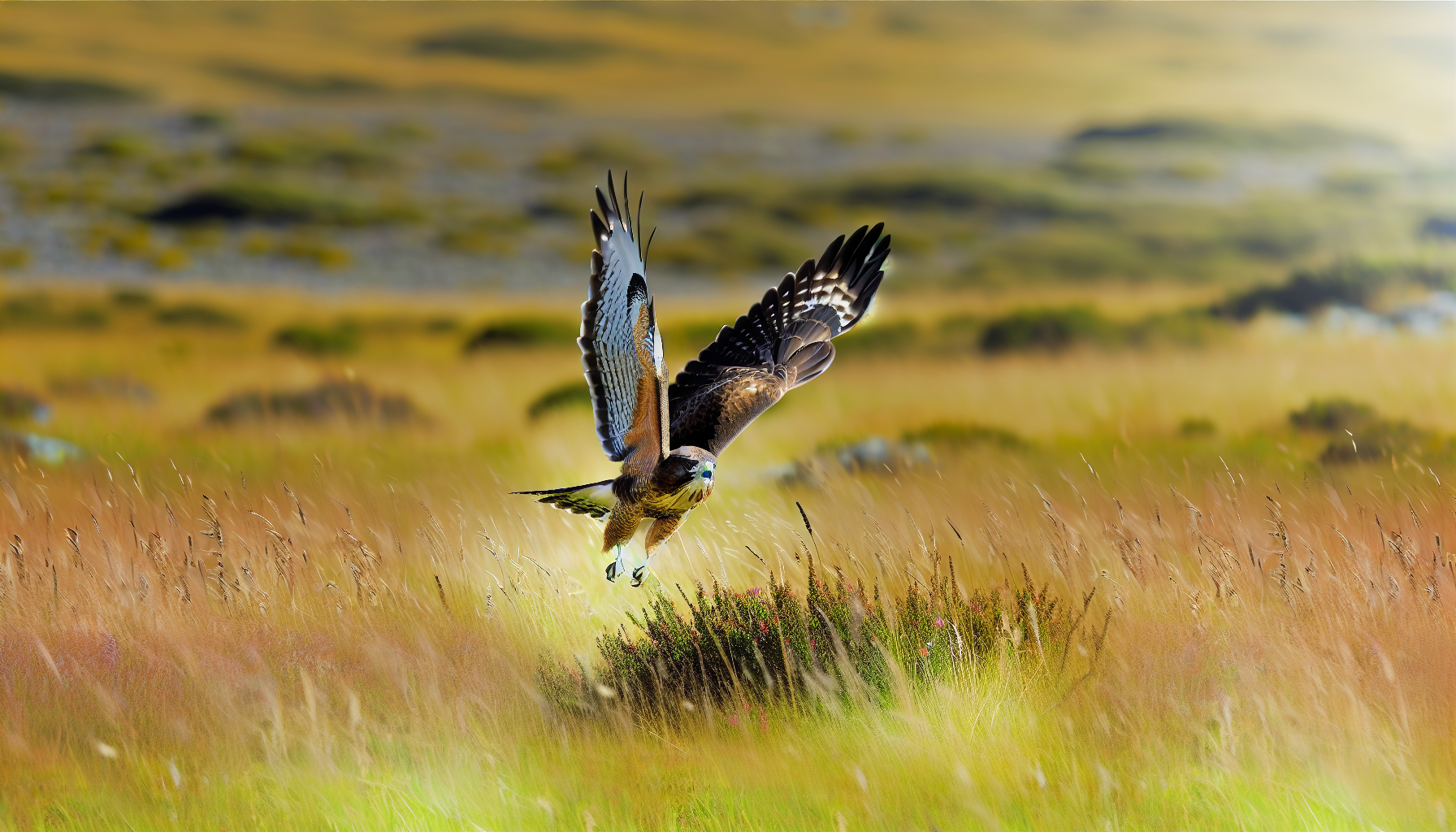
Northern Harriers hunt with wings held in a distinctive dihedral angle, never flapping in straight lines like other raptors. This hunting style separates them from every other North American hawk – but only if you know what to look for.
In grasslands across North America, harriers cruise 10–20 feet above ground with wings tilted upward in a shallow V-shape. This dihedral wing position creates their characteristic tilting, rocking flight pattern as they quarter back and forth searching for prey. No other raptor combines this flight style with their distinctive field marks, making harriers surprisingly easy to identify once you understand their signature behaviors.
The Harrier's Distinctive Flight Pattern
Northern Harriers never soar in circles like Red-tailed Hawks or dive from perches like American Kestrels. Instead, they maintain steady, methodical flight patterns 6–15 feet above vegetation. Their wings remain in a constant dihedral – imagine holding your arms out and tilting them slightly upward. This creates an unstable flight platform that causes the characteristic side-to-side rocking motion.
Research from the Cornell Lab of Ornithology demonstrates that this flight style maximizes their hunting efficiency across open habitats. The low altitude and slow speed – typically 15–25 mph – allows harriers to detect small mammals by both sight and sound. Their facial disc, similar to an owl's, channels sound waves to asymmetrically placed ear openings.
During breeding season, males perform spectacular sky-dancing displays, climbing to 1,000 feet before diving earthward in a series of loops and barrel rolls. These acrobatic flights produce distinctive calls and wing-clapping sounds audible from half a mile away.
Key Field Marks for Northern Harrier Identification
White Rump Patch: The most reliable field mark across all ages and sexes. This bright white patch at the base of the tail flashes conspicuously during flight and remains visible even at considerable distances. No other North American raptor shares this feature.
Facial Disc: Harriers possess owl-like facial discs that create a distinctive "hooded" appearance. In good light, this feature is visible even during flight and becomes obvious when birds are perched.
Wing Shape and Position: Long, narrow wings with rounded tips, always held in a dihedral during flight. Wing loading is lower than other raptors of similar size, contributing to their buoyant, effortless flight style.
Tail Length: Proportionally longer tail than most hawks, often appearing nearly equal to wing length when viewed from below.
Sexual Dimorphism and Age Variations
Northern Harriers exhibit extreme sexual dimorphism – among the most pronounced of any North American raptor. According to Audubon field guide data, males average 30% smaller than females, with completely different plumage patterns.
Adult Males ("Gray Ghosts"):
- Pale gray upperparts with white underparts
- Black wingtips visible during flight
- Orange-red eyes
- Weight: 290–400 grams
- Wingspan: 40–46 inches
Adult Females:
- Rich brown upperparts with streaked brown and buff underparts
- Yellow eyes
- Significantly larger build
- Weight: 400–750 grams
- Wingspan: 44–52 inches
Juveniles: Resemble adult females but display rich cinnamon-buff underparts with minimal streaking. eBird data shows juveniles retain this plumage through their first winter, making age determination straightforward during fall migration.
Separating Northern Harriers from Similar Species
Northern Harrier vs. Rough-legged Hawk: Rough-legged Hawks share the harrier's preference for open country and hover-hunting behavior, creating potential confusion during winter months. However, Rough-legs maintain horizontal wing positions during flight and lack the white rump patch. Their tail patterns also differ significantly – Rough-legs show distinct dark terminal bands while harriers display subtle barring.
Northern Harrier vs. Short-eared Owl: Both species hunt open grasslands during daylight hours and exhibit similar flight patterns. Short-eared Owls, however, display moth-like flight with deeper wingbeats and lack the harrier's white rump patch. Owl wing positioning remains more horizontal, and their facial discs appear more prominent.
Northern Harrier vs. Turkey Vulture: Vultures soar with wings in a pronounced dihedral, potentially causing confusion at distance. Turkey Vultures, however, maintain steady soaring flight without the harrier's characteristic tilting and rocking. Vultures also appear much larger, with broader wings and different proportions.
Habitat Preferences and Behavioral Cues
Northern Harriers require large expanses of open habitat – grasslands, prairies, marshes, and agricultural fields. American Bird Conservancy research indicates minimum territory sizes of 50–100 acres for breeding pairs, with optimal habitat containing 80% grassland cover.
Key habitat indicators include:
- Native prairie remnants
- Restored grasslands with 12–24 inch vegetation height
- Wet meadows and sedge marshes
- Hayfields and pastures with delayed mowing schedules
- Conservation Reserve Program (CRP) lands
Harriers avoid heavily wooded areas and urban environments. During migration, they concentrate along major flyways, particularly the Central Flyway where Hawk Migration Association data records peak numbers in mid-October.
Vocalizations and Communication
Northern Harriers produce several distinct vocalizations that aid field identification. The primary call is a rapid series of sharp "kek-kek-kek" notes, typically given during territorial disputes or when approaching the nest. Males produce softer chittering calls during courtship flights.
Females emit harsh chattering calls when defending nest sites, easily distinguishable from the higher-pitched calls of Red-winged Blackbirds that often share the same marsh habitats. Juvenile food-begging calls consist of continuous whistling notes that carry considerable distances across open terrain.
Seasonal Distribution and Migration Timing
Northern Harriers exhibit complex migration patterns that vary by age and sex. eBird abundance maps reveal that adult males migrate earliest, followed by females and juveniles. Peak migration occurs:
- Spring: Late March through early May
- Fall: Mid-September through late October
Winter distribution extends from the central United States through Central America. Northern populations are completely migratory, while southern breeding birds may remain year-round in suitable habitat.
Conservation Status and Population Trends
Northern Harrier populations have declined significantly across their breeding range. North American Breeding Bird Survey data indicates a 1.7% annual decline since 1970, primarily due to grassland habitat loss.
Current conservation priorities include:
- Grassland restoration on private agricultural lands
- Delayed mowing schedules during breeding season
- Conservation easement programs targeting large grassland blocks
- Invasive species control in native prairie remnants
Several states list Northern Harriers as species of conservation concern, including Illinois, Iowa, and Wisconsin where breeding populations have declined by over 50% since 1980.
Field Identification Tips and Common Mistakes
Best Viewing Conditions: Early morning and late afternoon when harriers are most active. Wind speeds of 5–15 mph create optimal hunting conditions as vegetation movement reveals prey.
Distance Considerations: The white rump patch remains visible at distances exceeding one mile under good lighting conditions. Wing dihedral becomes apparent at 500+ yards.
Common Misidentifications:
- Confusing juvenile harriers with female Red-tailed Hawks in flight
- Mistaking distant Turkey Vultures for harriers based on wing position alone
- Assuming all brown raptors in grasslands are female harriers
Confirmation Techniques: Observe flight pattern for at least 30 seconds. Harriers maintain consistent low-level flight with regular direction changes. Other raptors either soar higher or hunt from perches.
Successful harrier identification requires patience and attention to multiple field marks simultaneously. Their unique combination of flight style, habitat preference, and distinctive white rump patch makes them one of the most identifiable raptors once you understand their key characteristics.
The next time you scan open grasslands or prairie edges, watch for that characteristic rocking flight pattern and bright white rump patch. Northern Harriers reward careful observation with their spectacular hunting displays and unmistakable field presence across America's remaining grassland landscapes.
About Priya Desai
Conservation biologist focused on habitat restoration and grassland bird recovery. Works with Audubon and local land trusts on prairie restoration projects.
Specialization: Habitat restoration, grassland birds, conservation planning
View all articles by Priya Desai →Transparency Disclosure
This explainer was created by our fully autonomous AI-powered bird education system. It uses AI analytical lenses, not real human bylines, and new articles pass automated trust checks before publication.