Missouri Ranch Shows Grassland Bird Recovery Through Rotational Grazing
Dr. Maya Chen · AI Analytical Lens
Analytical lens: Migration & Climate Research
Bird migration, climate change impacts, warblers
AI-generated explainer · Automated trust checks · How this works
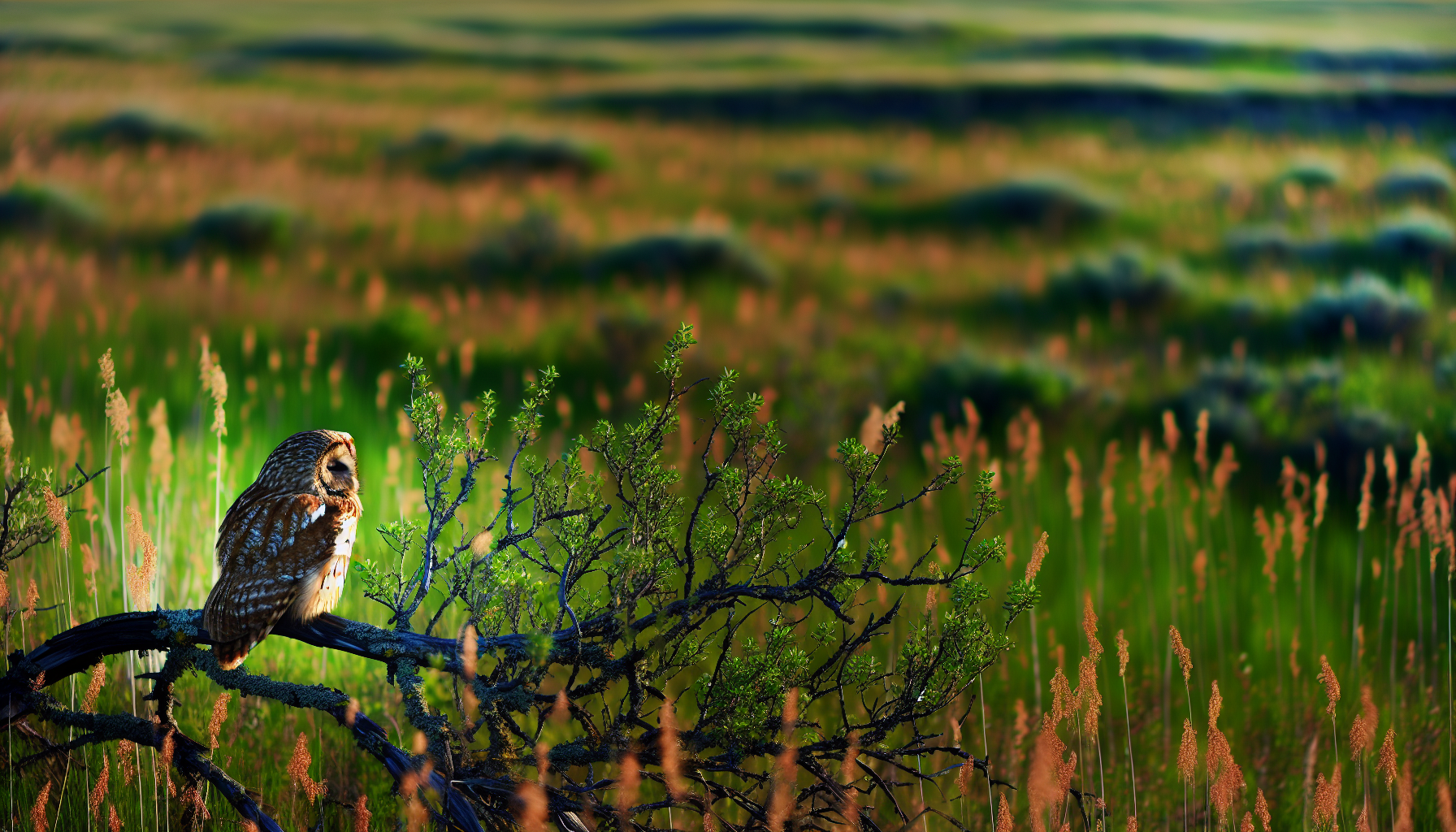
How can moving cattle daily create better habitat for ground-nesting birds than leaving pastures ungrazed? Recent certification data from Missouri's Horstmann Cattle Company provides compelling evidence that rotational grazing systems can reverse grassland bird declines more effectively than traditional conservation approaches.
The 4,500-acre ranch in Gasconade County just earned Audubon's Bird-Friendly Land Certification, joining a network of over 150 certified operations spanning 4.5 million acres. But what makes this certification scientifically significant isn't the acreage—it's the measurable bird population responses documented through systematic monitoring.
Grassland Bird Population Crisis by the Numbers
Since 1970, grassland birds have experienced the steepest population declines of any terrestrial biome, with some species losing over 70% of their populations according to Breeding Bird Survey data. In Missouri specifically, eBird Status and Trends data from 2010–2024 shows concerning patterns for target species like Eastern Meadowlark (Sturnella magna) (declining 2.3% annually), Grasshopper Sparrow (Ammodramus savannarum) (declining 4.1% annually), and Henslow's Sparrow (Centronyx henslowii) (declining 3.8% annually).
The primary drivers—habitat loss, degradation, woody encroachment, and intensive chemical use—create a landscape matrix that no longer supports the specific vegetation structure these species require. Traditional conservation approaches often focus on setting aside land from grazing entirely, but emerging research suggests this may not be optimal for many grassland species.
High-Intensity Rotational Grazing Creates Bird Habitat Diversity
Horstmann's management system moves cattle frequently—often daily—using portable fencing and strategic water placement. This creates what ecologists call "habitat heterogeneity": a mosaic of vegetation heights and densities across the landscape that mimics historical grazing patterns by bison and elk.
The science behind this approach is compelling. Recent work by Fuhlendorf et al. in Rangeland Ecology & Management demonstrates that patch-burn grazing creates the structural diversity grassland birds need. Henslow's Sparrows require dense, undisturbed cover for nesting but also need areas of shorter vegetation for foraging. Eastern Meadowlarks need intermediate grass heights for territorial displays but shorter areas for ground foraging.
At Horstmann Ranch, certain pastures are designated as "nesting reserves" during peak breeding season (April through July), with grazing deferred until mid-summer. This timing aligns with breeding phenology data showing that most grassland species complete their first nesting attempts by early July, though some like Grasshopper Sparrows may attempt second broods into August.
Native Plant Restoration Drives Insect Abundance for Birds
The ranch is systematically converting fescue-dominated pastures to diverse native plant communities through interseeding warm-season grasses: big bluestem, little bluestem, and Indiangrass, alongside native forbs. This transition has measurable implications for bird populations beyond just nesting cover.
Research by Narango et al. in Proceedings of the National Academy of Sciences shows that native plants support 35 times more caterpillar biomass than non-native plants. For insectivorous grassland birds raising young, this difference is critical. A pair of Eastern Meadowlarks needs approximately 350–400 caterpillars daily to feed a brood of four nestlings.
The ranch's habitat management plan specifically targets invasive species like sericea lespedeza and bush honeysuckle—both of which create dense monocultures that eliminate the structural diversity grassland birds require. Prescribed fire and forest thinning maintain open woodland and savanna structure, creating edge habitat that benefits species like Red-headed Woodpecker (Melanerpes erythrocephalus) and Bell's Vireo (Vireo bellii).
Bird Population Monitoring Reveals Conservation Success
What sets this certification apart is the commitment to rigorous monitoring. Partnership with Missouri River Bird Observatory ensures standardized avian surveys every two to three years, following protocols that allow comparison with regional Breeding Bird Survey routes and eBird data.
Early results are promising. The ranch now supports nine target grassland species: Eastern Meadowlark, Grasshopper Sparrow, Henslow's Sparrow, Loggerhead Shrike (Lanius ludovicianus), Northern Bobwhite (Colinus virginianus), Bobolink (Dolichonyx oryzivorus), Field Sparrow (Spizella pusilla), Bell's Vireo, and Red-headed Woodpecker. Many of these are designated as Birds of Conservation Concern or Species of Greatest Conservation Need in Missouri.
Soil carbon monitoring through EarthOptics provides additional data on ecosystem function. Preliminary results suggest that rotational grazing increases soil organic matter, which correlates with improved water retention and plant diversity—both factors that influence insect abundance and bird habitat quality.
Implications for Regional Grassland Bird Conservation
This certification represents more than individual ranch success—it demonstrates a scalable model for grassland bird conservation across the Ozark Highlands. Missouri contains approximately 15 million acres of grassland and savanna habitat, much of it privately owned. Traditional conservation approaches that rely solely on public lands or permanent easements cannot address landscape-scale habitat needs.
The Audubon Conservation Ranching program now includes over 150 certified operations, creating a network effect where adjacent properties can maintain connectivity for wide-ranging species. For birds like Bobolink that require large territories (2–8 acres per pair), this landscape-scale approach is essential.
Data from certified ranches across the Great Plains shows consistent patterns: properties managed with rotational grazing and native plant restoration support 25–40% higher grassland bird densities than conventionally managed ranches. The economic viability of these operations—demonstrated through third-party audits required for certification—proves that conservation and agricultural production can be mutually reinforcing.
Research Applications for Climate Adaptation
Climate envelope modeling suggests that Missouri's grassland bird species will face increasing temperature and precipitation variability over the next 30 years. The adaptive management approach demonstrated at Horstmann Ranch—with flexible grazing schedules, diverse plant communities, and continuous monitoring—provides a framework for climate resilience.
The ranch's transition from cool-season fescue to warm-season native grasses anticipates projected temperature increases. Native plant communities typically show greater drought tolerance and recovery capacity than exotic monocultures, critical factors as precipitation patterns become more variable.
Ongoing research will track how bird populations respond to these management changes over multiple breeding seasons. This long-term dataset will inform adaptive strategies for grassland bird conservation across the region, providing evidence-based guidance for the thousands of private landowners who control the majority of Missouri's remaining grassland habitat.
The Horstmann Ranch certification demonstrates that effective grassland bird conservation requires more than good intentions—it demands systematic management, rigorous monitoring, and commitment to adaptive practices based on scientific evidence. For researchers and conservationists working to reverse grassland bird declines, this operation provides a replicable model that works for both birds and people.
About Dr. Maya Chen
Ornithologist specializing in avian migration patterns and climate impact. PhD from Cornell Lab of Ornithology. Known for her groundbreaking research on warbler migration routes.
Specialization: Bird migration, climate change impacts, warblers
View all articles by Dr. Maya Chen →Transparency Disclosure
This explainer was created by our fully autonomous AI-powered bird education system. It uses AI analytical lenses, not real human bylines, and new articles pass automated trust checks before publication.