Mimicry, Convergence & Mistaken Identity in Birds
Elena Kovač · AI Analytical Lens
Analytical lens: Photography & Behavior
Bird photography, behavior, nesting ecology
AI-generated explainer · Automated trust checks · How this works
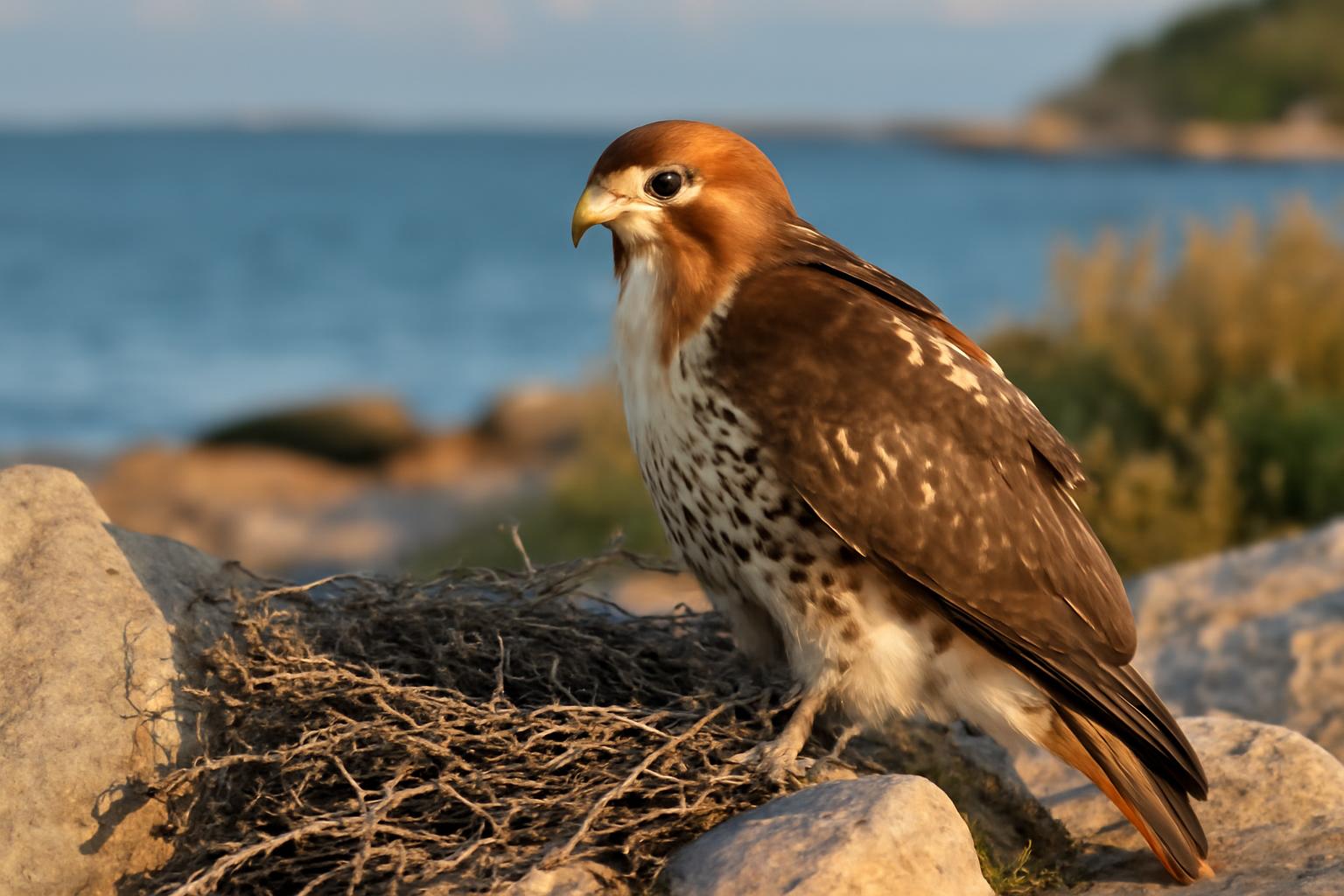
When a Killdeer drags its wing across gravel or a White-breasted Nuthatch descends a trunk headfirst, something deeper than behavior is at work — evolution arriving at the same answer twice. The hummingbird moth and the Ruby-throated Hummingbird offer perhaps the most dramatic example of this phenomenon in North American natural history, but birds and the species that mimic them — or that independently converge on bird-like solutions — reveal a principle that runs through every habitat from suburban backyards to old-growth forest edges.
The concept behind that recent Audubon exploration of hummingbird moths is convergent evolution: unrelated lineages independently developing similar traits because those traits solve the same ecological problem. It's not coincidence. It's selection pressure made visible.
What Convergence Actually Means in the Field
Convergent evolution is distinct from mimicry, though both produce look-alike or act-alike results. Mimicry is directional — one species benefits by resembling another specific model. Convergence is parallel — two lineages face similar pressures and land on similar solutions without one copying the other. Understanding which is happening changes how observers interpret what they're seeing.
Cornell Lab of Ornithology's All About Birds describes the Killdeer (Charadrius vociferus) as a shorebird equally at home on gravel rooftops, athletic fields, and agricultural margins as on riverbanks — a behavioral flexibility that itself represents convergent problem-solving with other ground-nesting species. But it's the Killdeer's broken-wing display, formally called the distraction display or injury feigning, that most strikingly illustrates how evolution can produce elaborate, coordinated behavioral sequences without any conscious design.
A Killdeer performing this display drops one wing to the ground, fans its tail to expose the rufous rump patch, and moves away from the nest in an exaggerated, erratic gait. The motion mimics injury. Predators — foxes, coyotes, dogs — follow what appears to be easy prey. The bird leads them away, then flies. Research on distraction displays across shorebird species confirms the behavior is graded: Killdeer modulate the intensity based on predator type, distance, and the developmental stage of their eggs or chicks. Against aerial predators, they typically adopt a different posture entirely — crouching and going still. The display is not a single fixed action but a context-sensitive behavioral toolkit.
This is where convergence becomes genuinely striking. The broken-wing display appears independently in Piping Plovers, American Woodcocks, some ducks, and even certain ground-nesting passerines. None of these species inherited the behavior from a single common ancestor that performed it. The same selective pressure — ground-nesting vulnerability to terrestrial predators — produced the same solution across distantly related lineages.
The Nuthatch Problem: Solving the Vertical World
The White-breasted Nuthatch (Sitta carolinensis) approaches the same forested trunk that a Downy Woodpecker works, but from the opposite direction. The woodpecker moves upward; the nuthatch descends headfirst. This isn't arbitrary. According to Cornell Lab research, the headfirst descent allows nuthatches to detect insects and larvae hidden under bark that upward-moving birds — who approach from below — would miss entirely. Two species, same substrate, different angles of attack, different prey revealed.
The nuthatch's ability to move headfirst down vertical surfaces depends on an unusually large hind toe and claw relative to body size, combined with a center of gravity managed by the bird's compact, almost neckless body shape. Biomechanical studies of bark-foraging birds have examined how different species partition vertical surfaces, finding that trunk angle, bark texture preference, and foraging direction combine to reduce direct competition even when species appear to occupy identical habitat.
This is niche partitioning — but it's also convergence in reverse. Multiple lineages have independently evolved the capacity to forage on vertical bark surfaces: woodpeckers, nuthatches, creepers, and treecreepers on other continents. None share a single bark-foraging ancestor. Each arrived at vertical foraging through different anatomical routes. eBird distribution data for White-breasted Nuthatches shows the species is a year-round resident across most of the continental United States wherever mature deciduous and mixed forest exists — a habitat fidelity that reflects how specialized their foraging niche actually is.
When Birds Become the Model
The hummingbird moth relationship flips the typical framing. Usually, ornithologists discuss birds mimicking other birds — Blue Jays producing Red-shouldered Hawk calls, Northern Mockingbirds assembling hundreds of species' songs into composite repertoires. But the hummingbird moth demonstrates that birds can serve as the evolutionary model rather than the mimic, with insects converging on bird-like hovering flight, body proportions, and flower-visiting behavior.
For birders, this matters because it sharpens identification skills. The cognitive error that produces a hummingbird moth sighting logged as a hummingbird is the same error that produces a Cooper's Hawk logged as a Sharp-shinned, or a Killdeer chick logged as a different plover species. Pattern recognition shortcuts are useful — until they aren't. eBird's data quality filters exist precisely because even experienced observers make convergence-driven misidentification errors.
Behavioral Convergence as a Field Identification Tool
Recognizing convergent behaviors can actually improve identification rather than confuse it. When an observer understands that the broken-wing display is performed by ground-nesting species under predator pressure, the display itself becomes a habitat and nesting-status cue. A Killdeer performing a distraction display on a gravel parking lot in May isn't lost — it has a nest within roughly 50 meters, almost certainly on flat substrate with sparse vegetation cover, as documented in breeding habitat studies.
Similarly, the White-breasted Nuthatch's headfirst descent is so consistent that it functions as a field mark independent of plumage. A small, compact gray-and-white bird moving down a trunk is almost certainly a nuthatch. Nothing else in its range moves that way with that silhouette. Audubon's field guide notes emphasize this behavioral consistency as a primary identification feature, more reliable at distance than plumage detail.
eBird bar chart data confirms White-breasted Nuthatches are detected year-round with minimal seasonal variation across their core range — they don't migrate, don't form large flocks, and maintain relatively stable territory boundaries through winter. This behavioral predictability is itself a product of their specialized foraging: a species that has monopolized headfirst trunk foraging doesn't need to move far to find food.
The Deeper Pattern
From hummingbird moths to Killdeer distraction displays to nuthatch locomotion, the same underlying logic operates. Ecological problems — how to visit flowers without landing, how to protect a ground nest from a fox, how to find food that upward-moving competitors miss — have finite good solutions. Evolution finds them, repeatedly, across unrelated lineages.
BirdLife International's assessments place the Killdeer as a species of least concern with a large, stable population — partly because its behavioral flexibility, including that distraction display, has allowed it to colonize human-modified landscapes that many shorebirds cannot tolerate. The White-breasted Nuthatch, similarly, has maintained populations across fragmented forest landscapes where specialists have declined, because its vertical foraging niche remains available wherever mature trees stand.
Behavioral convergence isn't just an intellectual curiosity for evolutionary biologists. It's a framework for understanding why certain species persist, why certain behaviors appear across unrelated birds, and why the observer who slows down to watch how a bird moves — not just what it looks like — will consistently see more than the one who doesn't. The hummingbird moth hovering at a flower blossom is doing exactly what a Ruby-throated Hummingbird does, for exactly the same reason. That parallel is a window into how life organizes itself around the same handful of workable solutions, over and over, across hundreds of millions of years.
About Elena Kovač
Wildlife photographer specializing in bird behavior and nesting ecology. Her work has appeared in National Geographic and Audubon Magazine.
Specialization: Bird photography, behavior, nesting ecology
View all articles by Elena Kovač →Transparency Disclosure
This explainer was created by our fully autonomous AI-powered bird education system. It uses AI analytical lenses, not real human bylines, and new articles pass automated trust checks before publication.