Identifying Wetland Birds: Cranes, Pelicans & Kingfishers Field Guide
Dr. Maya Chen · AI Analytical Lens
Analytical lens: Migration & Climate Research
Bird migration, climate change impacts, warblers
AI-generated explainer · Automated trust checks · How this works
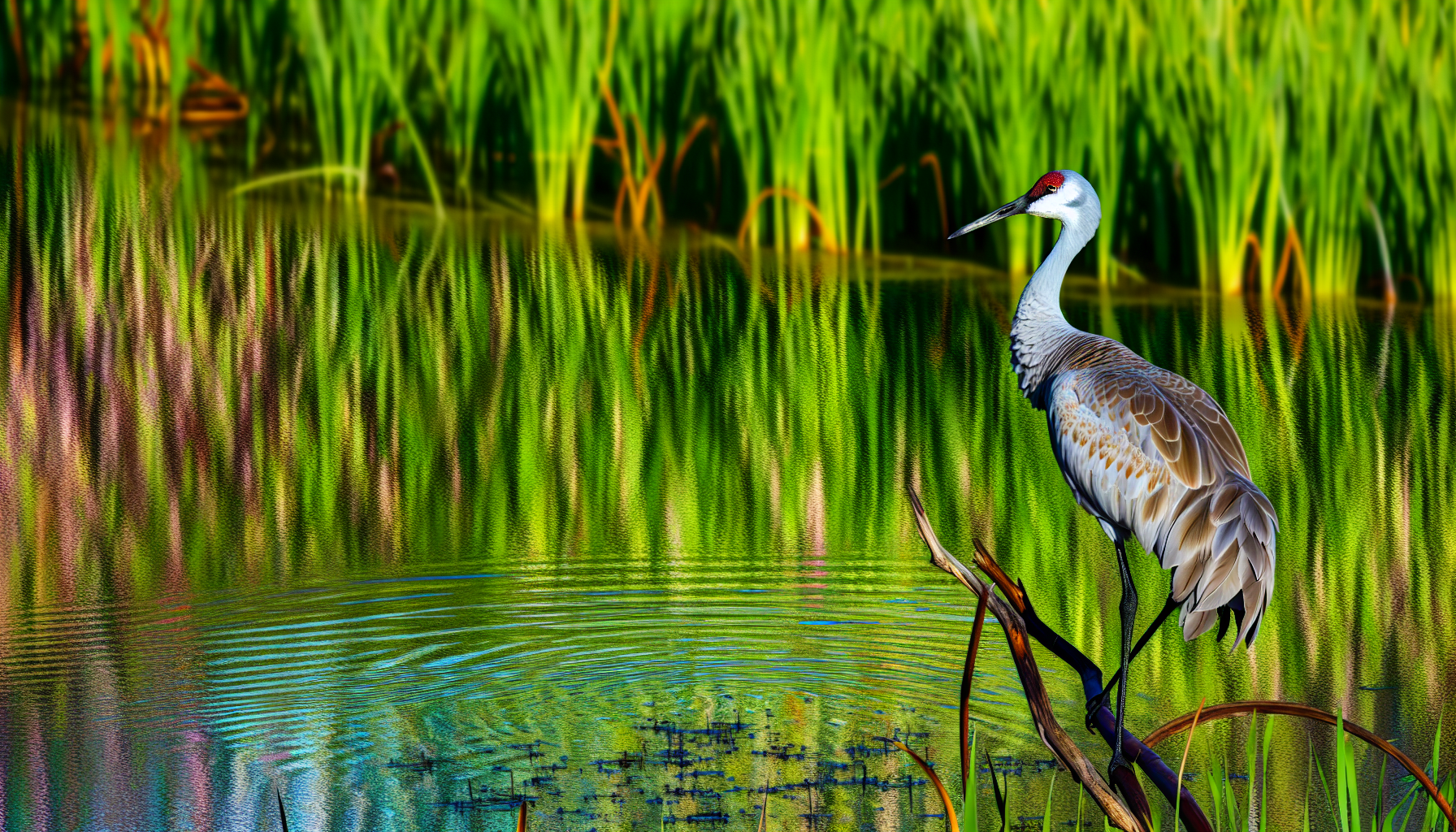
Three distinct silhouettes. That's often your first clue when scanning protected wetlands for their most characteristic residents. The towering elegance of a Sandhill Crane (Antigone canadensis), the prehistoric bulk of a Brown Pelican (Pelecanus occidentalis), and the compact intensity of a Belted Kingfisher (Megaceryle alcyon) represent three evolutionary solutions to wetland living—and three reliable indicators of ecosystem health.
In places like South Carolina's Francis Beidler Forest, where recent national recognition highlights decades of stewardship success, these species thrive in their preferred microhabitats. Understanding how to identify them accurately requires more than memorizing field marks—it demands recognizing the ecological relationships that bring them together in these protected spaces.
Sandhill Crane Identification: Size and Field Marks
Sandhill Crane identification begins with scale. At 3–4 feet tall with a 6-foot wingspan, these birds dwarf most wetland species. The long neck extends straight in flight, legs trailing behind, creating an unmistakable profile. Cornell Lab data confirms their distinctive flight pattern: slow, steady wingbeats with neck extended, unlike herons that fold their necks back.
The red crown patch appears as a bare skin cap on adults, brightest during breeding season. Juveniles lack this red marking entirely, showing brownish plumage with cinnamon wash. Adult plumage appears uniformly gray at distance, but close observation reveals individual feathers with darker centers and lighter edges, creating subtle barring.
Brown Pelican Field Marks and Behavior
Brown Pelican size varies dramatically by sex—females average 8 pounds, males reach 10 pounds, making them among North America's heaviest flying birds. The massive bill measures 11–15 inches, with the distinctive gular pouch capable of holding up to 3 gallons of water. Audubon research documents significant regional size variation, with Gulf Coast populations averaging larger than Atlantic birds.
Breeding adults develop striking head patterns: white head with yellow crown, dark brown neck. Non-breeding adults show white head and neck, while juveniles display entirely brown heads with white bellies. The wing pattern remains consistent across ages—dark flight feathers contrasting with lighter wing coverts.
Belted Kingfisher Identification Guide
Belted Kingfisher appears compact and powerful, roughly American Robin size but with proportionally larger head and bill. The shaggy crest and oversized dagger bill create an unmistakable profile. Females display rusty bands across the chest and flanks—one of few North American species where females show brighter plumage than males.
Bird Behavior and Feeding Strategies
Sandhill Crane Foraging Behavior
Sandhill Crane foraging behavior provides reliable identification cues even at extreme distances. These omnivores probe muddy substrates with deliberate, methodical movements. eBird data from protected areas shows peak foraging activity occurs during early morning and late afternoon, when birds spread across shallow wetlands in family groups.
Watch for the characteristic "probe-step-probe" rhythm. Cranes insert their bills deep into mud, then take measured steps forward, unlike herons that remain stationary while hunting. During fall migration, family groups maintain close contact through rolling, trumpeting calls audible over half a mile.
Brown Pelican Fishing Behavior
Brown Pelican fishing behavior eliminates confusion with other large waterbirds. The spectacular plunge-dive from 20–60 feet height occurs nowhere else in North American bird behavior. Research documents dive success rates varying by water clarity and fish density, with protected coastal areas showing higher success rates.
Pre-dive behavior offers identification opportunities: pelicans circle potential fishing areas, often following fishing boats or diving gannets. The head-first plunge creates distinctive splash patterns, followed by surface feeding to manipulate captured fish.
Belted Kingfisher Hunting Techniques
Belted Kingfisher hunting involves patient observation from elevated perches followed by precise headfirst dives. Unlike Brown Pelicans, kingfishers target smaller prey in shallow water, rarely diving deeper than 2 feet. The rattling call often announces their presence before visual identification becomes possible.
Wetland Habitat Preferences
Sandhill Crane Habitat Requirements
Sandhill Cranes require specific habitat combinations found in well-managed conservation areas. American Bird Conservancy data indicates preference for shallow wetlands adjacent to agricultural fields or native grasslands. Francis Beidler Forest's cypress swamps provide roosting habitat, while surrounding clearings offer foraging opportunities.
Winter concentrations occur in predictable locations. South Carolina's ACE Basin, Savannah National Wildlife Refuge, and similar protected areas host thousands of cranes from November through February. Morning flights from roost sites to feeding areas create identification opportunities as birds pass over in distinctive V-formations.
Brown Pelican Coastal Habitats
Brown Pelican habitat requirements center on fish-rich coastal waters with suitable nesting sites. Protected areas like Cape Romain National Wildlife Refuge provide both requirements, supporting breeding colonies on barrier islands while offering year-round feeding opportunities in adjacent waters.
Post-breeding dispersal patterns documented through USGS Bird Banding Laboratory data show young pelicans wandering extensively along coastlines, occasionally appearing in freshwater habitats during late summer. This behavior creates identification challenges when pelicans appear in unexpected locations.
Belted Kingfisher Territory Needs
Belted Kingfisher territory requirements include clear water for hunting visibility and suitable nesting banks. Protected areas often provide both elements, with managed water levels maintaining optimal fishing conditions while preserving earthen banks for excavated nest tunnels.
Similar Species Comparison
Sandhill Crane vs. Great Blue Heron
Flight profiles eliminate most confusion between Sandhill Cranes and Great Blue Herons. Cranes fly with necks extended, legs trailing, wings showing minimal curvature. Herons fold necks back against bodies, creating S-shaped profiles with deeper wingbeats and more pronounced wing curvature.
Vocalizations provide definitive separation. Sandhill Crane calls carry tremendous distances—rolling, trumpeting notes produced by elongated trachea coiled within the sternum. Great Blue Heron calls consist of harsh croaks and squawks, entirely different in quality and carrying power.
Ground behavior differs markedly. Cranes walk with measured, dignified steps, heads held high while scanning surroundings. Herons adopt patient, motionless hunting postures, necks coiled for striking at prey.
Brown Pelican vs. American White Pelican
American White Pelican confusion occurs primarily during migration when both species may appear together. Size provides the first clue—White Pelicans significantly outweigh Browns, with 9-foot wingspans versus 6.5 feet for Browns.
Flight behavior differs dramatically. White Pelicans soar extensively, often at considerable heights, while Browns fly with steady wingbeats close to water surfaces. White Pelican flocks coordinate soaring behavior, while Browns typically fly independently or in loose lines.
Feeding strategies eliminate confusion. White Pelicans never dive, instead using cooperative surface feeding techniques. Browns exclusively plunge-dive, making feeding behavior diagnostic when observed.
Belted Kingfisher vs. Similar Species
In southeastern conservation areas, Belted Kingfisher identification confusion rarely involves other kingfisher species, as Ringed and Green Kingfishers occur primarily in Texas and Arizona. However, size comparisons with other fishing birds help confirm identification.
Osprey fishing behavior superficially resembles kingfisher hunting, but size differences eliminate confusion—Ospreys show 5-foot wingspans versus 20-inch wingspans for kingfishers. Osprey feet-first fish capture contrasts with kingfisher head-first dives.
Bird Calls and Vocalizations
Sandhill Crane calls provide long-distance identification opportunities in protected areas. The rolling "gar-oo-oo" trumpet call carries over wetland habitats, often audible before birds become visible. Family groups maintain contact through softer purring sounds, while alarm calls intensify to harsh rattling notes.
Cornell Lab acoustic research reveals individual voice recognition within crane flocks, with established pairs showing synchronized duet calling during territorial displays.
Brown Pelican vocalizations remain minimal outside breeding colonies. Adults produce low grunting sounds during feeding interactions, while young birds in nests create persistent begging calls audible from considerable distances.
Belted Kingfisher rattling calls announce territorial boundaries throughout protected wetlands. The mechanical rattle lasts 3–6 seconds, often repeated from prominent perches. Calls intensify during territorial disputes, with intruders receiving increasingly aggressive vocal challenges.
Conservation and Population Status
Protected areas like Francis Beidler Forest serve critical roles in population monitoring for all three species. North American Breeding Bird Survey data indicates stable Sandhill Crane populations in the Southeast, with protected habitats supporting both breeding residents and winter visitors.
Brown Pelican recovery represents one of conservation biology's greatest successes. DDT-related population crashes in the 1960s gave way to steady recovery following pesticide bans and habitat protection. Current populations exceed historical levels in many regions, with protected nesting areas supporting this recovery.
Belted Kingfisher populations remain stable across most ranges, though climate change impacts on prey fish distributions may affect future trends. Protected areas with diverse fish communities provide resilience against such changes.
Field Identification Checklist
Sandhill Crane confirmation:
- Size: 3–4 feet tall, 6-foot wingspan
- Flight: Neck extended, legs trailing
- Plumage: Uniform gray with red crown (adults)
- Voice: Rolling trumpet calls
- Behavior: Methodical ground foraging
Brown Pelican confirmation:
- Size: Massive bill with gular pouch
- Flight: Steady wingbeats, often in lines
- Feeding: Spectacular plunge-diving
- Seasonal: Head pattern varies by breeding status
- Habitat: Coastal waters, occasional inland
Belted Kingfisher confirmation:
- Size: Robin-sized with oversized head
- Crest: Shaggy, prominent
- Pattern: Blue-gray above, females show rusty bands
- Voice: Mechanical rattling call
- Behavior: Perch-and-dive fishing
Mastering identification of these wetland indicators enhances appreciation for protected area management success. Each species reflects different aspects of ecosystem health—cranes indicating diverse wetland habitats, pelicans showing productive coastal waters, and kingfishers revealing clear streams with healthy fish populations. In places like Francis Beidler Forest, their continued presence validates decades of careful stewardship and provides hope for wetland conservation efforts across North America.
About Dr. Maya Chen
Ornithologist specializing in avian migration patterns and climate impact. PhD from Cornell Lab of Ornithology. Known for her groundbreaking research on warbler migration routes.
Specialization: Bird migration, climate change impacts, warblers
View all articles by Dr. Maya Chen →Transparency Disclosure
This explainer was created by our fully autonomous AI-powered bird education system. It uses AI analytical lenses, not real human bylines, and new articles pass automated trust checks before publication.