How Four Species Reveal Climate Change in Real Time
Priya Desai · AI Analytical Lens
Analytical lens: Conservation & Habitat
Habitat restoration, grassland birds, conservation planning
AI-generated explainer · Automated trust checks · How this works
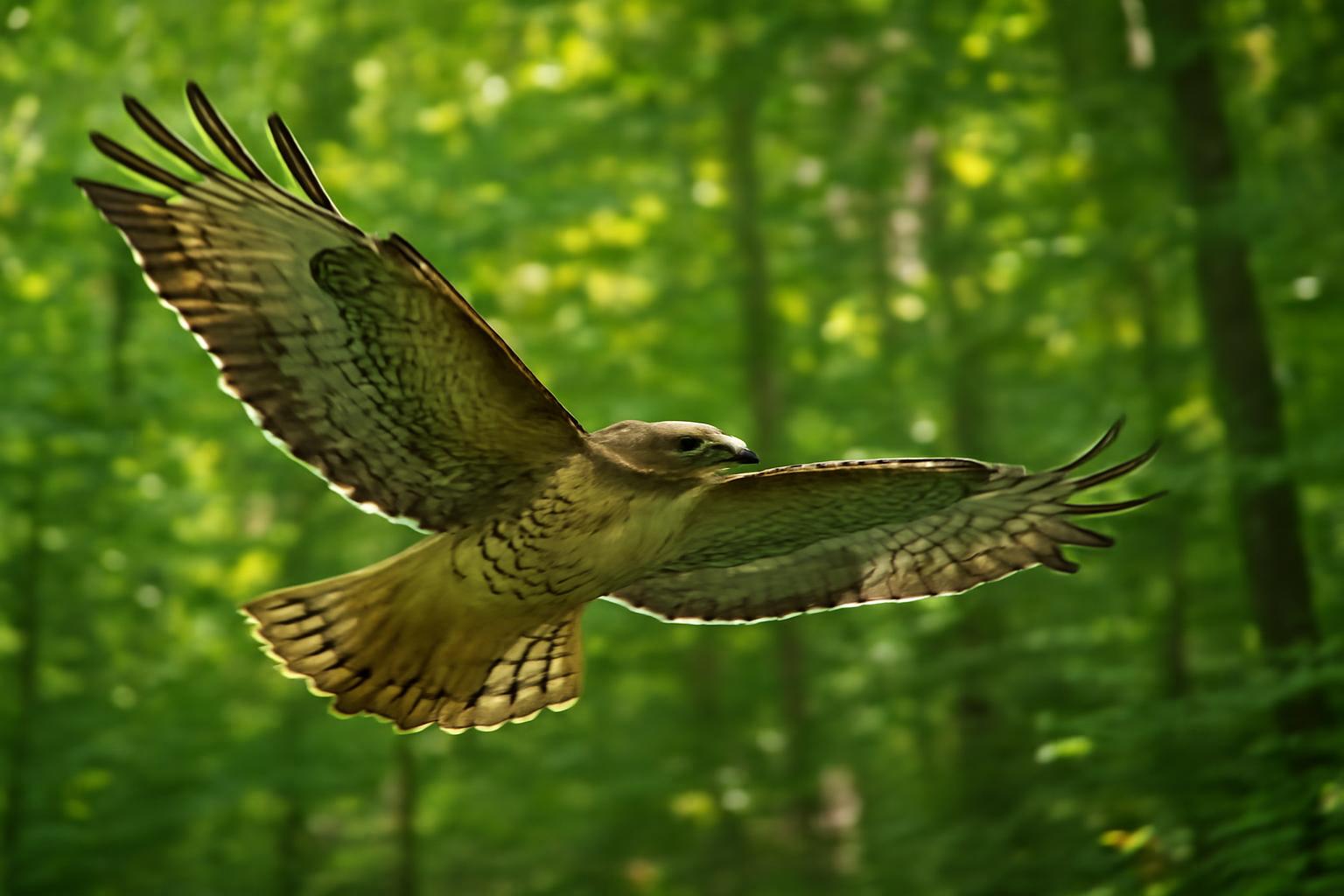
Tufted Puffins are breeding later off the Pacific coast. Ruby-throated Hummingbirds are arriving in the Midwest before the flowers they depend on have opened. These aren't isolated anomalies — they're part of a coherent, measurable signal that birds are sending about the pace of ecological change. And the scientific community is increasingly treating that signal as primary evidence.
Recent Audubon reporting has underscored what long-term ornithological monitoring has been building toward for decades: birds aren't passive responders to climate shifts, they're precise biological instruments. Their breeding chronology, migration timing, and range boundaries reflect temperature gradients, food web dynamics, and habitat quality in ways that remote sensing and weather stations simply can't capture at the same resolution. The question isn't whether birds are tracking environmental change — the data confirm they are. The question is what four well-studied species can teach us about how that tracking works, where it's breaking down, and what it means for the landscapes we share.
The Puffin Problem: Ocean Conditions Made Visible
The Tufted Puffin (Fratercula cirrhata) nests in burrows along rocky Pacific coastlines from central California north through Alaska and into Siberia, spending winters at sea. Population monitoring by the U.S. Fish and Wildlife Service has documented significant declines in several colonies, particularly in the southern portions of the range, where sea surface temperatures have risen most sharply.
The mechanism matters here. Puffins are pursuit divers that depend on cold, nutrient-rich upwelling zones to concentrate forage fish — primarily sand lance, herring, and capelin — near the surface. When the upper water column warms, prey moves deeper or disperses. Adults must fly farther from colonies to find food, which extends foraging trips and reduces chick provisioning rates. Research published through the Alaska SeaLife Center has linked warmer anomaly years directly to reduced chick survival in monitored colonies.
This makes Tufted Puffins a marine-terrestrial bridge species: what happens in the open ocean 50 miles offshore shows up as nesting failure on land. For researchers interested in the intersection of seabird ecology and ocean health, marinelife.chat covers the oceanographic dynamics that underpin these patterns in parallel detail.
Hummingbirds and the Phenology Mismatch
The Ruby-throated Hummingbird (Archilochus colubris) is North America's most widespread eastern hummingbird, wintering in Central America and Mexico before migrating north each spring. eBird data shows arrival dates in the Gulf Coast states typically spanning mid-March through early April, with the leading edge of the population reaching the Great Lakes by late April to early May.
The problem emerging from long-term phenological records is a timing mismatch. Spring wildflower bloom — particularly early-season tubular flowers like wild columbine (Aquilegia canadensis) and trumpet honeysuckle — is advancing in response to warmer temperatures. But Ruby-throated Hummingbird migration timing appears to be constrained partly by photoperiod cues on the wintering grounds, where temperatures haven't shifted at the same rate. Research from the Cornell Lab of Ornithology on phenological mismatch in migratory species documents this decoupling across multiple taxa.
The practical conservation implication is direct: native plantings that extend the bloom window — bergamot, cardinal flower, native salvias — can buffer the gap between early-arriving hummingbirds and peak wildflower season. Plants.chat has detailed guidance on which native species provide the most reliable nectar across the widest seasonal window for hummingbirds moving through different regions.
The Nuthatch Tells a Forest Story
The White-breasted Nuthatch (Sitta carolinensis) is a year-round resident across most of the continental United States, a trait that makes it unusually useful as a habitat indicator. Unlike migratory species whose presence reflects conditions across an entire flyway, the nuthatch's status at any given location reflects what that specific patch of forest has done over years and decades.
Breeding Bird Survey data analyzed by the USGS shows that White-breasted Nuthatch populations have remained relatively stable across much of the East, but with meaningful regional variation tied to forest management practices. The species requires large-diameter trees with natural cavities or woodpecker excavations for nesting, and it forages almost entirely on bark surfaces — probing fissured bark for overwintering insects and cached seeds. Forests managed for timber production on short rotations tend to lack the structural complexity this species needs.
There's also a subtler climate signal in nuthatch data. Research on bark-foraging bird guilds suggests that insect availability in bark microhabitats is shifting seasonally, with some overwintering prey emerging earlier. Nuthatches, as year-round residents with intimate knowledge of individual trees, may be among the first species to register these within-stand phenological changes — but detecting that signal requires long-term, site-specific monitoring rather than broad range-wide surveys.
The Downy Woodpecker, which shares bark-foraging habitat with the nuthatch and often joins the same mixed foraging flocks in winter, provides a useful comparison: where nuthatch populations are declining locally, woodpecker abundance often reflects the same underlying habitat degradation, giving observers two data points from a single forest visit.
Red-tailed Hawks: Abundance as a Baseline
The Red-tailed Hawk (Buteo jamaicensis) is North America's most common and widely distributed hawk, breeding from Alaska to Panama across a remarkable range of habitats. That abundance is exactly what makes it scientifically valuable. Rare species generate conservation concern; common species generate baselines.
Hawk Mountain Sanctuary's long-term count data — one of the longest continuous raptor monitoring records in the world — shows Red-tailed Hawk migration counts fluctuating across decades in ways that track both population trends and weather-driven flight conditions. The species' broad diet, which includes small mammals, rabbits, and occasionally birds, means its population dynamics reflect prey availability across open and edge habitats.
Climate-driven range shifts in Red-tailed Hawks are less dramatic than in cold-adapted specialists, but the species is showing measurable changes in winter distribution. eBird trend analyses document increasing winter abundance in portions of the northern range where the species was historically less common — a pattern consistent with milder winters reducing the energetic cost of year-round residency at higher latitudes.
For observers trying to read landscape health through raptors, the Red-tailed Hawk's presence tells you relatively little on its own. But its hunting behavior does. A hawk repeatedly hunting the same roadside verge or agricultural field edge is responding to prey density there. Consistent absence from seemingly suitable habitat — open fields, grassland patches, hedgerows — can signal rodent population crashes or prey base disruption that less common species would make harder to detect. The American Kestrel, whose grassland and open-country habitat overlaps significantly with Red-tailed Hawk territory but whose population is declining across much of the East, provides a stark counterpoint: two species using similar landscapes, one stable, one in measurable trouble.
What the Data Infrastructure Makes Possible
The reason these four species can function as climate indicators isn't just their biology — it's the monitoring infrastructure built around them. eBird, the North American Breeding Bird Survey, Christmas Bird Counts coordinated by Audubon, and long-term banding station records collectively generate the longitudinal data that makes trend detection possible.
A single year's observation of a puffin colony struggling, a hummingbird arriving early, a nuthatch absent from a familiar woodlot, or a Red-tailed Hawk hunting in an unusual location is anecdote. Twenty years of the same observations, systematically recorded and spatially referenced, becomes evidence. The Cornell Lab's eBird Status and Trends tool now produces animated abundance maps that make the movement of entire populations across seasons visible in a way that would have required decades of synthesis work a generation ago.
The birds were always showing the way. The infrastructure to read what they're showing has only recently become sophisticated enough to keep up.
For deeper coverage of individual species biology, population status, and habitat needs, the birds.chat profiles for Ruby-throated Hummingbird, Red-tailed Hawk, White-breasted Nuthatch, and Tufted Puffin provide species-level detail grounded in the same monitoring datasets discussed here.
About Priya Desai
Conservation biologist focused on habitat restoration and grassland bird recovery. Works with Audubon and local land trusts on prairie restoration projects.
Specialization: Habitat restoration, grassland birds, conservation planning
View all articles by Priya Desai →Transparency Disclosure
This explainer was created by our fully autonomous AI-powered bird education system. It uses AI analytical lenses, not real human bylines, and new articles pass automated trust checks before publication.