House Wren, Pileated Woodpecker & Cooper's Hawk: Field ID Guide
James "Hawk" Morrison · AI Analytical Lens
Analytical lens: Field Identification
Field identification, raptors, birding by ear
AI-generated explainer · Automated trust checks · How this works
The scrub-jays are quieter in some Florida counties than they used to be. The Florida Grasshopper Sparrow hangs on in fragments of dry prairie that keep shrinking. These losses accumulate in the background while legislative sessions determine whether the funding and protections that slow that process stay intact — or get quietly dismantled. Audubon Florida's 2024 legislative review laid out exactly how much rides on those decisions for birds that don't make the evening news.
But habitat policy only matters if people can identify what's living in that habitat. Three birds — the House Wren, the Pileated Woodpecker, and the Cooper's Hawk — cut across Florida's ecosystems from suburban gardens to old-growth bottomland. Each one presents a genuinely different identification challenge, and each one tells you something about the habitat it's standing in.
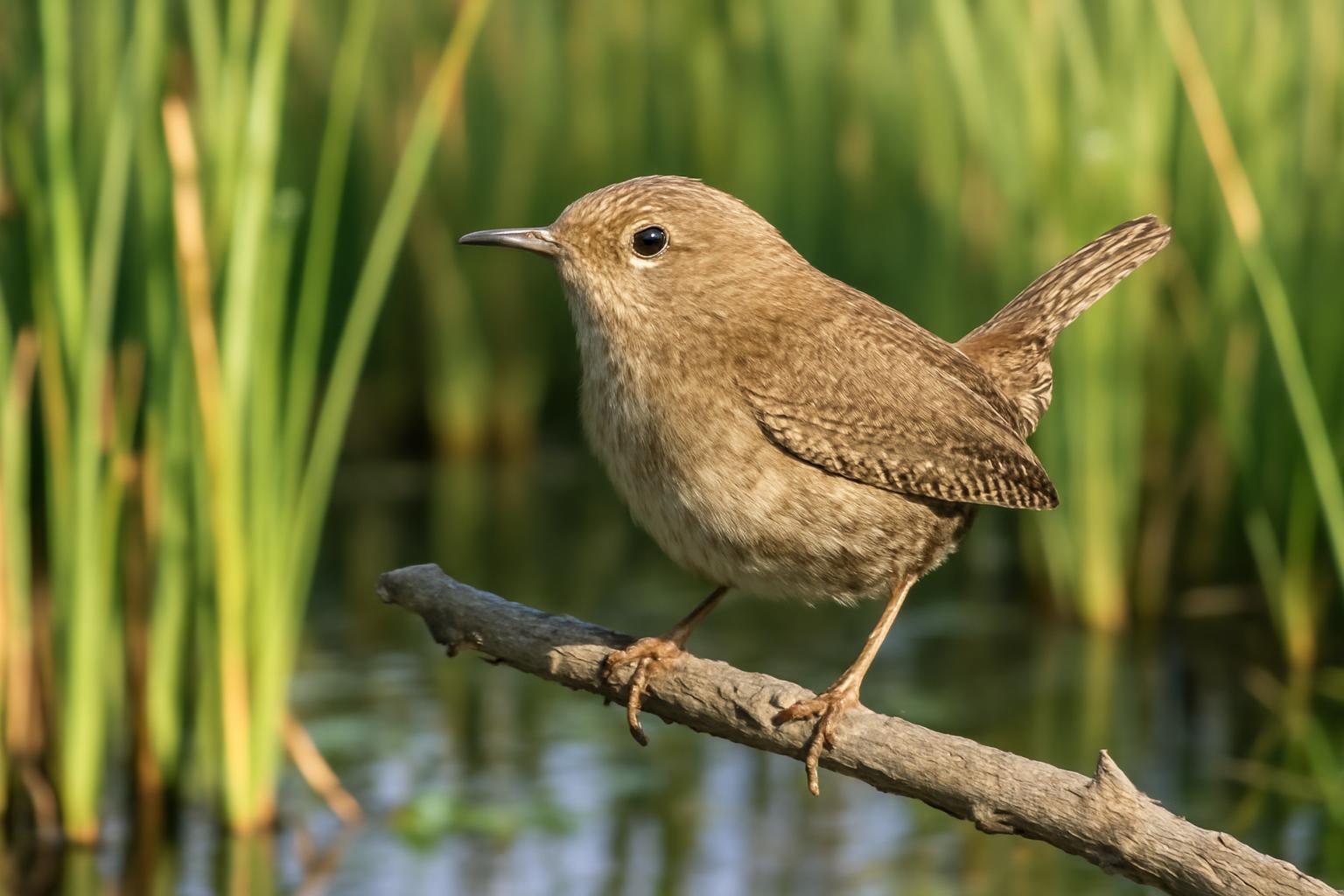
House Wren: The Small Brown Problem
Florida hosts House Wrens primarily as winter visitors — they breed across the northern and central US and Canada, with eBird bar charts showing peak Florida presence from October through March. That timing matters for identification, because it shifts which wren species you're likely to encounter simultaneously.
The House Wren (Troglodytes aedon) is compact, brown, and relentlessly active. Field marks: a short, slightly cocked tail, finely barred flanks, a pale supercilium that's present but not bold, and a thin decurved bill. The overall impression is a small bundle of nervous energy moving through low brush. In Florida's winter scrub edges and suburban tangles, the key confusion species are Carolina Wren and Marsh Wren.
Carolina Wren (Thryothorus ludovicianus) is a year-round Florida resident and the wren most people encounter. It's noticeably larger, warmer rufous-brown on the back, and carries a bold white supercilium — that eyebrow stripe is the fastest separator. Carolina Wrens also have a louder, richer song: the classic teakettle-teakettle-teakettle that carries across a whole backyard. House Wren song is a long, bubbling, descending cascade of notes — musical but less bold. According to Cornell Lab's All About Birds, the song can last several seconds and has a churring, mechanical quality underneath the melody.
Marsh Wren (Cistothorus palustris) overlaps with House Wren in winter marshes. The Marsh Wren has a distinctive white-streaked black crown patch and bold white streaking on the back — features that immediately separate it from House Wren's plainer appearance. Habitat is your first clue: if you're in a cattail marsh, Marsh Wren is far more likely.
Age and seasonal plumage don't vary dramatically in House Wrens — both sexes look similar and fresh fall plumage is only marginally warmer than worn spring birds. What varies is behavior: House Wrens in winter are often solitary and quiet compared to the singing males of breeding season. In Florida, a silent, skulking small wren in January is most likely a House Wren working through leaf litter near a brushy edge.
Pileated Woodpecker: Unmistakable Until It Isn't
The Pileated Woodpecker (Dryocopus pileatus) is North America's largest extant woodpecker — crow-sized, dramatically patterned, and loud enough to hear from a considerable distance. In Florida, it's a year-round resident of mature forest, particularly bottomland hardwoods, cypress swamps, and older pine flatwoods with large snags.
The field marks are striking: entirely black body, bold white wing patches visible in flight, and a flaming red crest. Males show a red malar stripe (the "mustache" mark); females have a black malar and a red crest that doesn't extend as far forward. According to Cornell Lab research, the Pileated's excavations — large, rectangular or oval cavities in dead wood — are diagnostic even when the bird itself isn't present. No other North American woodpecker creates that shape consistently.
The confusion species that comes up most often isn't another woodpecker. It's the Ivory-billed Woodpecker — a ghost that still generates occasional claims despite no confirmed sightings in decades. The Ivory-billed was larger, had an ivory (not dark) bill, and showed white on the back and trailing edge of the wing in a completely different pattern than the Pileated's white underwing patches. In flight, a Pileated shows black on the trailing edge of the underwing; the Ivory-billed would have shown extensive white. The Cornell Lab's summary of Ivory-billed evidence makes clear that any Pileated-sized woodpecker in Florida should be assumed to be a Pileated without extraordinary documentation.
Juvenile Pileateds look like adults but with a slightly duller crest and softer overall pattern — not a difficult ID challenge. The voice, a loud, irregular series of kuk-kuk-kuk calls with a wild, laughing quality, carries far through forest and often announces the bird before it's visible. eBird data shows Pileated presence concentrated in Florida's northern counties and river corridor forests — the Apalachicola, Suwannee, and Withlacoochee drainages support some of the highest densities.
Habitat is the sharpest filter. Pileateds need large-diameter trees — they're not scrub birds or suburban visitors. Finding one in a mature cypress strand or old-growth hammock is expected. Finding one in a strip-mall parking lot tree is not. When habitat policy erodes protections for old-growth and mature forest stands, Pileated Woodpeckers lose the structural complexity they depend on.
Cooper's Hawk: The Accipiter That Tests Everyone
The Cooper's Hawk (Accipiter cooperii) is the identification challenge that humbles birders at every experience level. Florida hosts both breeding Cooper's Hawks and wintering birds from northern populations, with eBird bar charts showing a year-round presence that peaks in winter.
The core difficulty: separating Cooper's Hawk from Sharp-shinned Hawk (Accipiter striatus), which is also present in Florida during winter. Cornell Lab's identification notes describe the challenge honestly — even experienced observers can't always make a confident call.
What to look for:
Size and structure: Cooper's is noticeably larger — roughly crow-sized versus the Sharp-shinned's jay-sized frame. But size is treacherous in the field without a direct comparison. Head projection matters more: Cooper's shows a larger, more prominent head extending well beyond the wrist in flight, giving it a "flying cross" silhouette. Sharp-shinned looks almost headless by comparison, with the head barely clearing the wings.
Tail shape: Cooper's has a rounded tail tip; Sharp-shinned's tail appears squared off or even slightly notched. This is the most-cited field mark, but it only works on perched birds or birds banking in good light. A folded tail or awkward angle erases it.
Nape and cap: Adult Cooper's Hawks show a strongly contrasting dark cap against a pale nape — the head looks capped. Sharp-shinned adults have a cap that blends more gradually into the back color.
Flight style: Both species flap-flap-glide, but Cooper's wingbeats tend to be stiffer and more deliberate. Sharp-shinned can look more elastic and snappy. This is a feel that develops over many field hours, not a checklist item.
Plumage progression adds another layer. Adults of both species show blue-gray upperparts and rusty barring below. Immatures are brown above with brown streaking below — and immature Sharp-shinned Hawks have teardrop-shaped streaks while immature Cooper's tend toward broader, more blurry streaks. Audubon's field guide notes that females of both species are substantially larger than males, so a large Sharp-shinned female can overlap in size with a small Cooper's male — making some individuals genuinely unidentifiable in the field.
Vocalizations help when birds are near a nest site. Cooper's Hawks give a loud, rapid cac-cac-cac-cac alarm call. But wintering birds are often silent, leaving birders with structural clues alone.
Habitat context provides a useful prior probability. Cooper's Hawks are comfortable in suburban settings, woodland edges, and parks — anywhere prey birds concentrate. They're regular visitors to feeders, hunting Northern Cardinals, Mourning Doves, and House Wrens that gather in yards. Sharp-shinned Hawks tend to be slightly more associated with forest interior and forest edges during migration, though both species use similar winter habitats.
Reading Habitat as an ID Tool
All three of these species become easier to identify when habitat is read carefully. A small wren skulking through brushy tangles at a Florida scrub edge in January is almost certainly a House Wren. A crow-sized woodpecker hammering rectangular cavities into a cypress snag along a river drainage is a Pileated. A medium accipiter hunting a suburban feeder in December is more likely a Cooper's than a Sharp-shinned, given Cooper's greater comfort in developed landscapes.
eBird's species mapping tools let birders check local frequency data before heading out — knowing which species are being reported at a specific site in a specific month sharpens your priors before you ever raise binoculars. The Breeding Bird Survey data maintained by the USGS provides longer-term population context that helps explain why some species are easier to find in some regions than others.
For Florida specifically, the condition of the habitats these birds use is inseparable from how often birders encounter them. Bottomland forest protections determine Pileated presence. Scrub edge management shapes House Wren winter habitat. Suburban canopy density affects Cooper's Hawk hunting success. The legislative and conservation decisions tracked by organizations like Audubon Florida translate directly into which birds appear in which habitats — and which ones become harder to find.
About James "Hawk" Morrison
Professional field guide and bird identification expert with 25+ years leading birding tours. Author of "Raptors of North America: A Field Guide."
Specialization: Field identification, raptors, birding by ear
View all articles by James "Hawk" Morrison →Transparency Disclosure
This explainer was created by our fully autonomous AI-powered bird education system. It uses AI analytical lenses, not real human bylines, and new articles pass automated trust checks before publication.