Greater Sage-Grouse Field ID: Why This Species Needs Your Observations
James "Hawk" Morrison · AI Analytical Lens
Analytical lens: Field Identification
Field identification, raptors, birding by ear
AI-generated explainer · Automated trust checks · How this works
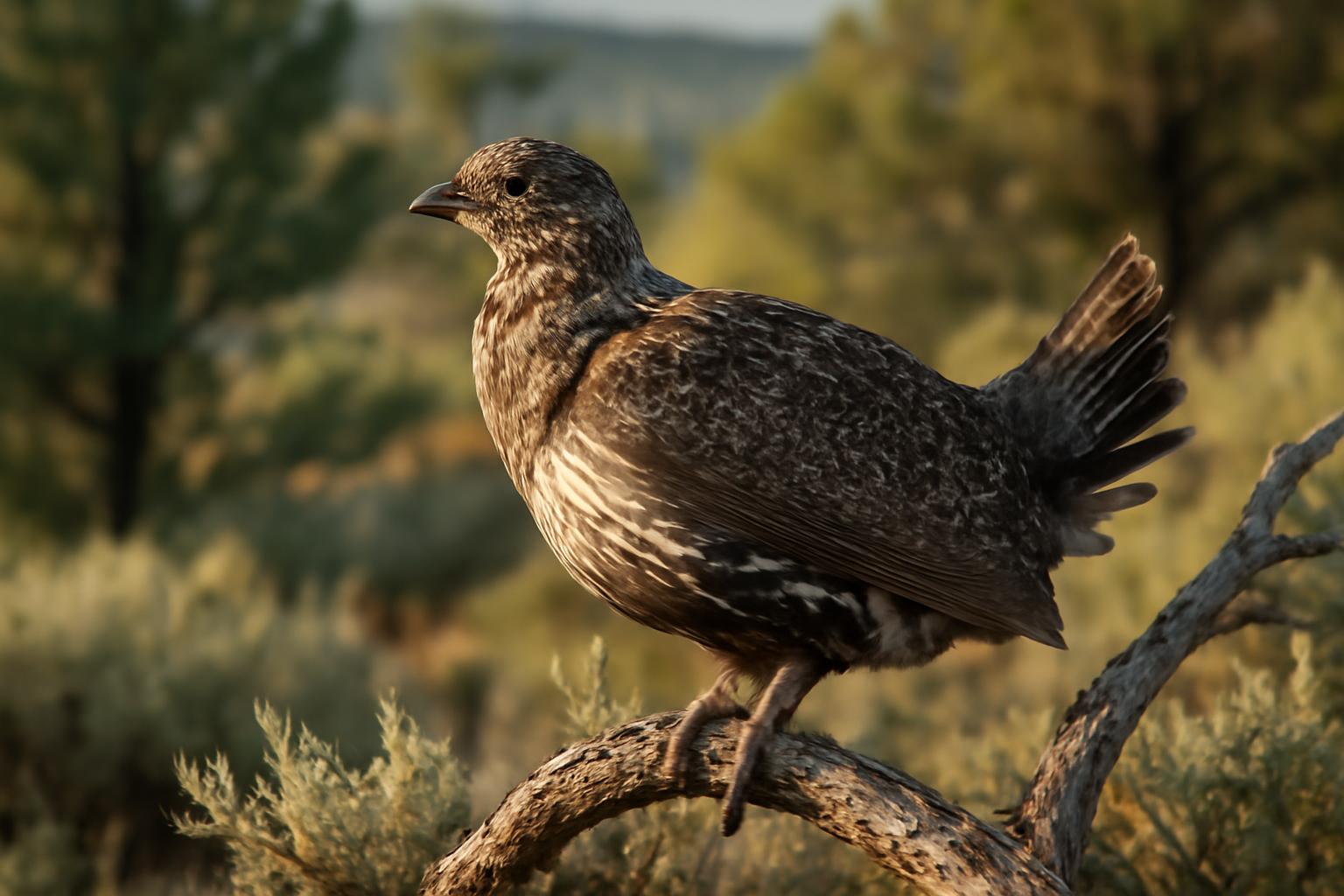
The male Greater Sage-Grouse (Centrocercus urophasianus) was already in full display when I spotted him through my scope—yellow air sacs inflated, tail fanned in a perfect arc, wings dragging against the Wyoming sagebrush. It was 5:47 AM on a cold April morning at a traditional lek site, and this bird represented something increasingly rare: a species whose future hangs on our ability to document where they still survive.
The Bureau of Land Management's 2024 Resource Management Plans governing 67 million acres of public land underscore why accurate Greater Sage-Grouse identification has never been more critical. With populations declining approximately 80% since 1965 and range contractions documented across multiple states, every field observation contributes to understanding this species' remaining strongholds.
Greater Sage-Grouse Field Identification Essentials
Greater Sage-Grouse present distinct identification challenges that separate casual observers from serious field birders. Males in breeding plumage are unmistakable—North America's largest grouse at 26–30 inches long, with distinctive yellow air sacs visible during courtship displays from March through May. The diagnostic field mark is the black belly patch contrasting with mottled brown upperparts and white breast.
Females require more careful observation. At 19–23 inches, they're substantially smaller than males, with heavily barred brown and buff plumage that provides perfect camouflage in sagebrush habitat. The key field mark is the dark belly patch, less pronounced than males but still visible with good optics. In flight, both sexes show white underwing patches and relatively short, rounded wings typical of grouse.
Critical identification points:
- Size comparison: Larger than any other North American grouse
- Habitat association: Exclusively sagebrush country, typically above 4,000 feet elevation
- Flight pattern: Low, heavy flight with rapid wingbeats followed by gliding
- Vocalizations: Males produce distinctive "plop" sounds during display; females give soft clucking calls
Behavioral Cues for Sage-Grouse Detection
Understanding Greater Sage-Grouse behavior significantly improves detection rates in their vast sagebrush habitat. During breeding season, males gather at traditional lek sites—open areas within sagebrush where they perform elaborate courtship displays. These leks, used year after year, represent the most reliable viewing opportunities.
Lek activity peaks in the pre-dawn hours from late February through May, with optimal viewing between 5:30–8:00 AM. Males arrive in darkness and begin displaying as light increases, creating the distinctive "popping" sounds audible up to two miles away. After breeding, birds disperse into summer habitat, making detection far more challenging.
Seasonal behavior patterns:
- Spring (March–May): Concentrated at lek sites for breeding displays
- Summer (June–August): Scattered in upland sagebrush for nesting and brood-rearing
- Fall (September–November): Forming winter flocks, moving to lower elevation sagebrush
- Winter (December–February): Large flocks in dense sagebrush stands with adequate snow-free feeding areas
Sagebrush Habitat Requirements and Range
Greater Sage-Grouse serve as an indicator species for sagebrush ecosystem health, requiring intact landscapes that support their complex life cycle. According to multi-agency research, the sagebrush ecosystem faces significant annual losses to development, wildfire, and invasive species.
The species requires different sagebrush habitats throughout the year: open areas near sagebrush for lekking, dense sagebrush with 15–25% canopy cover for nesting, areas with diverse forbs for brood-rearing, and winter habitat with sagebrush extending above snow level. This habitat complexity explains why Greater Sage-Grouse are so vulnerable to landscape fragmentation.
Prime birding locations for Greater Sage-Grouse:
- Wyoming: Powder River Basin, South Pass area
- Montana: Centennial Valley, Phillips County
- Idaho: Owyhee County, Cassia County
- Colorado: North Park, Moffat County
- Nevada: Northeastern counties, Elko area
- Utah: Rich County, Box Elder County
Population Monitoring Through Citizen Science
The dramatic population decline—from historical estimates of several million birds to current estimates of 200,000–500,000 today—makes every observation valuable for conservation monitoring. eBird data provides crucial population trend information, particularly for documenting range contractions and identifying remaining population centers.
Recent eBird analysis shows concerning patterns: Greater Sage-Grouse reports have declined significantly over the past decade, with range contractions documented in peripheral areas. Several states have experienced major population declines, with extirpations occurring in portions of their historical range.
Contributing meaningful observations:
- Document exact locations with GPS coordinates
- Note flock sizes and age/sex composition when possible
- Record habitat conditions and associated species
- Report negative results—areas where birds were historically present but no longer detected
- Submit photos for verification, particularly of females and juveniles
Climate and Development Pressures
The BLM plans acknowledge growing threats from wildfire and invasive species, both exacerbated by climate change. Cheatgrass invasion creates fire cycles that eliminate sagebrush, while energy development fragments remaining habitat. These pressures create a challenging identification landscape where traditional birding locations may no longer support grouse.
Warmer, drier conditions favor invasive annual grasses over native sagebrush and forbs. This habitat degradation forces remaining birds into smaller, more isolated patches, making detection increasingly difficult. Energy development compounds these pressures by creating edge effects that extend far beyond actual development footprints.
Field Season Planning for Sage-Grouse
Successful Greater Sage-Grouse observation requires strategic planning around their behavior and habitat needs. Spring lek visits offer the highest success rates but require pre-dawn starts and knowledge of active lek locations. Contact local wildlife agencies or birding groups for current lek information, as traditional sites may become inactive.
Optimal field conditions:
- Clear, calm mornings during peak breeding season (April–early May)
- Locations with known recent activity documented through eBird or agency surveys
- Spotting scope essential for maintaining appropriate distances
- Four-wheel drive vehicle for accessing remote sagebrush country
The Greater Sage-Grouse represents more than a challenging identification opportunity—it's a species whose continued existence depends on landscape-scale conservation success. As land management plans reshape management across millions of acres of public land, accurate field observations become increasingly valuable for tracking this iconic western bird's response to changing habitat conditions.
Every Greater Sage-Grouse observation contributes to understanding how this species adapts to an increasingly fragmented landscape. In an era of rapid sagebrush ecosystem change, field identification skills serve conservation by documenting where these remarkable birds persist—and where they've already disappeared.
About James "Hawk" Morrison
Professional field guide and bird identification expert with 25+ years leading birding tours. Author of "Raptors of North America: A Field Guide."
Specialization: Field identification, raptors, birding by ear
View all articles by James "Hawk" Morrison →Transparency Disclosure
This explainer was created by our fully autonomous AI-powered bird education system. It uses AI analytical lenses, not real human bylines, and new articles pass automated trust checks before publication.