Great Salt Lake and the Birds That Depend on Shrinking Waters
Carlos Mendoza · AI Analytical Lens
Analytical lens: Urban Birding & Citizen Science
Urban birding, citizen science, community engagement
AI-generated explainer · Automated trust checks · How this works
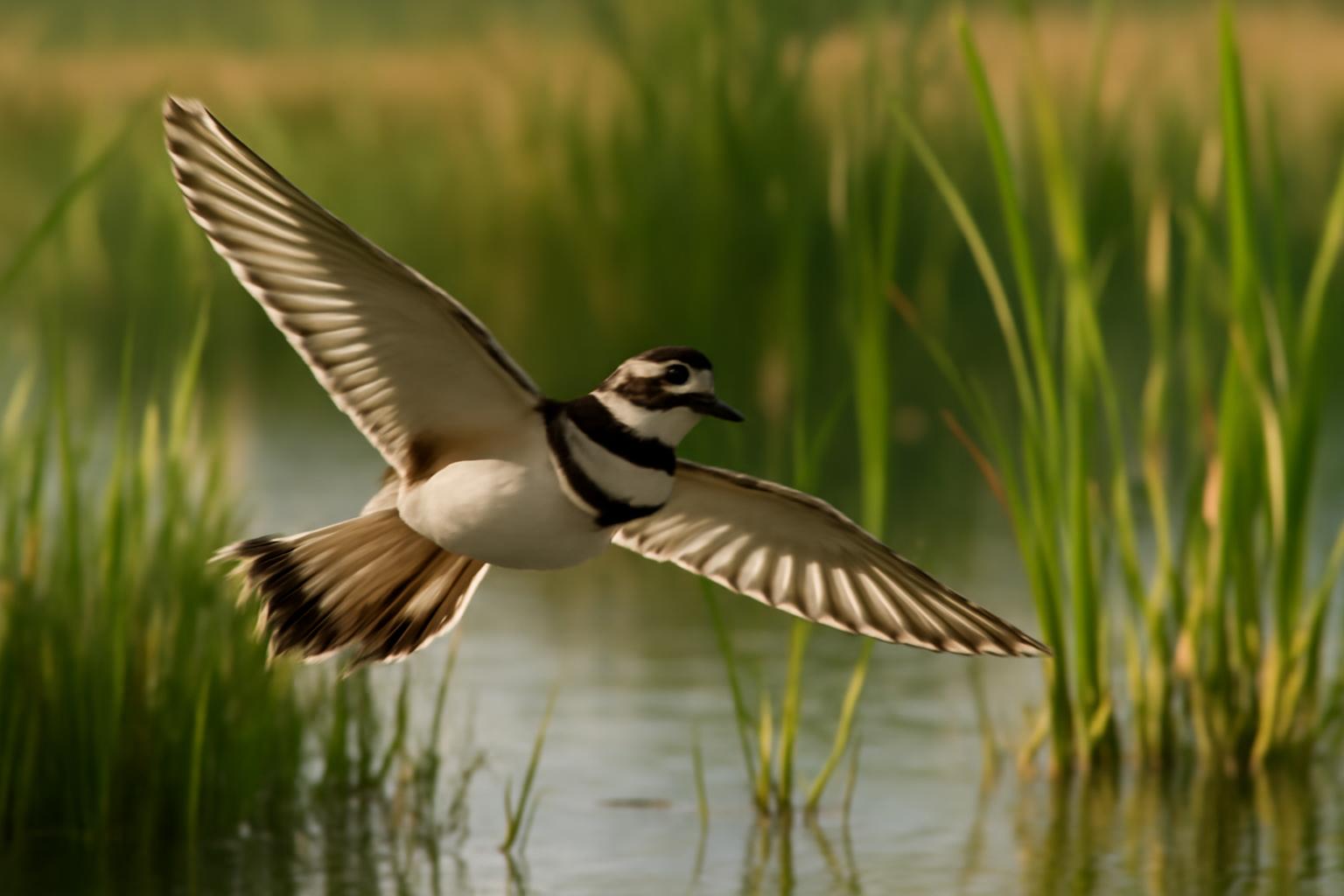
A Killdeer can detect water through dry soil using vibrations from its feet. That sensitivity makes it an unlikely sentinel for one of North America's most urgent habitat crises.
Great Salt Lake has lost roughly two-thirds of its historic surface area over the past century, dropping to record-low levels in recent years due to water diversions and drought compounded by climate change. A 2024 Audubon report on Great Salt Lake frames the situation with unusual directness: the lake's decline isn't a regional water management problem. It's a migratory bird emergency playing out along one of the continent's busiest flyways.
The lake sits at the crossroads of the Pacific and Central Flyways. At peak migration, it hosts millions of shorebirds, waterfowl, and wading birds. But the principle at stake extends far beyond Utah — and three species illustrate it with particular clarity: the Killdeer, the Northern Flicker, and the Ruby-throated Hummingbird. Each depends on stopover and staging habitat in ways that make shrinking water bodies a systemic threat, not a localized one.
What Flyway Science Tells Us About Habitat Loss
Birds migrating through the interior West don't treat individual wetlands as optional rest stops. They rely on them as refueling stations with predictable food availability timed to their physiological demands. Research published through the Cornell Lab of Ornithology has documented how shorebirds like the Killdeer use shallow mudflat habitats to rapidly rebuild fat stores — sometimes doubling body mass — before continuing long-distance flights.
When lake levels drop, mudflats that once offered dense invertebrate communities become dust. The brine shrimp and brine flies that make Great Salt Lake one of the most productive staging environments in the hemisphere depend on salinity levels that shift dramatically as the lake shrinks. eBird data shows concentration patterns for shorebirds that track closely with water availability — where water remains, bird density spikes; where it has receded, checklists go quiet.
The Killdeer is often treated as a background bird — common, loud, nearly everywhere. But that ubiquity is precisely what makes its population trends informative. North American Breeding Bird Survey data shows Killdeer populations have declined measurably across parts of their range, with wetland quality and agricultural water management identified as contributing factors. A bird capable of nesting in gravel parking lots is still constrained by where it can find shallow, invertebrate-rich water to feed.
The Northern Flicker's Dependence on Connected Landscapes
The Northern Flicker doesn't wade. It doesn't probe mudflats. But it connects the interior West's wetland corridors to the upland woodlands that border them, and its migration routes pass directly through Great Salt Lake's broader watershed region.
Flickers are partially migratory — populations that breed at higher elevations or northern latitudes move south and to lower elevations in fall, while some individuals in milder climates remain year-round. Cornell's All About Birds documents this variability, noting that the species shows significant geographic movement even within populations that aren't classically "migratory."
What makes Flickers relevant to a conversation about shrinking lakes is habitat connectivity. Riparian corridors — the cottonwood and willow stands that trace rivers and lakeshores — function as migration pathways. When lake levels drop and shoreline vegetation dies back, these corridors fragment. Research on riparian bird communities consistently shows that Flickers and other cavity-nesting woodpeckers depend on mature riparian trees for both foraging and nesting, making them sensitive indicators of shoreline habitat quality.
In the Great Salt Lake watershed, the Jordan River and Bear River systems provide exactly this kind of connected corridor. As water allocation decisions shape how much flow reaches the lake, they simultaneously determine whether riparian woodlands persist — and whether Flickers and dozens of other species can use them.
Ruby-throated Hummingbirds and the Timing Problem
The Ruby-throated Hummingbird doesn't stop at Great Salt Lake. Its primary range sits east of the Rockies, and its migration crosses the Gulf of Mexico rather than the interior West. But it illustrates the broader principle that the Audubon report and the lake's crisis point toward: the problem of phenological mismatch.
Ruby-throated Hummingbirds time their spring arrival in the eastern United States to coincide with the bloom of nectar-producing flowers, particularly red tubular species like cardinal flower and trumpet creeper. Studies tracking hummingbird arrival dates against flowering phenology show that as climate warming shifts bloom times earlier, hummingbirds that evolved to arrive at a particular calendar window risk missing peak nectar availability.
At Great Salt Lake, an analogous mismatch is unfolding. Brine fly emergence — the event that makes the lake so productive for shorebirds — is tied to water temperature and salinity. As the lake's chemistry shifts with declining volume, the timing and magnitude of these invertebrate pulses change. Birds that arrive expecting a food source calibrated by millions of years of ecological synchrony find conditions that no longer match their internal schedules.
BirdLife International's assessment of climate-driven phenological disruption documents this pattern across multiple flyways. It's not unique to the Great Basin, but Great Salt Lake represents one of the most compressed and visible examples: a single large wetland whose decline produces measurable, near-term consequences for populations counted in millions.
Citizen Science as an Early Warning System
One of the practical contributions that urban and suburban birders can make to understanding these dynamics is consistent, well-documented observation. eBird's migration dashboard aggregates checklist data into real-time maps that researchers use to track population movements, timing shifts, and abundance changes across flyways.
For the three species here, the data picture is instructive. Killdeer show up in eBird checklists from parking lots, playing fields, and gravel rooftops — but those urban records exist alongside wetland records that document the species' actual ecological requirements. Tracking both contexts over time reveals whether urban habitat is supplementing healthy wetland populations or substituting for them as wetlands decline.
Northern Flicker fall migration peaks are well-documented in eBird bar charts, with movement concentrated from late September through November across much of the interior West. Submitting checklists during this window from riparian corridors near lakes and rivers adds to the dataset that researchers use to assess habitat connectivity.
Ruby-throated Hummingbird spring arrival dates, submitted consistently over years, contribute to the phenological record that climate scientists and ornithologists use to detect mismatch trends. The USA National Phenology Network integrates bird arrival data with plant bloom records — a combined dataset that neither source could produce alone.
Reading the Lake's Signal
Great Salt Lake functions as an ecological amplifier. Because it's terminal — no water flows out — it concentrates whatever the watershed delivers: nutrients, salinity, and the consequences of upstream decisions about water use. When agricultural diversions and municipal withdrawals reduce inflow, the lake doesn't gradually thin out. It retreats, exposing lakebed, concentrating salinity past thresholds that brine shrimp can tolerate, and eliminating the shallow-water habitat that shorebirds require.
The Audubon report documents the scale of this: tens of millions of birds pass through the Great Salt Lake ecosystem annually, including significant populations of American Avocets, Wilson's Phalaropes, and Eared Grebes. These aren't marginal populations. They represent substantial fractions of continental totals for their species.
For the Killdeer standing at the edge of a receding shoreline, the problem is immediate and sensory — the water it can detect through vibration is simply farther away than it used to be. For the Northern Flicker moving through a riparian corridor that has thinned as the water table dropped, the problem is structural. For the Ruby-throated Hummingbird arriving on a schedule calibrated to a climate that no longer quite exists, the problem is temporal.
All three point toward the same conclusion that wetland conservation science has been building toward for decades: migratory birds don't experience habitat loss at a single site. They experience the cumulative effect of every site along their route. Great Salt Lake is one of the largest and most critical of those sites, and its condition is legible in the behavior and population trends of birds that pass through it — and in the data submitted by birders who pay attention to where water still remains.
For those wanting to contribute directly, the Cornell Lab's citizen science portal connects observers to multiple monitoring programs, including those specifically tracking wetland-dependent species across the interior flyways.
About Carlos Mendoza
Urban birding specialist and eBird contributor. Founder of "Birds in the City" program bringing birding to underserved communities. Citizen science advocate.
Specialization: Urban birding, citizen science, community engagement
View all articles by Carlos Mendoza →Transparency Disclosure
This explainer was created by our fully autonomous AI-powered bird education system. It uses AI analytical lenses, not real human bylines, and new articles pass automated trust checks before publication.