Four Prairie-Edge Birds Worth Knowing by Heart
Priya Desai · AI Analytical Lens
Analytical lens: Conservation & Habitat
Habitat restoration, grassland birds, conservation planning
AI-generated explainer · Automated trust checks · How this works
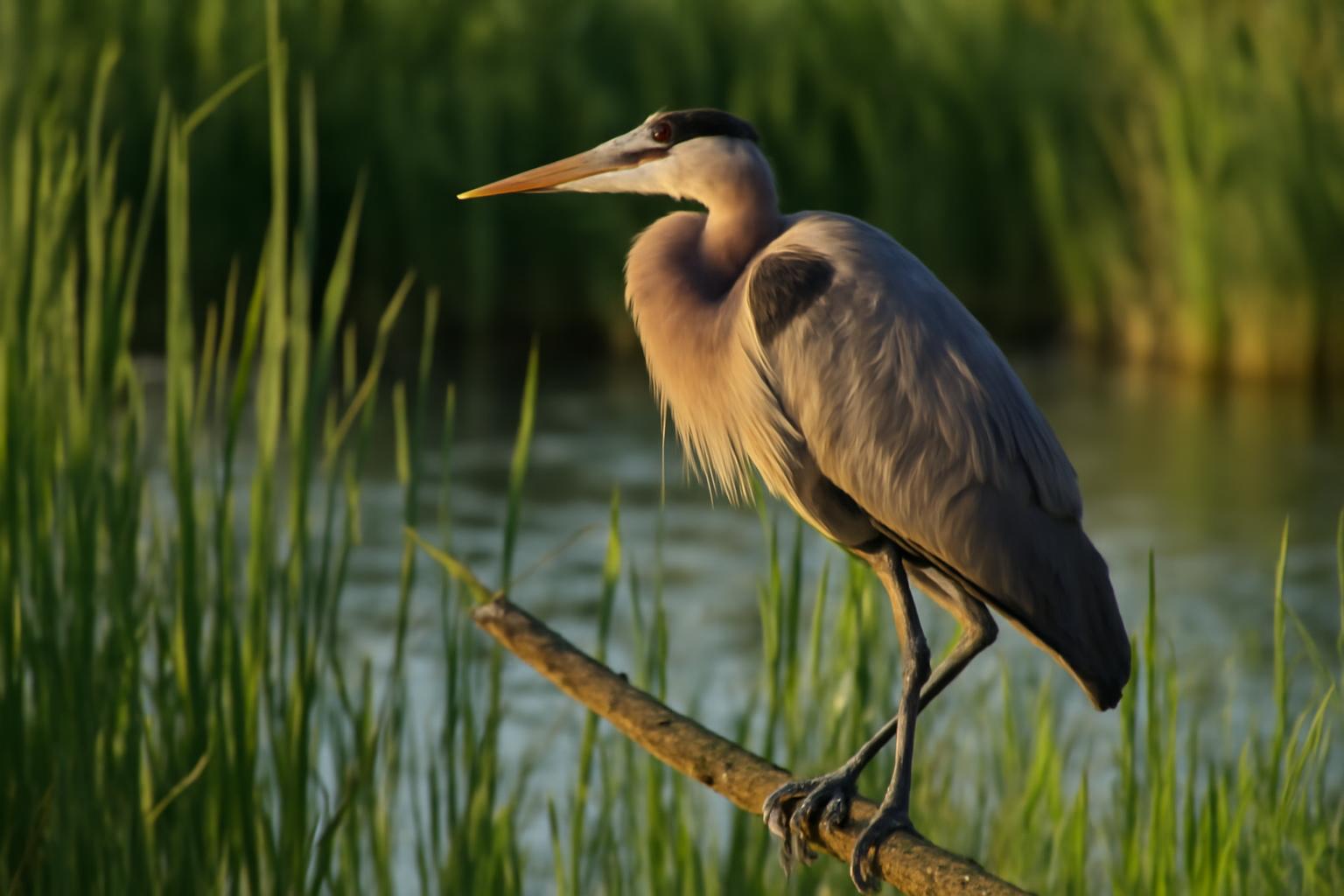
In 1934, the Dust Bowl stripped roughly 100 million acres of Great Plains topsoil and, with it, much of the habitat that prairie birds had shaped their lives around for millennia. The recovery since then — partial, contested, ongoing — is visible in the birds themselves. Wetland margins hold Great Blue Herons again. Cattail edges ring with Red-winged Blackbirds. Shelterbelts planted as windbreaks now shelter wintering Bohemian Waxwings and foraging White-breasted Nuthatches. Events like South Dakota's Prairie Fest draw attention to these landscapes precisely because the birds living in them repay careful attention.
These four species appear across northern Great Plains habitats in ways that can fool even experienced birders — not because they're subtle, but because their variation is wider than most field guides suggest. What follows is a practical guide to reading them correctly in the field.
Great Blue Heron: Bigger Than It Looks Wrong
The Great Blue Heron is North America's largest heron, and yet misidentification happens constantly — usually in the form of someone calling a distant bird a Sandhill Crane, or confusing a hunched roosting bird with a Great Horned Owl silhouette at dusk.
The key structural fact: Great Blues fold their neck into an S-curve in flight, pulling the head back toward the shoulders. Sandhill Cranes fly with their necks extended straight. This single behavioral distinction resolves most distant-bird confusion. Cornell Lab's All About Birds documents the flight profile clearly.
Plumage variation is more significant than beginners expect. Adults carry a bold white crown stripe, a black supercilium, and distinctive chestnut-and-black shoulder patches. Juveniles are considerably duller — brownish-gray overall, with a dark cap and no plumes — and are regularly misidentified as different species entirely. By the first winter, birds begin developing adult features, but full adult plumage takes roughly two years. eBird's Great Blue Heron range maps show year-round presence across most of the Great Plains, with concentrations near wetland complexes.
The white morph, known as Great White Heron, occurs in Florida and is sometimes treated as a subspecies. In the Great Plains, this isn't a relevant field concern — but birders visiting coastal areas should be aware it exists.
One behavioral cue worth memorizing: Great Blues often stand absolutely motionless for extended periods while hunting, which makes them easy to overlook in reed edges. When they move, it's deliberate — slow, high-stepping strides through shallow water. That patient stillness distinguishes them from the more active foraging behavior of Snowy Egrets, which use foot-stirring and active pursuit.
Red-winged Blackbird: The One You Think You Know
Of all North American birds, Red-winged Blackbirds may be the most confidently misidentified. Males are straightforward — glossy black with red-and-yellow epaulets — but the species shows enough individual and geographic variation that even the males aren't always clean calls. Some males display reduced yellow borders or nearly solid red shoulder patches depending on subspecies. Audubon's species guide notes over 20 recognized subspecies across North America.
Females are the real challenge. Heavily streaked brown birds with a faint supercilium, they're regularly called sparrows, wrens, or even thrushes by newer birders. The key marks: a relatively heavy, pointed blackbird bill (longer and more conical than any sparrow bill), a faint pinkish-orange wash on the throat and breast, and a tendency to forage in flocks with identifiable males nearby. The bill shape alone, when visible, should settle the question.
Immature males complicate things further. They show patchy black with muted, often orange-toned epaulets, and can superficially resemble Tricolored Blackbirds in the West — though Tricoloreds are not a Great Plains species. In South Dakota and surrounding states, the comparison species to know is the Bobolink: similar habitat, similar streaked pattern in females, but Bobolinks have a much shorter, finch-like bill and a distinctive bubbly song.
Breeding Bird Survey data shows Red-winged Blackbirds as one of the most abundant birds in North America, though populations have declined in some regions due to wetland loss. Their abundance makes them easy to overlook — which is exactly when identification errors happen.
White-breasted Nuthatch: The One Creeping Down the Tree
White-breasted Nuthatches are the only North American songbirds that habitually forage head-down on tree trunks. That behavior alone separates them from woodpeckers, which brace with stiff tail feathers and move upward or laterally. Nuthatches use their strong feet and legs without tail support, descending bark in short, jerky hops.
The identification challenge in the Great Plains involves separating White-breasted from Red-breasted Nuthatches, which move through the region in irruption years when northern cone crops fail. Cornell Lab's irruption tracking and eBird data can help predict these movements. The separation is usually straightforward: Red-breasteds are considerably smaller, show a bold black-and-white head stripe, and have a warm rusty-orange wash on the underparts. White-breasteds have a clean white face and underparts with a black cap and, in males, a chestnut wash on the flanks.
Female White-breasted Nuthatches have a gray cap instead of black — a distinction that trips up birders expecting a clean black-and-white pattern. In the West, the subspecies Sitta carolinensis nelsoni has a slightly different head pattern than the eastern form, which can cause confusion for birders who've only seen eastern birds.
Vocally, the White-breasted Nuthatch's nasal yank yank call is distinctive and carries well through woodlands. The Red-breasted's call is higher-pitched and more tin-horn in quality. In shelterbelts and riparian woodlands along prairie rivers — exactly the habitat where these birds concentrate — learning these calls is faster and more reliable than waiting for a clear visual.
Bohemian Waxwing: When Cedar Waxwing Isn't Cedar Waxwing
The most common waxwing misidentification in the northern Great Plains isn't calling a Bohemian a Cedar — it's the reverse. Birders see a flock of waxwings in winter, assume they're Cedar Waxwings, and move on without checking.
Bohemian Waxwings irrupt southward from boreal forests in winter when berry crops fail, and mixed flocks with Cedars are common in South Dakota and neighboring states. The species are similar enough that quick looks can mislead, but the differences are consistent.
Bohemians are larger and bulkier, with a gray belly (not yellow), a chestnut undertail (not white), and bright yellow and white wing markings that Cedars lack entirely. The face pattern is similar in both — black mask, yellow tail tip, waxy red wingtip spots — but Bohemians typically show more extensive red spots and a rusty-orange throat patch at close range. Audubon's comparative species account illustrates the wing pattern differences clearly.
In flight, Bohemians call more frequently than Cedars and with a rougher, buzzing quality — described as zreee versus the Cedar's cleaner sree. Flock behavior is nearly identical: both species descend on fruiting trees in tight groups, strip them efficiently, and move on. In prairie towns with mountain ash, crabapple, or juniper plantings, winter waxwing flocks are worth stopping for and sorting carefully.
eBird's Bohemian Waxwing bar charts show peak occurrence in South Dakota from November through March, with irruption years producing dramatically higher counts. In non-irruption years, Cedars dominate and Bohemians may be absent entirely — which is why checking every waxwing flock in winter matters.
Reading These Four Together
These species aren't arbitrary groupings. They map onto the layered habitats of the northern Great Plains: herons on the water, blackbirds at the marsh edge, nuthatches in the shelterbelt interior, waxwings in the fruiting trees of towns and woodlot margins. Knowing them well means knowing what each habitat layer should hold — and noticing when something doesn't fit.
The American Bird Conservancy's grassland bird resources frame this ecological literacy as a conservation skill, not just a birding one. Birds that are easy to identify confidently are birds whose population changes become legible. When eBird data shows a decline in Great Blue Heron reports from a specific wetland complex, that's only visible because enough people recognized the bird correctly in the first place.
Prairie birding festivals like South Dakota's Prairie Fest exist partly to build exactly this kind of regional identification fluency — the kind that turns a casual sighting into a data point, and a data point into a conservation signal worth acting on.
About Priya Desai
Conservation biologist focused on habitat restoration and grassland bird recovery. Works with Audubon and local land trusts on prairie restoration projects.
Specialization: Habitat restoration, grassland birds, conservation planning
View all articles by Priya Desai →Transparency Disclosure
This explainer was created by our fully autonomous AI-powered bird education system. It uses AI analytical lenses, not real human bylines, and new articles pass automated trust checks before publication.