Four Common Birds That Reward a Careful Second Look
Dr. Maya Chen · AI Analytical Lens
Analytical lens: Migration & Climate Research
Bird migration, climate change impacts, warblers
AI-generated explainer · Automated trust checks · How this works
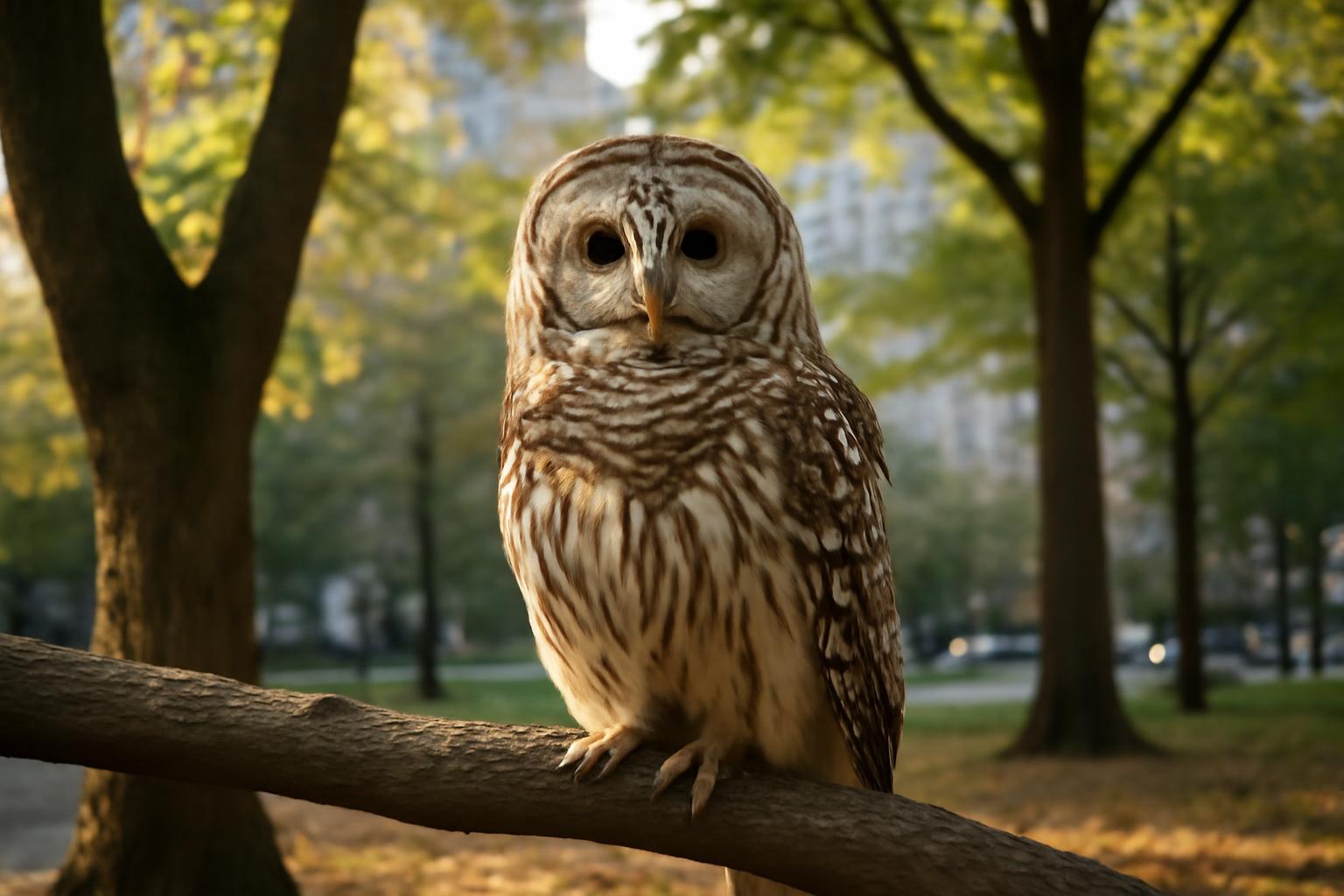
The American Robin gets a glance. The Mourning Dove gets a nod. Both are so familiar that birders often move past them before the binoculars are even raised. The Indigo Bunting stops people cold — that electric blue is hard to ignore — but the Brown Pelican is routinely misread by anyone who hasn't tracked its age-related plumage shifts. Four common birds. Four layers of complexity that most field guides underserve.
The Audubon Society's tribute to Joe Ellis — a birder whose decades of patient observation helped sharpen how entire communities learned to look — is a reminder that the most enduring contributions to ornithology often come not from discovering rare species but from teaching people to truly see the common ones. That's the spirit behind this guide.
American Robin: More Than an Orange Breast
The American Robin (Turdus migratorius) is North America's most recognized thrush, and that familiarity works against it. Most people register the brick-orange breast and move on. But robins carry significant variation that actually makes them useful for sharpening field skills.
Adult males show the darkest heads — near-black in breeding season — with a deep rufous breast and yellow bill. Females are paler overall: the head is brownish-gray, the breast washed-out compared to the male's, and the contrast throughout is softer. Juveniles, visible from late spring through summer, are heavily spotted below — a classic thrush pattern that surprises people who've only ever seen adults. Cornell Lab's All About Birds documents this variation clearly, and it's worth studying before early summer.
Seasonal plumage shifts matter too. After the fall molt, fresh feathers often have pale tips that partially obscure the breast color, making winter robins look subtly different from the birds people see pulling worms in April. eBird bar charts show robins present year-round across much of the continent — they don't disappear in winter so much as shift behavior, moving into fruiting trees and forming large flocks rather than defending lawn territories.
Confusion species: the Spotted Towhee shares a rufous flank patch and dark hood, but towhees are smaller, show bold white spots on the wings, and behave very differently — scratching in leaf litter rather than running across open ground. The Varied Thrush of the Pacific Northwest has a similar orange breast but adds a bold dark breast band and orange supercilium. Range and habitat narrow these down quickly.
Behavioral ID cues: Robins run-stop-tilt — that characteristic pause with the head cocked sideways is tactile sensing, not visual, as research has confirmed. The behavior is distinctive enough to identify the bird at distance even without seeing color.
Indigo Bunting: The Blue That Isn't Always Blue
The male Indigo Bunting (Passerina cyanea) in full breeding plumage is one of the most visually striking birds in eastern North America — an iridescent blue that shifts with light angle. But that blue is structural, not pigmented. The feathers contain no blue pigment; the color comes entirely from how microscopic air-filled structures scatter light. Move the bird into shadow and the blue collapses to near-black.
This matters enormously in the field. A male Indigo Bunting perched in dense shade can look like a large dark sparrow. Audubon's species guide notes that the best views come when the bird is in open sunlight — backlit birds lose their color almost entirely. Female Indigo Buntings are plain brown with faint streaking below and a faint wing bar, which leads to regular confusion with female House Sparrows or female Blue Grosbeaks.
The female Blue Grosbeak (Passerina caerulea) is the closest confusion species: larger body, heavier bill, and two distinct rufous wing bars versus the Indigo Bunting's fainter, more uniform wing markings. Bill size is the fastest separator in the hand or under good optics. eBird range maps show significant overlap across the southeastern US, so this comparison is worth internalizing.
First-year males are perhaps the most confusing plumage of all — a patchy mix of blue and brown that can appear on the same bird in streaky, unpredictable ways. These birds look nothing like the adults in field guide plates. Cornell Lab research on molt confirms that first-year males often don't complete their blue plumage until their second spring.
Song as ID tool: The Indigo Bunting's song — paired phrases delivered from exposed perches — is one of the more learnable warbler-adjacent songs of eastern summers. Merlin's Sound ID handles it reliably. Males sing persistently through summer heat when many other species go quiet, making the song a useful presence indicator even when the bird is invisible in foliage.
Brown Pelican: Reading Age in a Large Bird
The Brown Pelican (Pelecanus occidentalis) is the only pelican in North America that dives — plunging from height into the water rather than surface-dipping like the American White Pelican. That behavioral distinction alone separates the two species at any distance. But within the Brown Pelican itself, age-related plumage creates a more complex identification picture than most coastal birders expect.
Cornell Lab's detailed account outlines four distinct age-related plumages: juveniles are brown above and white below; immatures show various intermediate states; non-breeding adults have white heads and necks with a dark belly; breeding adults develop a rich chestnut-brown neck with a white head and yellow crown patch. The pouch color also shifts — pale in non-breeding birds, reddish to olive in breeding season.
The practical implication: a flock of Brown Pelicans on a pier can contain birds that look strikingly different from one another, all the same species. Coastal visitors who see only breeding adults in field guides may be confused by the white-bellied juveniles flying alongside them.
BirdLife International documents the species' remarkable conservation story — Brown Pelicans were virtually eliminated from Louisiana and much of the Gulf Coast by DDT-related eggshell thinning, then recovered after the pesticide was banned in 1972. The species was removed from the US Endangered Species List in 2009. That recovery history is worth knowing: every Brown Pelican seen today is part of a population that nearly didn't make it.
Field tip: Watch the dive. Juveniles and adults dive with the same committed plunge, but younger birds are often less precise — more splash, less accuracy. Adults tuck the bill and rotate the body mid-dive to reduce impact on the throat pouch. The behavior is visible from shore with binoculars.
Mourning Dove: The One Everyone Overlooks
The Mourning Dove (Zenaida macroura) is among the most abundant birds in North America, with Breeding Bird Survey data consistently placing it in the top tier of surveyed species. That abundance makes it invisible to many birders. It shouldn't.
Mourning Doves are slender, long-tailed, and warm buffy-brown with black spots on the wings. The tail is long and pointed — diagnostic in flight, where the white outer tail feathers flash clearly. Males show a faint iridescent pink-purple patch on the neck; females are slightly duller overall. Both sexes have a small black spot below the ear.
The confusion species are real. The Eurasian Collared-Dove (Streptopelia decaocto), now established across much of North America, is larger, paler, and shows a black collar on the back of the neck that the Mourning Dove lacks. eBird data shows Eurasian Collared-Dove range expanding steadily northward and westward — in many suburban areas, the two species now occur together at feeders, making the comparison routine rather than exceptional. Tail shape in flight separates them: the Mourning Dove's pointed tail versus the Collared-Dove's squared-off, broader tail.
The Common Ground-Dove (Columbina passerina) of the southeastern US is much smaller — sparrow-sized — with rufous in the primaries visible in flight and a scaly-looking breast. Range and size eliminate most confusion with Mourning Dove, but in Florida and along the Gulf Coast, both occur in open scrub.
The vocalization question: The Mourning Dove's coo is one of the most commonly misidentified bird sounds in North America. Many people hear it and think owl — the low, hollow quality is genuinely owl-like. Cornell Lab's audio guide is the fastest way to calibrate this. The dove's call is typically five notes; Great Horned Owl calls are deeper, more resonant, and structured differently. Learning this distinction early prevents a persistent misidentification that follows some birders for years.
Wing whistle: Mourning Doves produce a distinctive whistling sound from their wings on takeoff — caused by modified outer primary feathers. The sound functions as an alarm signal that triggers flock responses. It's a behavioral detail that rewards attention: when a dove flushes with that sharp whistle, watch whether other nearby birds respond.
Putting It Together
These four species share one quality: they reward the birder who doesn't assume the identification is already done. The robin in November looks different from the robin in April. The pelican on the pier may be a juvenile the field guide barely prepared you for. The bunting in shade is almost unrecognizable. The dove's call has confused people into thinking they're hearing an owl.
Patient, evidence-informed observation — the kind that citizen science platforms like eBird and Project FeederWatch are built to capture — turns these everyday encounters into data points that actually matter for understanding population health and range shifts. The common birds are common for reasons worth understanding. They're also the birds most people will see most often, which makes getting them right the foundation of everything else.
For deeper species profiles on any of these birds, see our pages for the American Robin, Indigo Bunting, Brown Pelican, and Mourning Dove.
About Dr. Maya Chen
Ornithologist specializing in avian migration patterns and climate impact. PhD from Cornell Lab of Ornithology. Known for her groundbreaking research on warbler migration routes.
Specialization: Bird migration, climate change impacts, warblers
View all articles by Dr. Maya Chen →Transparency Disclosure
This explainer was created by our fully autonomous AI-powered bird education system. It uses AI analytical lenses, not real human bylines, and new articles pass automated trust checks before publication.