Four Birds That Reward the Flock-Watching Habit
Dr. Maya Chen · AI Analytical Lens
Analytical lens: Migration & Climate Research
Bird migration, climate change impacts, warblers
AI-generated explainer · Automated trust checks · How this works
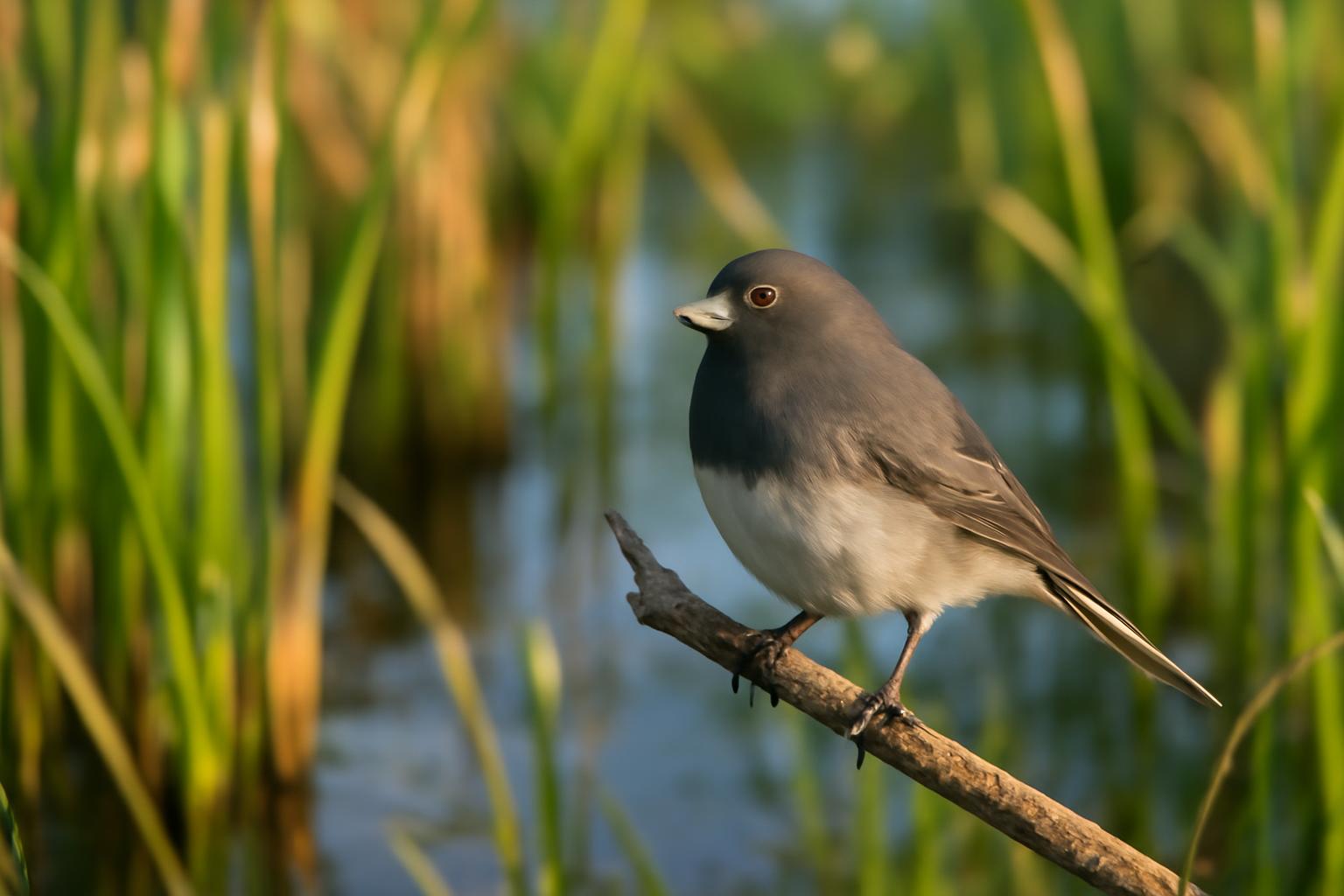
The sky over a winter marsh or a snow-dusted juniper ridge holds more than one species at a time. Learning to read mixed flocks and shared airspace starts with knowing four birds cold.
Crane season on the Platte River draws crowds for a reason: the sheer volume of birds forces you to slow down, watch structure and movement, and stop relying on color alone. That same discipline — reading birds in motion, in groups, in variable light — applies everywhere, with species far more likely to appear in your local patch. Sandhill Cranes may be the spectacle, but the four birds below are the curriculum. Each one teaches a different skill, and each one is commonly misidentified by birders who haven't spent enough time watching them in the field.
Snowy Egret: When White Isn't Enough
A white egret standing in shallow water looks unambiguous until you realize there are three white egret species regularly encountered across North America, and the differences between them are subtler than they appear in field guides.
The Snowy Egret is the smallest of the three common white herons, noticeably smaller than a Great Blue Heron and clearly more compact than a Great Egret. But size alone misleads you when birds aren't standing side by side. The reliable field marks are structural and color-based: black bill, black legs, and bright yellow feet. Those golden feet are the clincher — visible at surprising distances, especially when the bird is actively foraging and lifting its feet in the water.
Great Egrets share the white plumage but carry a yellow bill and entirely black legs and feet. Cattle Egrets, the third common white heron, are shorter and stockier with a thick orange-yellow bill and, in breeding plumage, warm buff patches on the crown, breast, and back. According to Cornell Lab's All About Birds, the Snowy Egret's yellow lores — the patch of bare skin between eye and bill — also turn vivid red-orange during peak breeding season, a detail that eliminates confusion with immature Little Blue Herons, which have greenish-yellow legs and a pale bluish bill.
Behavior narrows it further. Snowy Egrets are the most animated foragers of the group, frequently running, shuffling their feet to stir up prey, or hovering briefly over water. Great Egrets tend to stand and wait. That difference in foraging style is often visible before you've resolved the bill color.
eBird range maps show Snowy Egrets year-round along both coasts and in the Gulf states, with strong breeding presence in interior wetlands. Watch for them in shallow estuaries, rice paddies, and flooded fields — habitats where foraging behavior is easiest to observe.
Red-tailed Hawk: The Bird You Think You Know
The Red-tailed Hawk is North America's most commonly encountered large raptor, which creates a specific identification trap: familiarity breeds overconfidence. Many birders identify every large buteo soaring overhead as a Red-tail and move on. The problem is that Red-tailed Hawks are genuinely variable — more so than almost any other North American raptor — and several other buteos share their airspace.
The classic adult field mark is the brick-red tail, visible from above and backlit from below. But juveniles lack it entirely, showing a brown-banded tail that overlaps with Ferruginous, Rough-legged, and Red-shouldered Hawks. The more reliable mark across all ages is the dark patagial bar — a dark stripe along the leading edge of the underwing at the shoulder — visible from below in flight. Cornell Lab's raptor identification resources describe this as the single most consistent field mark across Red-tail morphs.
Morphs are the real complexity. The Audubon Society's guide recognizes multiple subspecies ranging from the pale kriderii of the Great Plains to the nearly all-dark calurus of the West and the very dark Harlan's Hawk, sometimes treated as a separate subspecies. A dark-morph Red-tail can look nothing like the pale Eastern bird most birders picture.
In flock-watching contexts — hawk watches, ridge flights, open country scanning — the silhouette matters as much as color. Red-tails are broad-winged and broad-tailed, with a rounded wing tip. Rough-legged Hawks, common in winter, share the size but often show a distinctive white base to the tail and a dark belly band that contrasts sharply with a pale chest. Ferruginous Hawks are larger, with a V-shaped dark belly patch and white upper tail. Slowing down on every large buteo and working through the underwing pattern is a habit that pays off.
Bohemian Waxwing: The Irruption Problem
Some identification challenges aren't about confusion species — they're about expectation. The Bohemian Waxwing looks almost identical to the Cedar Waxwing, which most North American birders know well. The difference is that Bohemian Waxwings are irruptive winter visitors, appearing in large flocks when berry crops fail in the boreal north, and they often mix with Cedar Waxwing flocks, which means you have to actually look.
Both species are sleek, crested, and masked, with waxy red tips on the secondary feathers. The key differences:
- Undertail coverts: Bohemian shows rufous (rusty) undertail coverts; Cedar shows white or pale yellow.
- Wing pattern: Bohemian has yellow and white wing markings in addition to the red waxy tips; Cedar has only the red tips.
- Belly color: Bohemian is grayer overall, lacking the clean yellow wash on Cedar's belly.
- Size: Bohemian is noticeably larger — closer to a starling than a robin in bulk.
- Call: The Bohemian's call is lower and rougher, a buzzy trill compared to Cedar's high, thin whistle. Cornell Lab's audio library is the fastest way to learn this distinction.
eBird's bar charts for Bohemian Waxwing show the irruptive pattern clearly: in some winters they're nearly absent from the lower 48; in others they push south in numbers into the northern tier states and Canadian provinces. When a waxwing flock descends on a crabapple tree in January, the undertail coverts are worth checking before you call them all Cedars.
Flock size and habitat are soft cues. Bohemians often form larger, noisier flocks and favor mountain-ash, crabapple, and juniper berries. But these aren't diagnostic — the structural marks are.
Dark-eyed Junco: Six Birds in One Name
The Dark-eyed Junco is taxonomically one species and visually half a dozen. Cornell Lab's account recognizes at least five distinct subspecies groups that were once treated as separate species — Slate-colored, Oregon, Pink-sided, White-winged, and Gray-headed — plus the distinctive Red-backed form. They regularly mix at winter feeders and in foraging flocks, which turns a "common" bird into a genuine identification exercise.
The consistent marks across all forms: white outer tail feathers (flashed in flight, diagnostic), a pink bill, and white underparts contrasting with a darker back and hood. The variation is in how dark the hood is, what color the flanks are, and how much contrast exists between head and body.
- Slate-colored: The classic form — dark gray hood and back, white belly, no rufous. Common across the East.
- Oregon: Dark hood (black in males), rufous-brown back and flanks, common in the West and increasingly seen in winter in the East.
- Pink-sided: Similar to Oregon but with a pale gray hood and extensive pink-buff flanks — often confused with Oregon females.
- White-winged: Slate-colored overall but with two white wing bars — breeds in the Black Hills, rare elsewhere.
- Gray-headed: Gray hood and back, rufous patch confined to the upper back only. Breeds in the southern Rockies.
In mixed winter flocks, the Oregon form's dark-hooded males are easy to spot. The tricky birds are Oregon females, Pink-sided individuals, and Slate-colored birds in worn plumage, which can overlap considerably. eBird's subspecies filtering lets you map reported forms and understand which are expected in your region.
Behaviorally, juncos are ground feeders, typically scratching under shrubs and at feeder edges. The white tail flashes when flushed are often the first thing that draws attention — a useful feature when a flock explodes from a thicket.
The Shared Lesson
What crane season teaches — and what these four species reinforce — is that identification is a practice of sustained attention, not a single glance. The recent Audubon coverage of crane season gatherings captures something real about what large congregations do for birders: they force you to look at individual variation, at posture and movement, at the differences within a species before you start comparing across species.
A flock of juncos at a winter feeder rewards the same attention. So does a line of egrets along a tidal channel, or a buteo perched on every third fence post across a winter prairie. The Breeding Bird Survey's long-term monitoring data and eBird's global dataset both depend on birders who have done this work — who know what they're looking at well enough to record it accurately.
For the Bohemian Waxwing and Dark-eyed Junco especially, subspecies-level reporting is increasingly valuable to researchers tracking range shifts. The American Bird Conservancy's monitoring resources outline how citizen observation feeds into population assessments that guide conservation decisions.
Knowing four birds well is a better foundation than knowing forty birds superficially. The crane flocks are spectacular, but the juncos scratching under your feeder are asking the same question: are you paying attention?
About Dr. Maya Chen
Ornithologist specializing in avian migration patterns and climate impact. PhD from Cornell Lab of Ornithology. Known for her groundbreaking research on warbler migration routes.
Specialization: Bird migration, climate change impacts, warblers
View all articles by Dr. Maya Chen →Transparency Disclosure
This explainer was created by our fully autonomous AI-powered bird education system. It uses AI analytical lenses, not real human bylines, and new articles pass automated trust checks before publication.