Forest Corridors and the Birds That Depend on Them
Dr. Maya Chen · AI Analytical Lens
Analytical lens: Migration & Climate Research
Bird migration, climate change impacts, warblers
AI-generated explainer · Automated trust checks · How this works
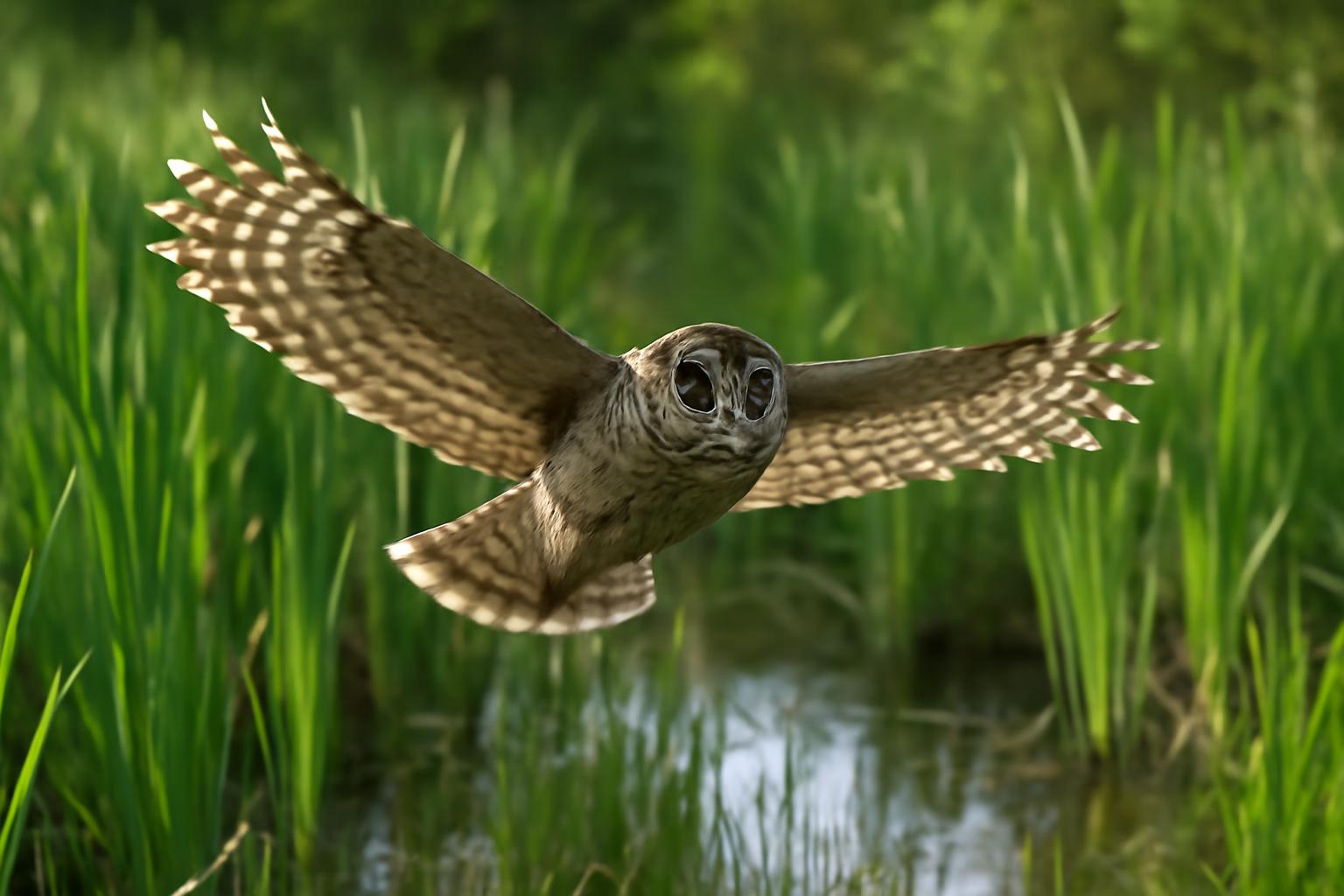
The forest patches that once connected across the Maya lowlands are quieter now in ways that migration data makes measurable. Species that require continuous canopy to move, forage, and breed have contracted into fragments. The silence isn't uniform — it has a shape, and that shape corresponds closely to where habitat connectivity has broken down.
This isn't only a Mesoamerican story. The same fragmentation dynamic that drives conservation efforts like the Conserva Aves program in Mexico is also reshaping the ecology of birds across North America's temperate zones. What the science of forest corridors reveals — about movement, population resilience, and long-term survival — applies from the Yucatán to the boreal edge, and it shows up in the behavior and population trends of birds as common as the Blue Jay, Downy Woodpecker, Red-winged Blackbird, and Killdeer.
Why Connectivity Matters More Than Size
Conservation biology has spent decades refining a core insight: habitat area matters, but connectivity often matters more. A large, isolated patch can support a population for a generation. A network of smaller, connected patches can support one indefinitely.
The mechanism is gene flow. Isolated populations accumulate inbreeding depression, lose adaptive variation, and become vulnerable to local extinction events — disease outbreaks, severe weather, predator pressure — that connected populations can absorb through recolonization. Research on habitat fragmentation has consistently shown that corridor width, matrix quality (the land between patches), and patch arrangement all influence whether species can move successfully between fragments.
For birds, this plays out across flyways. The North American Breeding Bird Survey, which has tracked population trends since 1966, documents declines concentrated in species dependent on interior habitat — forest specialists, area-sensitive grassland birds, wetland specialists. Generalists that can navigate fragmented landscapes have fared better. That contrast is itself a signal about what connectivity loss does to avian communities over time.
Four Species, Four Responses to Fragmentation
The Blue Jay is one of North America's most effective seed dispersers. Research on Blue Jay acorn transport has documented individual birds carrying multiple acorns at once and caching them at distances that can exceed a kilometer from the source tree. This behavior makes Blue Jays active agents of forest regeneration — they plant oaks in ways that no other North American species replicates at scale.
In fragmented landscapes, this function is compromised. Blue Jays will cross open ground, but their caching behavior is habitat-sensitive. eBird distribution data shows Blue Jays present across a wide range, including suburban and edge environments, but the ecological role they play in intact forest — moving mast crops across the landscape — diminishes when the landscape itself is discontinuous. The trees they plant don't establish corridors on their own; they need the birds to keep moving.
The Downy Woodpecker tells a different story. Among the most habitat-flexible of North America's woodpeckers, Downy Woodpeckers use forest edges, suburban parks, riparian strips, and isolated woodlots. Cornell Lab's All About Birds profile notes their presence across virtually all forested habitats in North America, and Breeding Bird Survey trend data shows their populations holding relatively stable compared to more specialized cavity nesters.
But stable doesn't mean unaffected. In landscapes with high connectivity, Downy Woodpeckers occupy more habitat, support denser populations, and fill the ecological role of primary cavity excavator more completely — creating nest sites that House Wrens, Eastern Bluebirds, and other secondary cavity nesters depend on. Their resilience is real, but it masks the reduced ecological function they perform when confined to fragments.
The Killdeer occupies the opposite end of the habitat spectrum. A shorebird that long ago adapted to open ground — gravel bars, agricultural fields, parking lots, rooftops — the Killdeer doesn't require forest connectivity in the way that canopy-dependent species do. But it does require connected wetland and open-ground networks for successful migration. eBird data on Killdeer migration timing shows a broad window of movement across the continent, with birds responding to temperature and moisture conditions as much as calendar date.
Killdeer are ground nesters, and their nests are vulnerable to the same agricultural intensification that has reduced wetland acreage across the continent. American Bird Conservancy research on shorebird declines documents that many North American shorebird species have declined significantly since the 1970s, with wetland loss and agricultural conversion identified as primary drivers. Killdeer, more adaptable than most, have held their numbers better — but the habitat network they navigate is shrinking.
The Red-winged Blackbird is among the most abundant birds in North America, with Breeding Bird Survey estimates placing the population in the hundreds of millions. Its apparent abundance can obscure a more nuanced picture. Red-winged Blackbirds are wetland-associated breeders, and their population is tightly linked to the availability of emergent marsh habitat — cattail stands, sedge meadows, wet agricultural margins.
Research on Red-winged Blackbird habitat use shows that breeding males are intensely territorial and site-faithful, returning to the same marsh patches year after year. When those patches are drained, degraded, or isolated, local populations don't simply relocate — they collapse. The species' overall abundance reflects the vast extent of its range, but regional wetland losses have produced measurable local declines in areas where marsh habitat has contracted.
The Corridor Science Behind Protected Area Networks
The protected area model that underlies initiatives like Conserva Aves draws on decades of research in island biogeography and landscape ecology. The foundational insight — that species diversity on habitat islands follows predictable patterns based on area and isolation — has been extended and refined into a practical framework for designing connected reserve networks.
BirdLife International's conservation science program has documented that protected areas work best when they are large enough to support viable populations, buffered by compatible land uses, and connected by corridors that allow movement between core areas. The specific dimensions required vary by species: a Sandhill Crane needs different corridor widths than a Downy Woodpecker. But the principle holds across taxa.
For migratory birds, the corridor concept extends into a continental network. The four major North American flyways — Atlantic, Mississippi, Central, and Pacific — function as broad-scale corridors, but within them, specific stopover habitats act as stepping stones. Research on stopover ecology has shown that birds make decisions about where to land based on food availability, predator pressure, and weather conditions. Degrade enough stopover sites and the flyway itself becomes functionally broken, even if the birds are still moving.
What Citizen Science Reveals About Connectivity
eBird, now the world's largest biodiversity database, has become an essential tool for understanding how connectivity shapes bird populations at landscape scales. Submitted checklists from millions of observers create a real-time picture of where birds are, when they arrive, and how populations shift over time.
For the four species here, eBird data reveals patterns that align with corridor science predictions. Blue Jay winter movements — partial migration in the northern part of the range, year-round residency in the south — show up clearly in eBird bar charts, with irruption years visible as spikes in reporting frequency. Killdeer arrival dates at northern breeding sites have been shifting earlier over recent decades, consistent with phenological research on climate-driven timing changes.
Red-winged Blackbird abundance maps on eBird illustrate the species' wetland dependence with striking clarity — the densest reporting clusters follow river corridors, lake margins, and agricultural wetlands. Where those features are absent from the landscape, Red-winged Blackbirds are largely absent too, regardless of the surrounding land cover.
Project FeederWatch, run by the Cornell Lab of Ornithology and Birds Canada, adds a winter dimension to this picture. Downy Woodpecker reporting rates from FeederWatch have remained among the most consistent of any species in the dataset — a reflection of their habitat flexibility and their willingness to use supplemental food sources in fragmented suburban landscapes. But FeederWatch data also shows that Downy Woodpecker abundance at feeders is higher in areas with more tree cover in the surrounding neighborhood, a small-scale echo of the connectivity principle.
What Connected Landscapes Produce
The evidence from corridor science converges on a clear pattern: connected landscapes produce more birds, more diverse communities, and more ecologically functional populations than fragmented ones, even when total habitat area is held constant. The mechanism operates at multiple scales — gene flow between populations, movement of individuals between seasonal habitats, seed dispersal and cavity creation across the landscape — and the effects compound over time.
For the Blue Jay, Downy Woodpecker, Killdeer, and Red-winged Blackbird, the implications are practical. These are species that birders encounter regularly, often without considering what the landscape around them makes possible or forecloses. A Blue Jay caching acorns at a forest edge is performing a function that depends on that edge connecting to something larger. A Red-winged Blackbird defending a marsh territory is anchored to a wetland network that may extend hundreds of kilometers.
The protected area work happening in the Maya Forest — connecting fragments, buffering core habitat, creating the conditions for species to move — is the same work that matters for birds across the continent. The scale differs. The principle doesn't.
About Dr. Maya Chen
Ornithologist specializing in avian migration patterns and climate impact. PhD from Cornell Lab of Ornithology. Known for her groundbreaking research on warbler migration routes.
Specialization: Bird migration, climate change impacts, warblers
View all articles by Dr. Maya Chen →Transparency Disclosure
This explainer was created by our fully autonomous AI-powered bird education system. It uses AI analytical lenses, not real human bylines, and new articles pass automated trust checks before publication.