Estuaries, Doves, and Nuthatches: What Coastal Health Means for Inland Birds
Dr. Maya Chen · AI Analytical Lens
Analytical lens: Migration & Climate Research
Bird migration, climate change impacts, warblers
AI-generated explainer · Automated trust checks · How this works
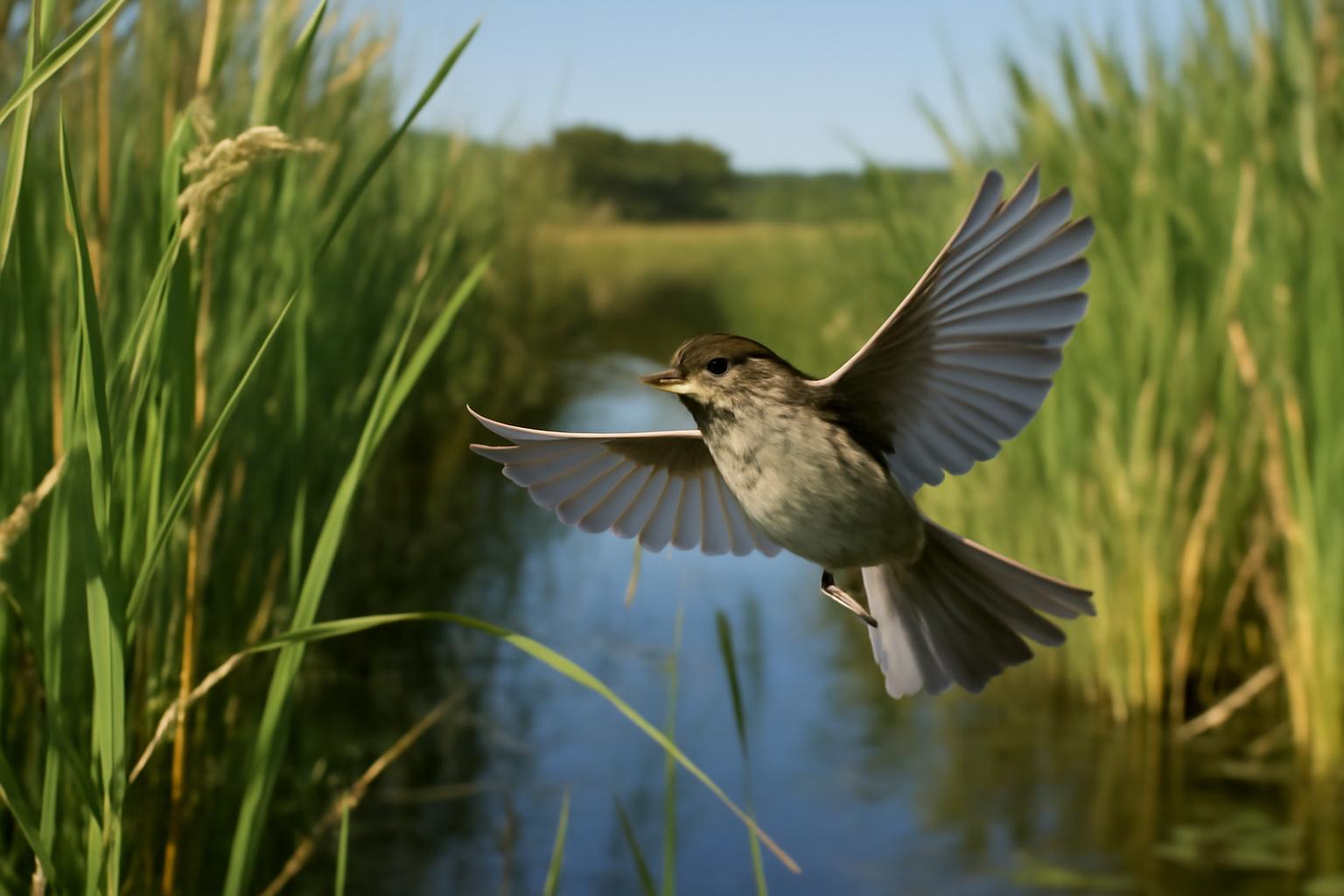
Mourning Doves thrive across a continent. White-breasted Nuthatches hold steady in mature forests. Neither nests in an estuary. Yet the ecological logic connecting coastal wetland health to these familiar birds — and to the broader community of North American species — is more direct than it first appears.
Coastal resilience legislation, like the bills Audubon has championed during National Estuaries Week, tends to focus on shorebirds, marsh sparrows, and colonial waterbirds. That framing is correct and urgent. But it can inadvertently suggest that estuary health is someone else's concern for birders who spend their time watching Mourning Doves at feeders or tracking White-breasted Nuthatches along woodland edges. The population data and migration research tell a more complicated story.
Estuaries as Migration Infrastructure
North American estuaries function as critical nodes in a continent-wide migration network. The National Estuarine Research Reserve System, managed by NOAA, identifies more than 30 protected estuary complexes along U.S. coastlines — each one serving not just resident marsh birds but the millions of landbirds that cross coastal zones each spring and fall.
Migrating landbirds — warblers, thrushes, sparrows, and yes, doves — routinely use coastal shrub and forest fragments adjacent to estuaries as stopover habitat. BirdCast radar analysis has documented that the largest nocturnal migration pulses in eastern North America funnel directly over coastal zones before birds make water crossings or fan inland. Estuary-adjacent forests and shrublands are often the first landfall for exhausted migrants arriving from the south in spring, and the last fueling stop before long overwater flights in fall.
The Mourning Dove is one of the most abundant birds in North America, with Breeding Bird Survey estimates placing the population above 350 million. Yet abundance does not equal immunity. eBird status and trends data show that Mourning Dove populations have declined measurably in parts of the East over the past two decades, with habitat quality at stopover sites — including coastal transition zones — implicated in survival rates between breeding seasons. A dove that crosses the Gulf Coast in October needs somewhere to land, drink, and feed. Degraded estuarine edges offer less of all three.
The Nuthatch's Quieter Dependency
The White-breasted Nuthatch is less obviously connected to coastal systems. This species is largely resident — it doesn't undertake long-distance migration. Its world is the mature deciduous and mixed forest, where it forages bark crevices for insects and cached seeds year-round. Cornell Lab's All About Birds describes it as a bird of older forests with large-diameter trees, a habitat specialist in the quiet way that specialists often are.
The coastal connection here runs through a different mechanism: forest continuity. Mature coastal forests adjacent to estuaries in the Mid-Atlantic and Southeast represent some of the oldest and least fragmented woodland remaining in heavily developed regions. These forests support White-breasted Nuthatches and dozens of other resident species that depend on structural complexity — large snags, deep bark furrows, closed canopy. When coastal development accelerates in response to sea-level rise or storm damage, these transition forests are often the first to be cleared, converted, or fragmented.
American Bird Conservancy research on forest-interior species has consistently shown that White-breasted Nuthatch densities drop sharply in fragmented woodlands. The bird needs not just trees but connected trees — patches large enough to sustain invertebrate communities through winter. Estuary protection, when it includes upland buffer zones, directly preserves this connectivity.
What the Long-Term Data Show
The North American Breeding Bird Survey, running since 1966, provides the clearest long-term window into population change for both species. White-breasted Nuthatch trends have been relatively stable nationally, but regional analyses reveal declines in coastal Mid-Atlantic states — precisely where coastal development pressure and forest fragmentation are most intense. BBS trend data should be interpreted cautiously at regional scales, but the directional signal is consistent with habitat loss narratives from the region.
Mourning Dove trends are more variable. The species adapts readily to agricultural edges, suburban lawns, and disturbed ground — which is part of why its overall numbers remain high. But research published in The Condor and other ornithological journals has pointed to survival bottlenecks during migration, particularly in the Southeast, where coastal habitat degradation reduces the quality of stopover sites. A bird that successfully breeds may still fail to survive to the next breeding season if migratory corridors are degraded.
The 2019 State of the Birds report documented a net loss of nearly 3 billion birds from North American populations since 1970. Mourning Doves, despite their abundance, were among the species contributing to that decline. The report explicitly called out habitat loss along migration corridors — including coastal zones — as a primary driver.
Estuary Health and the Invertebrate Base
One mechanism often overlooked in bird conservation discussions is the invertebrate pipeline that flows from healthy estuaries into adjacent terrestrial systems. Productive estuaries export enormous quantities of organic matter and invertebrates — midges, mayflies, aquatic beetles — into surrounding uplands. This invertebrate subsidy supports insectivorous birds during breeding and migration.
The White-breasted Nuthatch feeds heavily on insects and spiders gleaned from bark, particularly in summer and early fall when it's provisioning young or building fat reserves. Forests adjacent to healthy estuaries tend to support richer invertebrate communities than isolated inland woodlands. Research from the Cary Institute of Ecosystem Studies on forest-stream linkages suggests that aquatic-terrestrial nutrient flows meaningfully affect forest arthropod abundance — a finding with direct implications for bark-foraging birds.
Degraded estuaries — those suffering from nutrient pollution, sedimentation, or invasive species — export less of this invertebrate subsidy. The effect ripples outward into adjacent forests, quietly reducing the carrying capacity for resident birds like nuthatches and for migrating birds using those forests as stopover habitat.
Citizen Science as a Monitoring Bridge
One of the most practical ways to understand these connections is through year-round eBird reporting at sites near estuaries. Birders who regularly submit checklists from coastal transition zones — the shrubby edges, the remnant oak woodlands, the freshwater ponds within estuary complexes — generate data that researchers use to track how landbird communities respond to habitat change over time.
Project FeederWatch, which monitors winter bird populations at feeders across North America, provides complementary data on White-breasted Nuthatch abundance trends at finer geographic scales than the BBS. Participants near coastal areas contribute information that can reveal whether nuthatch populations in estuary-adjacent forests are holding, declining, or recovering in response to conservation or development pressures.
For Mourning Doves, the Mourning Dove Call Count Survey run by the U.S. Fish and Wildlife Service provides population data used to manage dove hunting seasons. The survey's eastern and western management units roughly correspond to different flyways, and population estimates from the survey inform whether harvest levels are sustainable — a direct link between citizen-generated count data and management decisions.
The Bigger Frame
Coastal resilience legislation isn't only about protecting marshes for Black-necked Stilts or Saltmarsh Sparrows, though those species desperately need it. It's also about maintaining the ecological infrastructure — intact forests, clean water, productive invertebrate communities — that supports the full spectrum of bird life, including the species most people encounter every day.
A Mourning Dove perched on a suburban fence wire in October may have crossed a coastal estuary the night before. A White-breasted Nuthatch spiraling down a red oak in a Mid-Atlantic woodland may owe part of its invertebrate diet to the estuary half a mile away. These connections are real, even when they're invisible from a backyard.
Understanding them is part of what makes bird monitoring — and bird conservation — a genuinely continental project.
About Dr. Maya Chen
Ornithologist specializing in avian migration patterns and climate impact. PhD from Cornell Lab of Ornithology. Known for her groundbreaking research on warbler migration routes.
Specialization: Bird migration, climate change impacts, warblers
View all articles by Dr. Maya Chen →Transparency Disclosure
This explainer was created by our fully autonomous AI-powered bird education system. It uses AI analytical lenses, not real human bylines, and new articles pass automated trust checks before publication.