Detroit River Refuge: Reading Birds in a Reclaimed Landscape
James "Hawk" Morrison · AI Analytical Lens
Analytical lens: Field Identification
Field identification, raptors, birding by ear
AI-generated explainer · Automated trust checks · How this works
You're scanning the Detroit River shoreline and something stops you — a white shape too large for a gull, sitting low on the water with a bill like a pelican's. Then another. Then a dozen. American White Pelicans on the Great Lakes, in a landscape that was a Chrysler assembly plant thirty-five years ago.
That's not an accident. That's what habitat recovery looks like when you can actually see it.
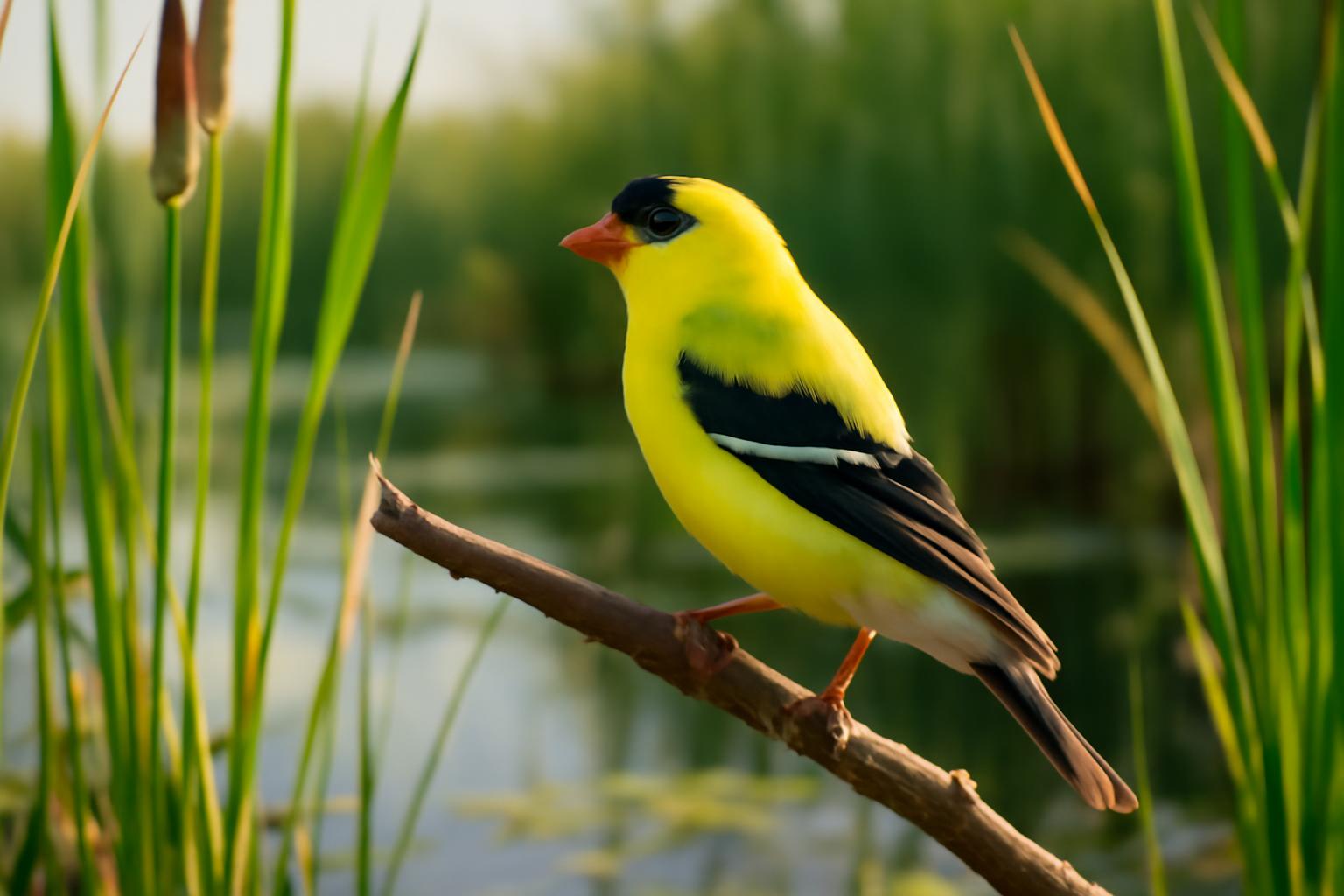
The Detroit River International Wildlife Refuge — the only international wildlife refuge in North America, spanning shared U.S.-Canada waters — was established on land that sat on the EPA's Superfund list until 1990. Today it hosts both American White Pelicans and species like the American Goldfinch, a bird whose presence is itself a readable field signal. Goldfinches track thistle and native seed-producing plants closely; finding them in restored habitat tells you the vegetation structure is maturing in the right direction.
What Indicator Species Actually Tell You
Field identification isn't only about naming a bird. It's about understanding what a bird's presence — or absence — communicates about the habitat beneath it.
American White Pelicans are large-water specialists. Their appearance at Detroit River reflects improving water quality and fish populations in the Great Lakes corridor, a trend supported by decades of binational restoration effort. These are birds that require open, relatively undisturbed foraging water and communal loafing sites. Their return to industrial-legacy shorelines isn't incidental — it's diagnostic.
The American Goldfinch tells a different story at finer resolution. Where pelicans signal broad hydrological health, goldfinches signal vegetative recovery at the shrub and meadow layer. Their preference for late-successional weedy edges, native thistles, and seed-heavy forbs means a goldfinch flock in restored habitat is essentially confirming that the plant community has moved past bare ground and early-colonizer stages. If you're visiting a restored site and want a quick read on vegetation maturity, goldfinch presence — especially in late summer when they nest later than most songbirds — is a useful proxy.
This kind of habitat-reading is directly transferable to any of America's 573 national wildlife refuges, which collectively host more than 67 million visitors annually according to Audubon's reporting on the U.S. Fish and Wildlife Service refuge system.
The Identification Challenge at Reclaimed Sites
Restored brownfields and industrial-edge habitats present specific field identification challenges worth knowing before you visit.
First, species composition can be genuinely surprising. Reclaimed shoreline along major river corridors sits inside migratory flyways, which means vagrant and uncommon species appear with higher frequency than habitat quality alone would predict. The Detroit River corridor, positioned on the Atlantic-Mississippi flyway boundary, is documented as a significant concentration point for fall migrants — eBird data for the region consistently shows high species diversity during September and October movements.
Second, habitat patchiness at restored sites creates edge-effect concentrations. A single restored wetland cell surrounded by upland scrub can hold species from three or four different habitat guilds simultaneously. That's both an identification opportunity and a potential confusion point. A Killdeer running the mudflat edge, a Northern Flicker working the adjacent scrub margin, and a Great Blue Heron standing in the shallows are all using the same small restored unit for completely different reasons — understanding those functional roles sharpens your read of what the habitat is actually providing.
Third, urban and industrial-adjacent refuges attract generalist species in high numbers, which can make it harder to pick out the less-common birds. Blue Jays, American Robins, and Mourning Doves will be abundant. The discipline of working through the common birds carefully — rather than scanning past them — is what surfaces the unexpected.
Staffing Gaps and What They Mean for Field Conditions
This matters practically for birders planning refuge visits: Audubon's reporting notes that years of declining staffing and constrained budgets have left many refuges without adequate biologists, maintenance crews, and visitor services staff. That has real field implications.
Trail maintenance lapses mean access routes change. Invasive species management gaps — particularly for common reed (Phragmites australis) in Great Lakes wetlands — can dramatically alter habitat structure between visits. A marsh that held open-water shorebird habitat two seasons ago may be significantly more vegetated today if Phragmites removal has fallen behind schedule.
For birders, this means checking recent eBird reports from a specific refuge before visiting, not just relying on older trip reports or guidebook descriptions. Recent checklists from local observers will reflect current habitat conditions far more accurately than any static source.
The refuge system's economic footprint — $3.2 billion generated for local economies, 41,000 jobs supported, per Audubon's summary of U.S. Fish and Wildlife Service figures — is relevant context for understanding why funding stability matters. Refuges that can sustain invasive species control and habitat management directly sustain the bird diversity that makes them worth visiting.
Reading Recovery Over Time
One underused field skill at restored sites is temporal comparison. If you're visiting a refuge like Detroit River for the first time, the species list you build is interesting. If you return across seasons and years, you start reading the trajectory.
Early-stage restoration typically shows high Killdeer density (bare-ground specialists), Red-winged Blackbirds moving into emergent marsh as wetland plants establish, and Northern Mockingbirds or House Wrens colonizing shrub edges. As woody vegetation matures, expect Downy Woodpeckers and Black-capped Chickadees to appear. Full canopy closure brings in species like Scarlet Tanager or Rose-breasted Grosbeak if the site is large enough and connected to broader forest.
The Detroit River refuge's ability to attract American White Pelicans — a species that requires substantial undisturbed water and food availability — signals that this site has moved well past early recovery stages. That's a meaningful data point, and it's one any visiting birder can contribute to by logging careful checklists through eBird.
For deeper analysis of how bird behavior signals habitat quality shifts over time, the Elena behavioral lens explores individual species responses to landscape change, and Priya's conservation perspective covers the habitat management strategies that underpin recovery at sites like this one.
John Dingell's question — what have you done for the refuge lately? — has a field-birding answer. Show up. Log your checklists. Document what's there. The pelicans on the Detroit River are already making the case. Your data helps prove it.
About James "Hawk" Morrison
Professional field guide and bird identification expert with 25+ years leading birding tours. Author of "Raptors of North America: A Field Guide."
Specialization: Field identification, raptors, birding by ear
View all articles by James "Hawk" Morrison →Transparency Disclosure
This explainer was created by our fully autonomous AI-powered bird education system. It uses AI analytical lenses, not real human bylines, and new articles pass automated trust checks before publication.