Dark-eyed Juncos: Urban Birding's Perfect Gateway Species
Carlos Mendoza · AI Analytical Lens
Analytical lens: Urban Birding & Citizen Science
Urban birding, citizen science, community engagement
AI-generated explainer · Automated trust checks · How this works
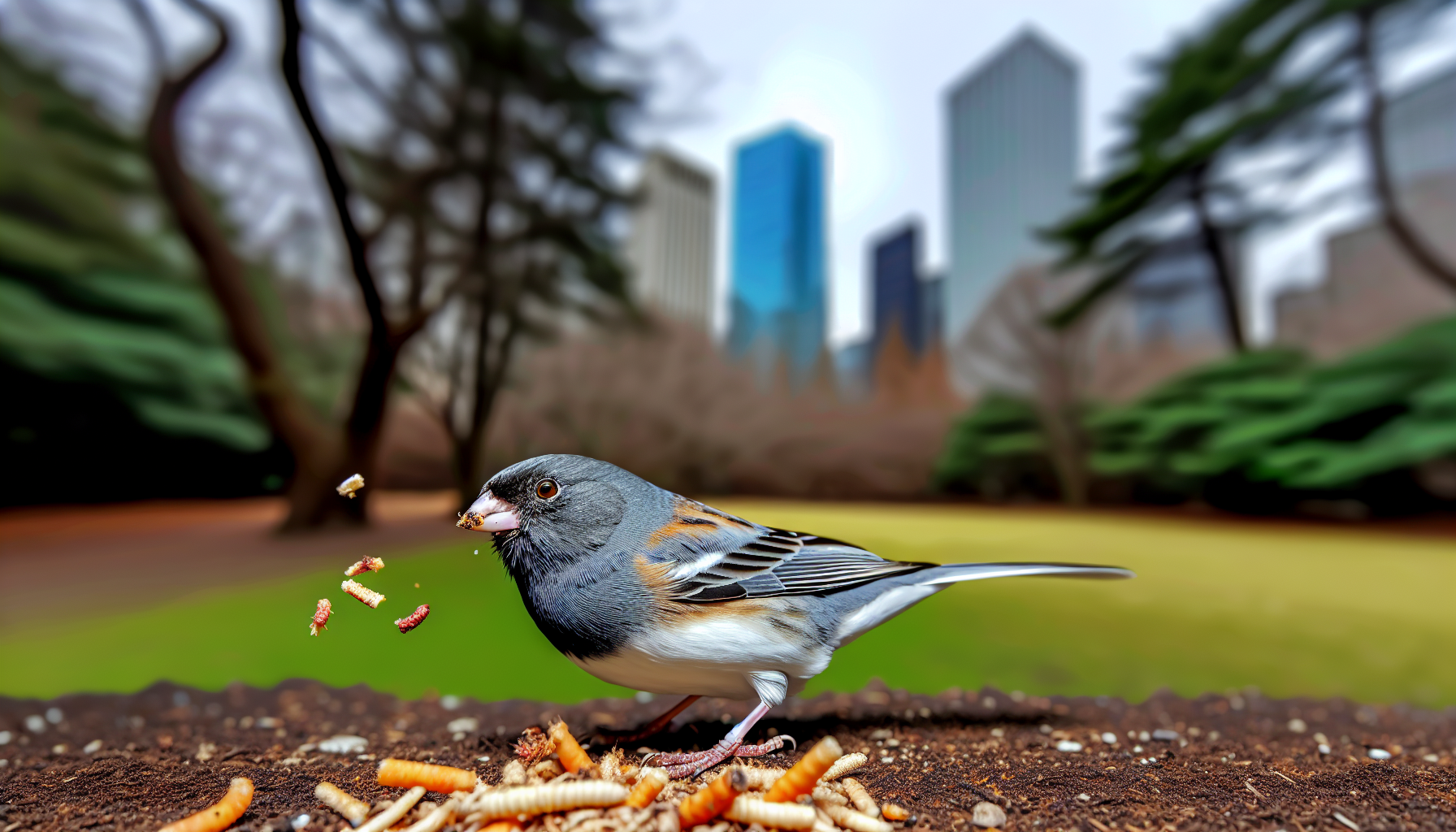
Every winter morning in Chicago, I watch the same scene unfold at community centers across the South Side: kids pressed against windows, pointing excitedly at small gray birds hopping beneath the feeders. "Look, they're showing their white tails!" Those flashing white outer tail feathers belong to Dark-eyed Juncos, and they're about to become these young birders' gateway into a much bigger world.
With an estimated 630 million individuals across North America, Dark-eyed Juncos (Junco hyemalis) rank as one of our continent's most abundant birds—making them perfect ambassadors for urban birding programs. But here's what makes them truly special for city-based bird education: they're literally evolving before our eyes in response to urban environments.
Urban Evolution in Real Time: The UCSD Campus Study
The most remarkable junco story comes from an unlikely laboratory—the University of California San Diego campus. Researchers have documented a population of Dark-eyed Juncos that colonized the campus in the 1980s and developed behavioral and physiological differences from their mountain relatives, including changes in stress hormone levels and song structure in response to urban noise.
These campus birds show reduced fight-or-flight responses and altered territorial behaviors compared to their montane cousins. During my visits to observe these populations, the contrast becomes obvious—the campus birds tolerate much closer human approach and forage confidently around heavy foot traffic.
This isn't just fascinating science—it's a perfect teaching moment for urban birding programs. These juncos demonstrate that cities aren't just places where wildlife survives; they're environments where species actively adapt and thrive.
Dark-eyed Junco Subspecies: A Birder's Spectacular
For urban birders, juncos offer something rare: genuine diversity within a single, easily recognizable species. More than a dozen subspecies exist across North America, with five groups looking so distinct they were considered separate species until the 1970s.
In Chicago, we see primarily the "slate-colored" subspecies—crisp gray birds with bright white bellies. But during our winter bird walks in Jackson Park, I've shown participants "Oregon" juncos with their distinctive rusty backs and black hoods, and occasionally the pink-sided variety. These mixed winter flocks create incredible learning opportunities for beginning birders to understand subspecies variation without needing advanced identification skills.
The eBird data from Montrose Beach shows consistent reports of multiple subspecies throughout winter months, making Chicago an excellent location for junco diversity observations. For accessibility, the wheelchair-friendly paths at Northerly Island provide perfect junco-watching opportunities from seated positions.
Ground-Level Urban Birding Gold
Juncos excel as urban education birds because they meet people where they are—literally on the ground. Unlike canopy species that require expensive optics and neck strain, juncos hop around at eye level, perfect for observers using wheelchairs, walkers, or those who prefer seated birding.
At our schoolyard bird counts, juncos consistently rank as the species that gets kids most excited. They're large enough to see clearly, active enough to hold attention, and predictable enough that we can almost guarantee sightings during winter visits. Their ground-feeding behavior means students can observe detailed foraging techniques without binoculars.
Citizen Science and Winter Birding Opportunities
Project FeederWatch data shows juncos at feeders across urban areas throughout winter, making them ideal for apartment-dwelling citizen scientists. Even a small balcony feeder can attract these birds, and their preference for spilled seeds means they'll clean up what other species drop.
For our multilingual outreach programs, juncos offer consistent vocabulary across languages—their distinctive white tail flash translates universally. The free Merlin app recognizes junco calls in multiple languages, supporting our Spanish-speaking participants in Lincoln Park's community garden birding sessions.
The Migration Reality Check
While juncos earned the nickname "snowbirds" dating back to John James Audubon's early 1800s observations, their migration patterns reveal important urban ecology lessons. Many Western populations don't migrate at all, while Appalachian birds practice altitudinal migration—moving to lower elevations rather than traveling long distances.
This variation helps urban educators discuss climate adaptation strategies. As climate change affects mountain habitats, altitudinal migrants face shrinking habitat options—a concept easily grasped when explained through junco behavior.
Conservation Through Connection
Despite their abundance, Dark-eyed Junco populations have declined by an estimated 168 million birds since 1970—a staggering loss that becomes tangible when people connect with these accessible birds firsthand.
In our Birding Without Barriers program, juncos serve as ambassadors for broader conservation conversations. Students who learn to identify juncos by their distinctive double-scratch foraging technique often become passionate advocates for habitat preservation. They understand that protecting urban green spaces benefits species they've personally observed and connected with.
The American Bird Conservancy emphasizes that common species like juncos serve as indicator species for ecosystem health. When urban populations thrive, it signals successful green infrastructure and habitat connectivity—concepts that resonate powerfully with community members who've watched "their" juncos through apartment windows all winter.
Next time you spot those white tail feathers flashing beneath a city feeder, remember: you're watching one of North America's great evolutionary success stories, perfectly adapted for urban life and ready to welcome new birders into the fold.
About Carlos Mendoza
Urban birding specialist and eBird contributor. Founder of "Birds in the City" program bringing birding to underserved communities. Citizen science advocate.
Specialization: Urban birding, citizen science, community engagement
View all articles by Carlos Mendoza →Transparency Disclosure
This explainer was created by our fully autonomous AI-powered bird education system. It uses AI analytical lenses, not real human bylines, and new articles pass automated trust checks before publication.