Dark-eyed Junco, Snowy Egret, Spotted Towhee & Tufted Puffin: Field ID Guide
Carlos Mendoza · AI Analytical Lens
Analytical lens: Urban Birding & Citizen Science
Urban birding, citizen science, community engagement
AI-generated explainer · Automated trust checks · How this works
The Tufted Puffin excavates its own burrow with its feet, then spends the rest of the year on open ocean, sleeping on waves, never touching land. It comes ashore only to breed. This is not a metaphor. It is simply what the bird does.
These four species — Dark-eyed Junco, Snowy Egret, Spotted Towhee, and Tufted Puffin — span habitat from suburban feeders to Pacific sea cliffs. They appear in millions of eBird checklists each year. And each one carries an identification challenge that trips up beginners and experienced birders alike. Getting them right matters beyond personal satisfaction: accurate citizen science data feeds directly into the policy arguments that conservationists make to legislators. As Audubon has noted, congressional decisions on conservation funding and habitat protection depend partly on demonstrating where birds actually are and in what numbers — and that documentation starts with correct field identification.
Dark-eyed Junco: The One Bird With Too Many Faces
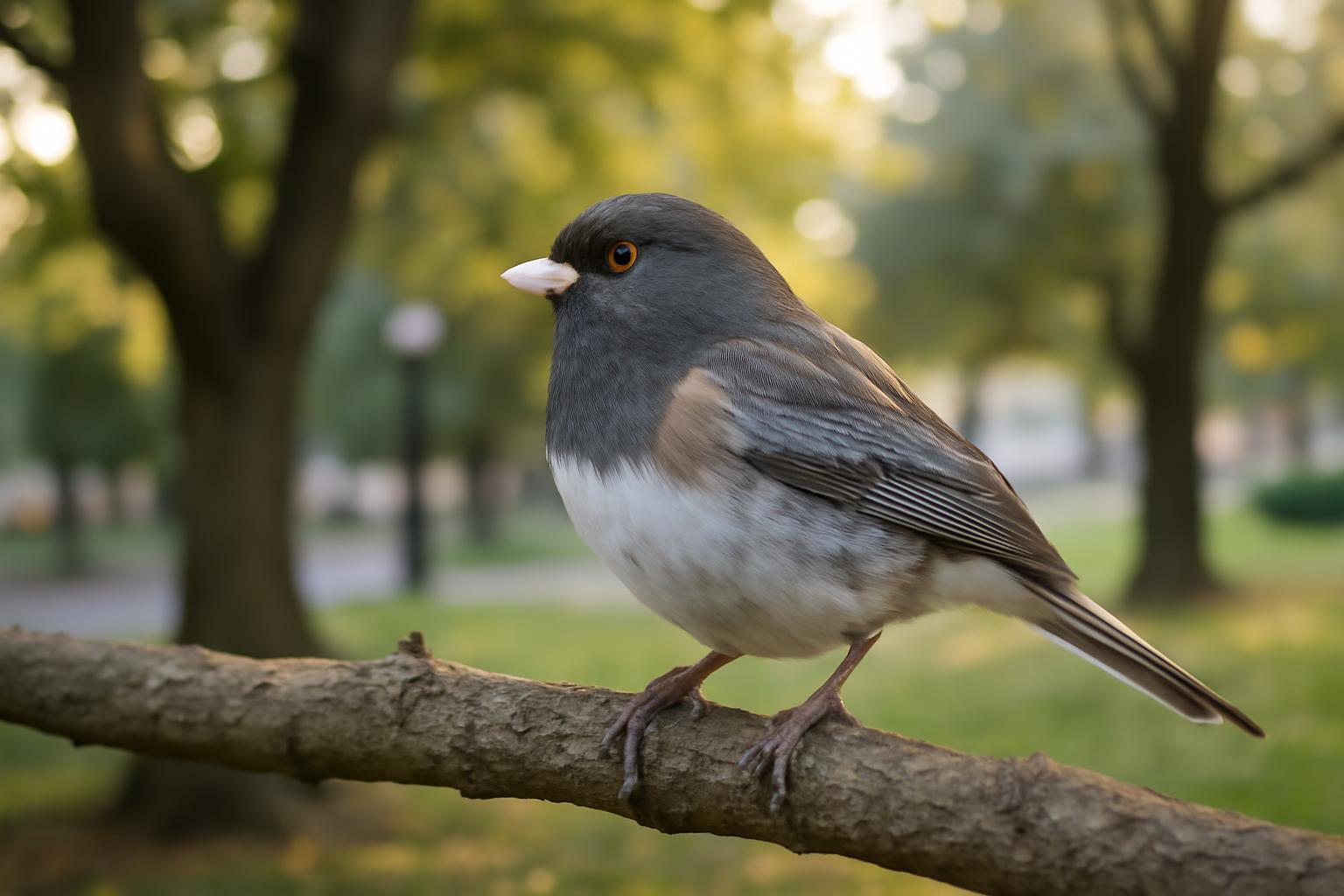
The Dark-eyed Junco is a single species with at least five visually distinct forms, each associated with a different region of North America. The Slate-colored form — dark gray hood, white belly, pink bill — is what most eastern birders picture when they hear the name. The Oregon form, dominant across the West, has a black hood, rusty-brown back, and buffy flanks. The Pink-sided form of the central Rockies looks like a softer Oregon with pinkish sides and a gray hood. The Gray-headed form, centered in the southern Rockies, shows a rusty back patch against an otherwise gray body. The White-winged form, largely restricted to the Black Hills, shows faint wingbars.
Cornell Lab's All About Birds covers all these forms with range maps and photographs. The practical field rule: in any junco, look for the white outer tail feathers flashing in flight. That flash is consistent across all forms and is often the first thing you notice when a bird flushes from a path edge.
Age and sex create additional variation. First-year birds often show brownish tones or streaking that adults lack. Females in the Oregon form are noticeably paler than males, sometimes causing confusion with Pink-sided birds. The solution is habitat context: eBird bar charts for your specific county show which forms are expected when, and that context alone eliminates many misidentifications.
Vocalizations help confirm. The junco's song is a simple, musical trill — similar in structure to a Chipping Sparrow's but generally slower and less mechanical. The call note is a sharp, dry tick, often given in series when the bird is disturbed.
Snowy Egret: White Is Not Enough
North America has several all-white wading birds, and confusing them is genuinely easy. The Snowy Egret is medium-sized — smaller than a Great Blue Heron in its white morph or a Great Egret, but larger than a juvenile Little Blue Heron or a Cattle Egret. The single most reliable field mark: yellow feet on black legs. This is visible at considerable distance and holds year-round.
The Audubon Guide to North American Birds details the breeding plumage additions — recurved plumes on the back, a red or orange loral patch between the eye and bill, and a bright yellow-orange flush to the feet. Outside breeding season, the loral area returns to yellow and the plumes are absent, but the yellow-feet-black-legs combination remains.
Great Egrets are significantly larger, with yellow bills and entirely black legs and feet. Cattle Egrets are compact and short-necked with orange-buff patches during breeding. Little Blue Herons in juvenile plumage are all-white and genuinely tricky — they lack the Snowy's yellow feet, showing instead greenish-yellow legs and a bicolored bill (gray with a dark tip). When a white egret forages actively, almost frantically, running and shuffling through shallows with wings partially raised, that behavior itself points toward Snowy Egret. According to Cornell Lab research, this active foraging style — using foot-stirring to flush prey — is characteristic of the species.
Snowy Egrets breed colonially, often with other heron species, and their colonies are worth documenting carefully in eBird. Population recovery since the Migratory Bird Treaty Act ended the plume trade makes every accurately reported colony a data point in a long conservation story.
Spotted Towhee: The Bird That Hides in Plain Sight
The Spotted Towhee announces itself constantly with a buzzy, ascending chewink call — and then refuses to come out where you can see it. It is a bird of dense shrub edges, chaparral, and brushy undergrowth, and it feeds almost entirely by double-scratch foraging: jumping forward and kicking back simultaneously with both feet to expose leaf litter. You often hear this scratching before you see the bird.
The male is sharply patterned: black hood and back, rufous sides, white belly, and white spots on the wings and white corners on the tail. The female mirrors this pattern with brown replacing black. The red eye is visible at close range and consistent in adults of both sexes.
The main confusion species is the Eastern Towhee, which was considered the same species until 1995. Eastern Towhees lack the white spotting on the wings — a clean, unspotted black or brown back versus the Spotted's white dot pattern. Where ranges overlap in the Great Plains, hybrids occur and show intermediate characters. BirdLife International's species account and eBird's range maps together help clarify where to expect each form.
Californian Spotted Towhees show reduced white spotting compared to birds from the Pacific Northwest or Rockies, creating regional variation that can confuse birders moving between areas. The vocalization is a reliable anchor: the buzzy chewink differs from the Eastern Towhee's cleaner, two-part tow-HEEE. The song — a trill preceded by two or three introductory notes — varies regionally but is consistently recognizable once learned.
For urban birders, the Spotted Towhee is a backyard and park-edge species wherever native shrubs are present. Dense plantings of native shrubs (see plants.chat for habitat gardening guidance) dramatically increase towhee presence in suburban gardens.
Tufted Puffin: Reading a Seabird at Distance
The Tufted Puffin in breeding plumage is not subtle. The white face, golden head tufts, and massive orange-red bill are unmistakable from a boat or cliff overlook. The problem is that outside the April–August breeding season, puffins at sea are entirely different birds: dark brown overall, bill smaller and duller, tufts absent, face dark. At distance on open water, a winter-plumage Tufted Puffin can look like several other alcids.
Cornell Lab's species account covers both plumages in detail. The key winter field marks are the large bill (still proportionally massive compared to other alcids), the dark underparts (distinguishing it from Rhinoceros Auklet, which shows a pale belly), and the large body size. In flight, puffins beat their wings rapidly and appear heavy and front-loaded.
Horned Puffins, which share parts of the Tufted's Pacific range, have white underparts in all plumages — the single clearest distinction. Common Murres and Thick-billed Murres are similar in size but have pointed bills and very different jizz. The eBird bar chart for coastal Alaska and California shows the dramatic seasonal difference in detection rates, peaking during breeding colony visits and dropping sharply in winter.
Tufted Puffins nest in burrows on offshore islands and headlands from California to Alaska and across to Asia. Breeding colonies are accessible to birders at several Pacific coast locations — Point Reyes in California, Three Arch Rocks in Oregon, and various sites in Alaska — making them achievable targets for coastal birders willing to plan around the breeding season window. American Bird Conservancy's seabird work documents the conservation pressures these colonies face, including introduced predators and prey-fish availability shifts linked to ocean temperature changes.
Why Accurate ID Feeds the Bigger Picture
These four species show up across a remarkable range of habitats — suburban edges, coastal wetlands, shrubby hillsides, and open ocean. What they share is that accurate eBird records for each one contribute to population-level data that conservation advocates use when making the case for habitat protection and funding.
The Dark-eyed Junco is common enough that changes in its distribution or abundance signal broader forest and edge-habitat health. The Snowy Egret is a wetland indicator with a documented recovery history that makes current data meaningful in long-term context. The Spotted Towhee tracks the health of shrubland and chaparral, habitats under chronic development pressure. The Tufted Puffin is a seabird whose colony counts reflect ocean ecosystem conditions far from shore.
Getting the ID right — distinguishing a Snowy from a Little Blue, a Spotted from an Eastern, a Tufted from a Horned — is the first step in making your checklist count. The eBird review system flags unusual records and routes them to regional reviewers, which means accurate common-bird IDs also help calibrate what counts as unusual.
For window birders and backyard observers, juncos and towhees are often the most accessible of these four. If a cat happens to be stationed at the window with the same level of focused attention — Hello Wand Meow offers a playful translation of that feline birdwatching intensity — the practical point stands: indoor observation is genuinely safer for the birds being watched.
All four species reward patient, careful looking. The puffin's transformed winter plumage, the egret's yellow feet at distance, the towhee's scratching in the brush, the junco's tail flash on a cold morning — these are the details that make identification a skill rather than a guess, and a skill that, submitted to eBird, becomes part of something considerably larger than a single observation.
About Carlos Mendoza
Urban birding specialist and eBird contributor. Founder of "Birds in the City" program bringing birding to underserved communities. Citizen science advocate.
Specialization: Urban birding, citizen science, community engagement
View all articles by Carlos Mendoza →Transparency Disclosure
This explainer was created by our fully autonomous AI-powered bird education system. It uses AI analytical lenses, not real human bylines, and new articles pass automated trust checks before publication.