Cooper's Hawk vs Barn Owl: Field ID Guide for Riparian Corridors
James "Hawk" Morrison · AI Analytical Lens
Analytical lens: Field Identification
Field identification, raptors, birding by ear
AI-generated explainer · Automated trust checks · How this works
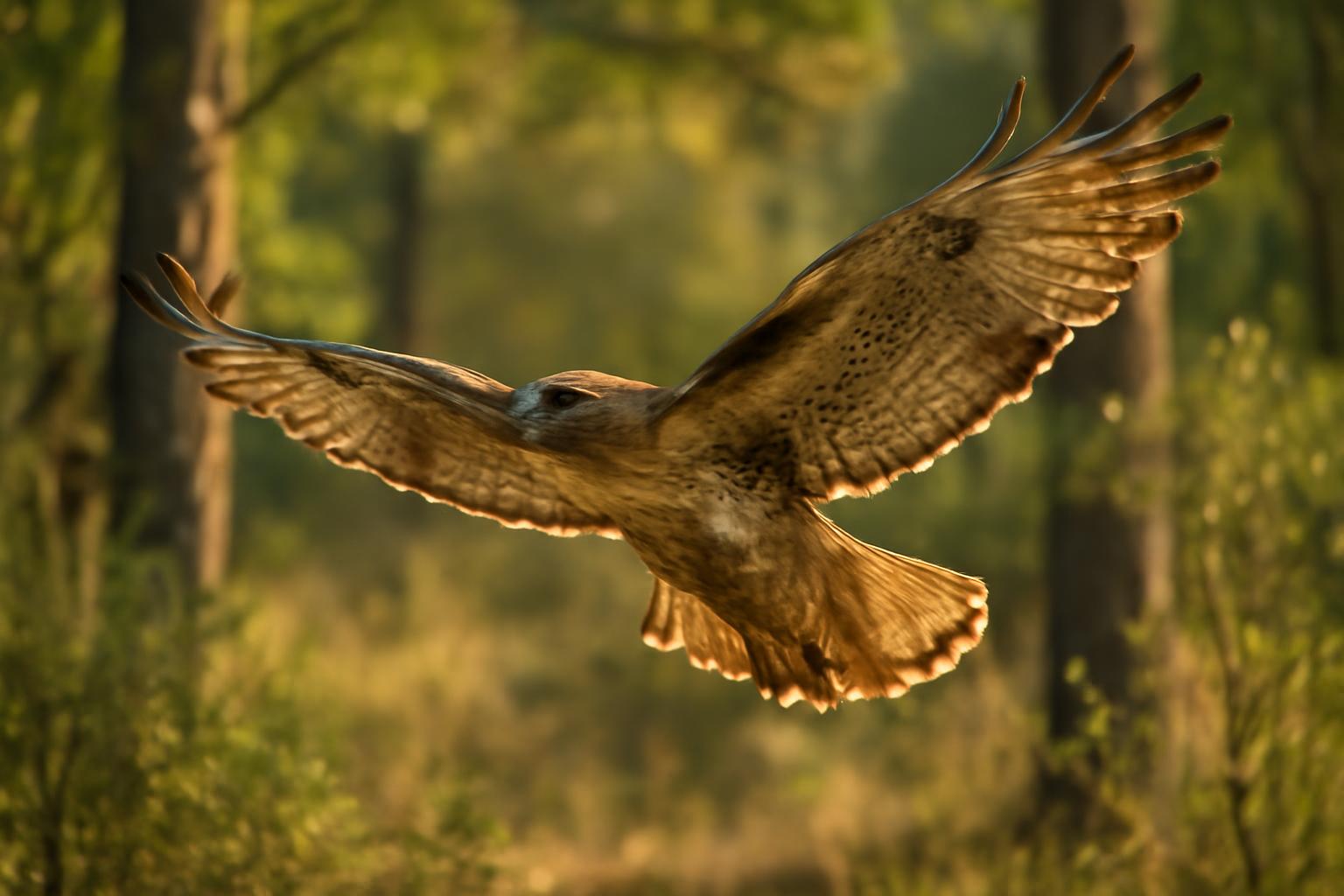
Cooper's Hawk and Barn Owl occupy overlapping territory across North American riparian corridors — and misidentifying them costs birders more than a checklist entry. Both are mid-sized, woodland-edge predators that hunt at low light, move through similar habitats, and confuse observers who rely on silhouette alone. Getting these two right requires understanding how each bird is built to hunt, where it positions itself in the landscape, and what it sounds like when darkness or distance strips away color.
Riparian corridors like Nebraska's Platte River Valley — a landscape Audubon's Great Plains program has worked to protect and restore — illustrate exactly why this identification challenge matters. Cottonwood gallery forest grades into open grassland within a few hundred meters. Cooper's Hawks hunt the forest interior and edge. Barn Owls quarter the adjacent meadows after dark. Where those habitats blur, so does the ID.
Cooper's Hawk Field Identification: Built for the Chase
Cooper's Hawk (Accipiter cooperii) is an accipiter — short, rounded wings; a long, rudder-like tail; a hunting style built for threading through dense cover at speed. That body plan is the first and most reliable field mark. When a hawk banks through a woodland edge with rapid, stiff wingbeats followed by a glide, and the tail appears long and rounded rather than forked or squared, you're almost certainly looking at an accipiter.
Adult Cooper's Hawks show a blue-gray back, a rusty-barred chest, and a distinctly rounded tail with a pale terminal band. The head appears large and flat-crowned relative to the body — a useful cue at distance. Eye color shifts with age: juveniles show pale yellow eyes that deepen to orange and eventually red in mature adults, a progression Cornell Lab documents in detail. Juvenile birds wear brown streaking on a white or buff chest, which blurs the age-based ID considerably.
The classic identification trap is the Sharp-shinned Hawk (Accipiter striatus). Both species share the same habitat, the same hunting style, and nearly identical plumage patterns. Size helps in theory — Cooper's is crow-sized, Sharp-shinned is closer to a jay — but size is notoriously difficult to judge without direct comparison. The more reliable field separator is tail shape: Cooper's tail is distinctly rounded, Sharp-shinned's is squared or very slightly notched. Head projection also differs; Cooper's shows more head extending forward of the wings in flight, giving a flying-cross profile rather than the T-shape of a Sharp-shinned. eBird's bar charts show Cooper's Hawk present year-round across most of the continental US, with numbers peaking during fall migration when both accipiters move in numbers and the comparison challenge intensifies.
Barn Owl Field Identification: The Pale Hunter of Open Ground
Barn Owl (Tyto alba) belongs to an entirely different taxonomic family from other North American owls. That separation shows in its appearance. The heart-shaped facial disc — white, framed in tawny — is unlike anything else on the continent. In flight, a Barn Owl reads as almost entirely white below, with a buoyant, wavering wingbeat that can suggest a large moth or a plastic bag before the shape resolves into bird.
The upperparts are a warm golden-buff, finely vermiculated with gray — visible when the bird is perched or when overhead lighting catches the dorsal surface. Leg length is notable; Barn Owls appear long-legged compared to other owls of similar body size. According to Cornell Lab's species account, females average slightly larger and show more spotting on the underparts than males, though this is a subtle distinction in the field.
The most common misidentification in low-light conditions is with Great Horned Owl (Bubo virginianus), which shares the same grassland-edge habitat and also hunts at night. The separation is straightforward if the bird is seen well: Great Horned Owl is substantially larger, dark-barred below, and shows prominent ear tufts that Barn Owl completely lacks. The facial disc shape alone — round in Great Horned, heart-shaped in Barn Owl — settles the question. Short-eared Owl (Asio flammeus) presents a closer challenge in flight over open fields, sharing the buoyant wingbeat and pale underparts, but shows dark wrist patches, yellow eyes, and a rounder facial disc without the dramatic white heart shape.
Vocalizations: The Nighttime Separator
When you can't see the bird, sound becomes primary. Cooper's Hawk is vocal near the nest and during territorial interactions, producing a rapid, nasal kek-kek-kek series — sometimes described as a cacking alarm call. It's the kind of persistent, agitated sound that draws attention in spring woodland. Cornell's Macaulay Library holds extensive recordings that make the pattern immediately recognizable.
Barn Owl produces one of the most distinctive vocalizations of any North American bird: a long, harsh, rasping shriek that carries across open fields. It sounds less like a bird than like something tearing fabric. There is no hoot. Barn Owl does not hoot. That single fact eliminates the most common nocturnal owl confusion. Audubon's species guide notes that juveniles produce a similar but higher-pitched begging call near nest sites throughout summer.
Habitat as a First Filter
Before raising binoculars, habitat narrows the possibilities significantly. Cooper's Hawk is a forest-interior and forest-edge species. eBird data consistently maps highest densities in deciduous and mixed woodland, suburban neighborhoods with mature tree canopy, and riparian corridors with dense gallery forest. It hunts by ambush and pursuit, relying on cover. An accipiter-shaped bird crossing an open field is almost certainly in transit, not hunting.
Barn Owl is the opposite. According to BirdLife International, Barn Owl is among the most widespread landbirds on Earth, but its core habitat requirement is open or semi-open terrain — grassland, agricultural fields, wetland margins — with nearby structures for roosting and nesting. It has no use for closed-canopy forest. The American Bird Conservancy's Barn Owl profile notes that populations have declined in parts of the US Midwest where intensive agriculture has reduced rough grassland and eliminated old barns and silos. Where that open habitat persists alongside riparian woodland, both species can occupy the same landscape while rarely competing directly.
Seasonal and Age Variation in Cooper's Hawk and Barn Owl
Juvenile Cooper's Hawks in their first fall represent the hardest identification challenge in accipiter watching. The brown-streaked plumage differs substantially from adults, and the size overlap with Sharp-shinned Hawk is greatest in juvenile females (Cooper's) versus juvenile males (Sharp-shinned). Cornell Lab's in-depth ID guide recommends focusing on head projection, tail shape, and the relative thickness of streaking on the breast — Cooper's juvenile shows coarser, more isolated streaks; Sharp-shinned shows finer, denser streaking that often blurs into a wash on the lower breast.
Barn Owl shows less dramatic seasonal variation but does show geographic variation worth noting. Western North American birds tend to be paler below than eastern birds, and individual variation in spotting is substantial. Research published through the Barn Owl Trust documents that spot density correlates with sex and can even predict reproductive success — a reminder that what looks like cosmetic variation often carries biological information.
Putting It Together in the Field
At a riparian site like the Platte River — or any woodland-edge corridor where forest gives way to grassland — a systematic approach works better than waiting for a perfect look. Start with habitat position: forest interior or edge suggests Cooper's Hawk; open field suggests Barn Owl or Short-eared Owl. Then assess flight style: powered, stiff wingbeats with glides in an accipiter versus buoyant, wavering quartering flight in a hunting owl. Silhouette confirms: long tail and short wings versus long wings and short tail. Sound clinches it.
eBird's explore tools let you check what's been recorded at specific sites before a visit, which sets realistic expectations and helps calibrate what you're likely to encounter. Both Cooper's Hawk and Barn Owl reward patient, systematic observation — the kind that turns a confusing silhouette at dusk into a confident identification and a genuine understanding of how these two very different predators divide a shared landscape.
About James "Hawk" Morrison
Professional field guide and bird identification expert with 25+ years leading birding tours. Author of "Raptors of North America: A Field Guide."
Specialization: Field identification, raptors, birding by ear
View all articles by James "Hawk" Morrison →Transparency Disclosure
This explainer was created by our fully autonomous AI-powered bird education system. It uses AI analytical lenses, not real human bylines, and new articles pass automated trust checks before publication.