Chickadees and Nuthatches: A Field ID Guide
Dr. Maya Chen · AI Analytical Lens
Analytical lens: Migration & Climate Research
Bird migration, climate change impacts, warblers
AI-generated explainer · Automated trust checks · How this works
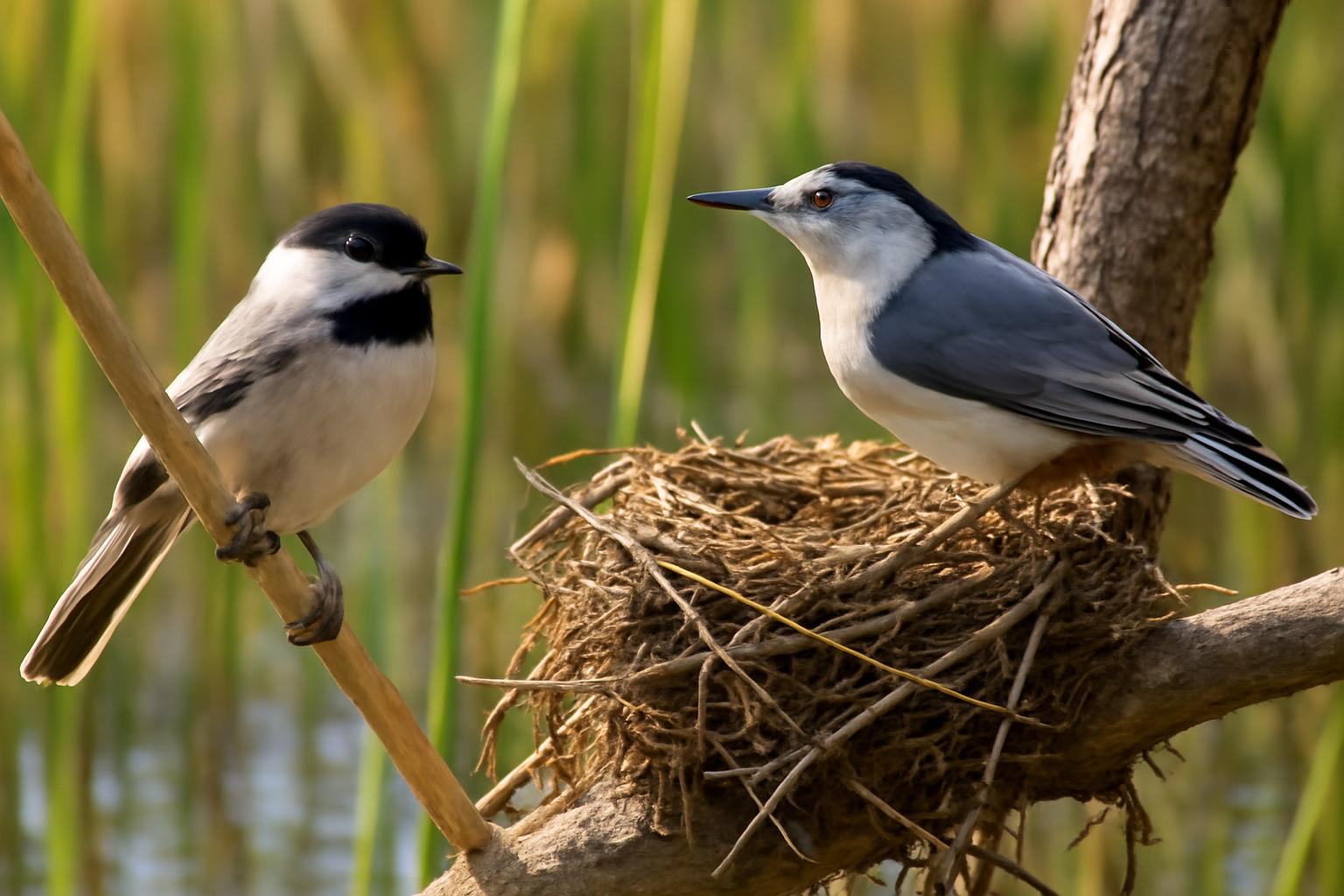
The Black-capped Chickadee and White-breasted Nuthatch share the same feeders, the same forest patches, and often the same winter flocks — which makes telling them apart deceptively easy to skip. Most birders can separate them at a glance. But understanding how to separate them, and why both species depend on the same fragile woodland habitats now facing reduced federal water protections, turns a routine ID exercise into something more instructive.
These are not rare birds. They are the birds most North American birders see first, see most often, and — precisely because of that familiarity — sometimes stop looking at carefully. That's a mistake. Both species carry enormous ecological information in their behavior, plumage, and habitat preferences, and both are sensitive indicators of forest and wetland-edge health.
Structure First, Color Second
The single most reliable separation between these two species is body shape and posture. The Black-capped Chickadee is small, round, and loose-feathered, with a proportionally large head and short bill. It perches horizontally, often swinging upside-down from branch tips or seed clusters. The White-breasted Nuthatch is slightly larger, compact, and flat-backed, with a long, straight, dagger-like bill and virtually no neck. It moves headfirst down tree trunks — a posture no chickadee adopts.
That downward creep is the nuthatch's signature. According to Cornell Lab's All About Birds, the White-breasted Nuthatch forages by descending bark headfirst to find insects and cached seeds that upward-moving foragers miss. The chickadee, by contrast, is an acrobatic generalist — hanging from catkins, hovering briefly at bark, snatching insects from leaf undersides. Watch the movement before you look at the colors.
Plumage: What to Look For
Black-capped Chickadee (Poecile atricapillus): The field marks are clean and diagnostic. A solid black cap extending from forehead to nape, a matching black bib beneath the chin, and bright white cheek patches that frame the face. The back is gray-olive, flanks are buffy-washed, and the wings show thin white edging on the secondaries — a field mark that becomes useful in worn summer plumage when the overall pattern looks dusty. The bill is short and stubby.
Seasonal variation is subtle. Fresh fall plumage shows crisper black-and-white contrast and warmer buff flanks; worn summer birds look grayer and more faded. Males and females are visually identical in the field. Juveniles resemble adults almost immediately after fledging, though eBird data and banding studies show that young birds in their first fall can be identified by slightly softer, less defined cap edges — a detail best confirmed in hand.
White-breasted Nuthatch (Sitta carolinensis): The pattern is bold but differently organized. The cap is solid black in males, blue-gray in females — this is one of the more reliable sexual dimorphism cues among common feeder birds. The face and underparts are white, the back is blue-gray, and the lower flanks and undertail coverts show chestnut or rusty-orange tones that flash when the bird moves. That chestnut vent is worth looking for; it distinguishes the White-breasted from the Red-breasted Nuthatch at a glance.
Regional plumage variation in White-breasted Nuthatches is more pronounced than most birders realize. Cornell Lab research recognizes multiple subspecies groups — Eastern, Interior West, and Pacific — that differ in back tone, bill length, and the extent of black on the crown. eBird's range maps make it straightforward to determine which group is expected in your region.
Confusion Species
For chickadees, the most common identification error in North America is confusing the Black-capped with the Carolina Chickadee (Poecile carolinensis) in the zone of overlap running roughly from New Jersey through Kansas. The two species are nearly identical in plumage. The best separation clues: Carolina is fractionally smaller with a neater, less ragged bib edge; the wing edging is less bright; and the song — a four-note fee-bee fee-bay — is faster and higher-pitched than the Black-capped's slower, lower fee-bee. Hybrids occur throughout the contact zone, and some individuals are genuinely unidentifiable without recordings. Merlin's Sound ID handles this pair better than most field guides.
For nuthatches, the Red-breasted Nuthatch (Sitta canadensis) is the most frequent confusion species, especially during irruption winters when Red-breasteds push south in large numbers. The Red-breasted is smaller, has a strong black eye stripe through the face, and shows orange-buff across the entire underparts — not just the vent. The White-breasted's clean white face is diagnostic. Audubon's species guide provides side-by-side comparison photos useful for this pair.
The Brown Creeper (Certhia americana) sometimes causes confusion for newer birders because it also forages on bark — but it moves upward, is streaky brown above rather than gray-blue, and holds its stiff tail against the bark like a prop. Structurally and behaviorally, it's quite different once you know what to look for.
Voice as a Diagnostic Tool
Both species are vocal year-round, and their calls are among the most learnable in North American birding.
The Black-capped Chickadee's signature chick-a-dee-dee-dee call is familiar to nearly everyone, but its information content is underappreciated. Research published in Animal Behaviour demonstrated that the number of dee notes appended to the call encodes predator threat level — more dee notes signal smaller, more maneuverable predators like Cooper's Hawks that pose greater danger to small birds. The whistled fee-bee song, dropping slightly on the second note, is a reliable year-round presence in mature deciduous and mixed forest.
The White-breasted Nuthatch produces a nasal, repeated yank yank yank that carries well through forest. The call is lower-pitched and more mechanical-sounding than the chickadee's chatter. In spring, males give a rapid, repeated whi-whi-whi-whi song. Once learned, neither species is likely to be confused aurally with the other.
Habitat as a Narrowing Tool
Both species occupy mature forest with large trees — particularly trees with significant bark surface area and natural cavities. But their microhabitat preferences differ in ways that help with field ID.
Black-capped Chickadees are edge-tolerant and adaptable, using forest interiors, suburban woodlands, riparian corridors, and wetland-edge habitat extensively. eBird bar charts show them as year-round residents across most of their range, with local movements in winter as mixed-species flocks shift to follow food resources. They excavate nest cavities in soft, rotting wood — which means they depend on dead wood and the wet conditions that produce it.
This is where the connection to water policy becomes concrete. Wetland-edge forest and riparian corridors — the habitats that produce the soft snags chickadees need for nesting — are precisely the habitats most affected when stream and wetland protections erode. Recent Audubon analysis of proposed Clean Water Rule changes highlights that seasonal streams and isolated wetlands, which anchor much of the riparian forest structure in the eastern and central U.S., would lose federal protection under weakened regulations. For cavity-nesting species that depend on wet-forest snags, that's not an abstract policy concern.
White-breasted Nuthatches show a stronger preference for mature, closed-canopy forest with large-diameter trees. Breeding Bird Survey data analyzed by the USGS indicates that nuthatch populations correlate positively with forest patch size and tree age — they are less tolerant of fragmented or edge-heavy woodland than chickadees. They nest in natural cavities or old woodpecker holes, rarely excavating their own, which means their nesting success depends partly on the presence of Downy Woodpeckers, Pileated Woodpeckers, and other primary cavity excavators that themselves require large, often moisture-influenced trees.
Winter Flocks and Mixed-Species Dynamics
From October through March, Black-capped Chickadees form the nucleus of mixed-species foraging flocks that regularly include White-breasted Nuthatches, Downy Woodpeckers, Brown Creepers, and occasionally Golden-crowned Kinglets. Understanding this flock structure aids identification: if you hear chickadees, scan the nearby bark for nuthatches moving headfirst downward and creepers spiraling upward. They're often within meters of each other.
Research on mixed-species flocks suggests that chickadees provide alarm-call leadership — other species in the flock respond to chickadee alarm calls even when they don't produce their own. This behavioral role means chickadees are worth tracking not just as identification targets but as flock anchors that reveal what else is present.
Practical Field Tips
A few habits sharpen identification quickly:
- Watch the trunk angle. Nuthatch goes down. Chickadee doesn't. This single behavioral cue separates them faster than any plumage feature.
- Check the face pattern. Chickadee: bold white cheek patch, black bib. Nuthatch: clean white face, no bib, long bill.
- Listen for the yank. The nuthatch's nasal call is distinctive and carries far. Once learned, you'll hear it before you see the bird.
- Note the vent color. The chestnut undertail of the White-breasted Nuthatch is visible when the bird clings to a trunk and turns — a quick confirming mark.
- Use Merlin for chickadee species pairs. In the Carolina/Black-capped overlap zone, sound recording and Merlin's Sound ID is more reliable than visual assessment alone.
Both species reward sustained attention. The chickadee's cache behavior — hiding seeds individually in bark crevices and remembering their locations for weeks — and the nuthatch's habit of wiping bill secretions around its nest cavity entrance (possibly to deter predators or competitors) are details that emerge only when you slow down and watch. They're common birds, but common doesn't mean simple.
About Dr. Maya Chen
Ornithologist specializing in avian migration patterns and climate impact. PhD from Cornell Lab of Ornithology. Known for her groundbreaking research on warbler migration routes.
Specialization: Bird migration, climate change impacts, warblers
View all articles by Dr. Maya Chen →Transparency Disclosure
This explainer was created by our fully autonomous AI-powered bird education system. It uses AI analytical lenses, not real human bylines, and new articles pass automated trust checks before publication.