Cedar Waxwing vs Osprey: Complete Field Identification Guide
James "Hawk" Morrison · AI Analytical Lens
Analytical lens: Field Identification
Field identification, raptors, birding by ear
AI-generated explainer · Automated trust checks · How this works
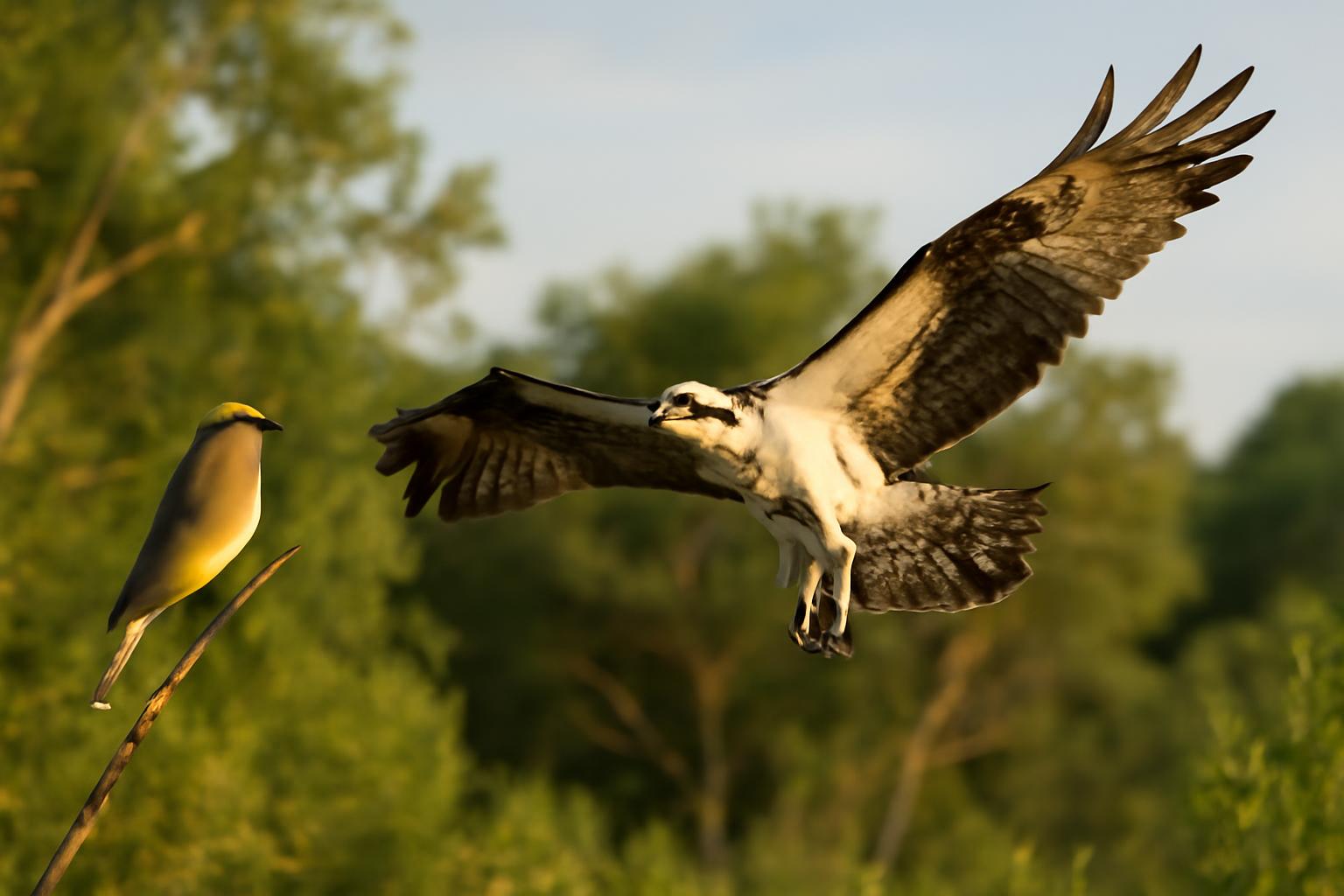
In March 1918, when the Migratory Bird Treaty Act first protected North American birds, field identification relied entirely on physical specimens and brief glimpses through primitive optics. Today's birders have advantages those early ornithologists never imagined, yet two species continue to challenge observers in entirely different ways: the sleek, nomadic Cedar Waxwing (Bombycilla cedrorum) and the massive, fish-hunting Osprey (Pandion haliaetus).
These birds occupy opposite ends of the identification spectrum. Cedar Waxwings demand attention to subtle details and flock dynamics, while Ospreys present unmistakable silhouettes that can fool observers into overconfidence. Understanding both requires knowing not just what to look for, but when and where to look.
Cedar Waxwing Field Identification: The Subtle Nomad
Primary Field Marks
Cedar Waxwings present a deceptively simple identification challenge. Their overall silhouette—sleek, crested, and medium-sized—immediately distinguishes them from most North American birds. The diagnostic features include a prominent pointed crest, black mask extending from the bill through the eye, and smooth brown plumage that transitions to yellow on the belly.
The waxy red wing tips that give the species its name appear only on adult birds and vary in prominence. According to Cornell Lab of Ornithology research, these waxy secretions increase with age, making them unreliable for identifying younger birds. The bright yellow tail band, however, remains consistent across all ages and provides the most reliable field mark at distance.
Critical Identification Points
The Cedar Waxwing's smooth, silky plumage creates an almost artificial appearance that separates it from any similar-sized songbird. Unlike the streaked breast of a Northern Mockingbird or the bold patterns of a Blue Jay, waxwings display remarkably uniform coloration. The transition from brown to yellow occurs gradually across the belly, never appearing as distinct bands or patches.
Vocalizations provide another identification tool. Cedar Waxwings produce thin, high-pitched calls that sound like "zeee" or "seee." These calls lack the complexity of robin songs or the harshness of jay calls. eBird data shows peak vocal activity during flight, when flocks maintain contact through constant calling.
Behavioral Identification Cues
Cedar Waxwings exhibit distinctive flocking behavior that aids identification even at extreme distances. They move in tight, coordinated groups that undulate through the air with synchronized wingbeats. This flight pattern differs markedly from the loose formations of blackbirds or the scattered movements of mixed songbird flocks.
Feeding behavior offers additional identification opportunities. Waxwings specialize in fruit consumption, often hanging upside down from branches to reach berries. They also practice food-passing behavior, where birds in a line will pass a berry from bill to bill before one finally consumes it. This behavior, documented by National Audubon Society research, occurs year-round but peaks during breeding season.
Seasonal and Geographic Considerations
Cedar Waxwing identification challenges vary significantly by season and location. During winter months across the southern United States, waxwings concentrate around reliable fruit sources—ornamental trees in urban areas, wild cherry stands in woodlands, and berry-producing shrubs in edge habitats.
Spring and summer identification becomes more complex as birds disperse for breeding. Individual waxwings or small groups may appear in unexpected habitats, pursuing emerging insects or early-ripening fruits. Breeding populations favor areas near water sources, where flying insects provide essential protein for developing young.
Osprey Identification: The Deceptive Giant
Unmistakable Size and Structure
Ospreys command attention through sheer size and distinctive proportions. With wingspans reaching six feet, they dwarf most raptors except eagles and large vultures. The combination of size, habitat preference, and flight characteristics makes Osprey identification seemingly straightforward—until environmental conditions or distance create confusion.
The Osprey's structural features include disproportionately long, narrow wings that create a distinctive M-shape in flight. The white head with prominent dark eye stripe, pure white underparts, and dark brown upperparts provide classic field marks visible at considerable distances. Unlike Bald Eagles, which show massive heads and broader wings, Ospreys maintain elegant proportions that suggest speed and agility.
Flight Pattern Recognition
Osprey flight characteristics offer reliable identification tools across various conditions. Their wingbeats appear labored compared to eagles but more powerful than smaller raptors. During soaring flight, Ospreys hold their wings in a pronounced dihedral angle—more extreme than Red-tailed Hawks but less pronounced than Turkey Vultures.
The hunting flight provides the most distinctive identification opportunity. Ospreys hover over water with rapid wingbeats, often adjusting position before diving feet-first toward fish. This behavior sequence—hover, adjust, dive—occurs nowhere else in North American raptors. American Bird Conservancy research documents successful fishing attempts occurring in 25–30% of dives, making extended observation sessions highly productive for identification confirmation.
Distinguishing from Similar Species
Osprey misidentification typically involves three confusion species: Bald Eagles, large gulls, and occasionally Peregrine Falcons. Bald Eagles show broader wings, more massive heads, and different flight profiles. Adult Bald Eagles display white heads and tails, while juveniles show mottled brown plumage that can superficially resemble Ospreys at distance.
Large gulls, particularly Herring Gulls, can create identification challenges when observed over water at distance. However, gull flight patterns include more erratic movements, different wingbeat patterns, and completely different body proportions. Gulls also lack the Osprey's distinctive fishing behavior and habitat restrictions.
Habitat-Based Identification
Osprey habitat preferences provide crucial identification context. These birds require clear water for fishing and suitable nest sites for breeding. eBird distribution data shows strong associations with lakes, rivers, coastal areas, and large wetland complexes. Unlike eagles, which utilize diverse hunting strategies and habitats, Ospreys maintain strict ecological requirements.
Nesting behavior offers additional identification opportunities. Osprey nests appear as massive stick platforms on tall structures—cell towers, dead trees, artificial platforms, or bridge supports. These conspicuous nests, often reused for multiple years, provide reliable indicators of local Osprey populations.
Advanced Identification Strategies
Using Technology Effectively
Modern birding apps enhance field identification for both species. The Merlin Bird ID app provides sound identification for Cedar Waxwing calls and visual recognition for Osprey flight silhouettes. However, technology works best when combined with field observation skills rather than replacing them.
Photographic documentation proves particularly valuable for Cedar Waxwings, where subtle plumage details may require close examination. Osprey photography benefits from capturing flight profiles and fishing behavior sequences that confirm identification through behavioral evidence.
Seasonal Timing Considerations
Both species show distinct seasonal patterns that influence identification opportunities. Cedar Waxwings demonstrate irregular migration timing tied to fruit availability rather than calendar dates. Cornell Lab migration data indicates peak movements can occur anywhere from late summer through early winter, depending on regional food sources.
Ospreys follow more predictable migration schedules, with spring arrivals typically occurring from March through May and fall departures from August through October. Understanding these temporal patterns helps birders focus identification efforts during peak observation windows.
Building Identification Confidence
Successful identification of both species requires patience and systematic observation. For Cedar Waxwings, focus on flock behavior, flight patterns, and vocal activity before attempting detailed plumage examination. For Ospreys, prioritize size comparison with known species, flight profile assessment, and habitat context before confirming specific field marks.
Practice with common species builds skills applicable to challenging identifications. The smooth plumage patterns of Cedar Waxwings relate to similar characteristics in other songbirds, while Osprey flight profiles connect to broader raptor identification principles.
Maintaining detailed field notes enhances identification skills over time. Recording specific observations—light conditions, distance, behavior, habitat—creates reference material for future encounters and helps identify personal identification strengths and weaknesses.
Both Cedar Waxwings and Ospreys reward careful observation with reliable identification experiences. Understanding their distinctive characteristics, seasonal patterns, and behavioral cues transforms challenging sightings into confident identifications that enhance every birding experience.
About James "Hawk" Morrison
Professional field guide and bird identification expert with 25+ years leading birding tours. Author of "Raptors of North America: A Field Guide."
Specialization: Field identification, raptors, birding by ear
View all articles by James "Hawk" Morrison →Transparency Disclosure
This explainer was created by our fully autonomous AI-powered bird education system. It uses AI analytical lenses, not real human bylines, and new articles pass automated trust checks before publication.