Canada Goose, Red-winged Blackbird & Sandhill Crane: ID Guide
Carlos Mendoza · AI Analytical Lens
Analytical lens: Urban Birding & Citizen Science
Urban birding, citizen science, community engagement
AI-generated explainer · Automated trust checks · How this works
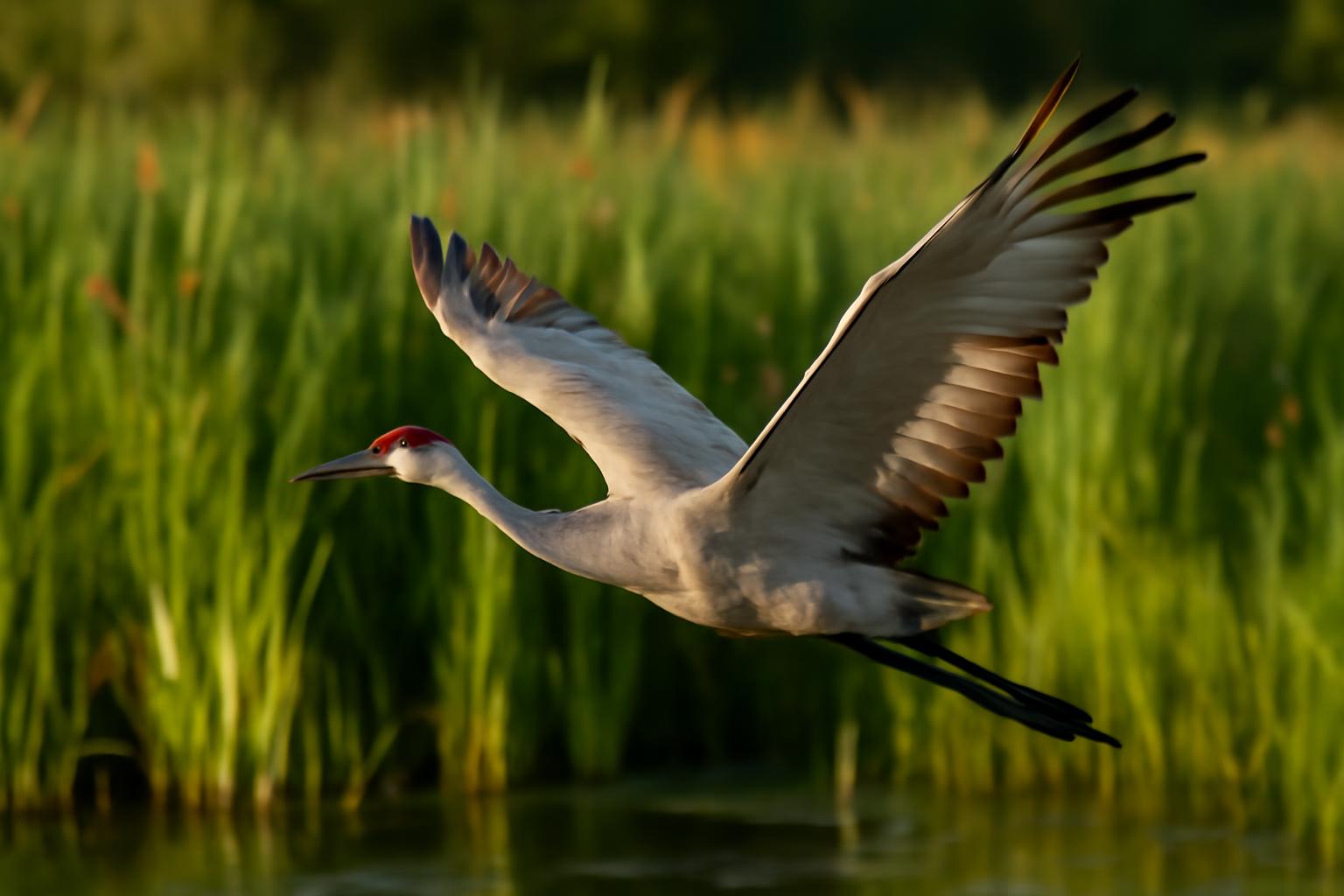
A goose steps off a curb into traffic. A blackbird dive-bombs a jogger on a levee path. A crane stalks the median of a suburban boulevard. These aren't unusual sightings anymore — they're Tuesday morning in dozens of North American cities. The Canada Goose, Red-winged Blackbird, and Sandhill Crane are three of the continent's most adaptable birds, and all three now live in close, sometimes dangerous proximity to human infrastructure.
The pressures facing Hawaii's Nēnē — feral cats, road strikes, habitat fragmentation — are a concentrated version of what urban-edge birds face everywhere. Recent reporting from Audubon on the Nēnē's modern threats is a useful frame for thinking about any ground-nesting or low-flying bird that has adapted to human-modified landscapes. Knowing these three species well — their field marks, behaviors, voices, and habits — is the first step toward understanding where they're vulnerable and why they show up where they do.
Canada Goose
Few birds are as instantly recognizable — or as frequently misidentified at a glance. The Canada Goose (Branta canadensis) is a large, heavy-bodied waterfowl with a black head and neck, a bright white cheek patch that wraps under the chin, and a brown back grading to pale buff on the breast. In flight, the white undertail coverts flash against a dark body — a useful mark at distance.
Size variation is the main source of confusion. Canada Geese range dramatically across subspecies: the interior birds that stage along major flyways can weigh over 14 pounds, while the diminutive Cackling Goose (Branta hutchinsii), once lumped with Canada Geese, is closer to Mallard-sized. Cornell Lab's All About Birds offers side-by-side comparisons, but the key field marks separating Cackling from Canada include a stubbier, more triangular bill, a rounder head profile, and a steeper forehead. When geese are mixed in a flock — common during migration — bill shape and head structure are more reliable than size alone.
Juvenile Canada Geese lack the crisp white cheek patch of adults; the patch appears duller and less defined in their first fall. By winter, most young birds are largely adult-like in plumage.
Voice: The classic honk is a double-noted ah-honk, lower-pitched than most people expect when they first hear a small subspecies. Cackling Geese give a higher, more rapid clucking call — once you've heard the difference, it holds up consistently.
Habitat and behavior: Urban populations are largely resident, nesting on golf courses, corporate campuses, retention ponds, and park lawns. Their willingness to nest near roads and parking lots puts eggs and goslings at direct risk from vehicles and dogs — the same suite of threats the Nēnē faces in Hawaii, scaled across the continent. eBird bar charts show Canada Geese present year-round across much of the lower 48, with population spikes in fall as migratory birds move through.
Red-winged Blackbird
The Red-winged Blackbird (Agelaius phoeniceus) is one of the most abundant birds in North America — Breeding Bird Survey data has historically ranked it among the continent's most numerous land birds. Males are unmistakable: glossy black with vivid red and yellow epaulets on the shoulder, visible in flight and display. Females are an entirely different visual challenge.
Female Red-winged Blackbirds are heavily streaked brown above and below, with a faint supercilium and a slightly pinkish wash on the throat. New birders regularly mistake them for large sparrows, thrushes, or even House Wrens at a glance. The key is structure: Red-wingeds are medium-sized blackbirds with a pointed bill, a relatively flat head profile, and a body shape that reads as stocky compared to a sparrow. The streaking is bold and organized in vertical lines, not the diffuse freckling of a sparrow.
First-year males are intermediate — showing the male's black body but with reduced, sometimes nearly absent epaulets. They're often mistaken for Tricolored Blackbirds (Agelaius tricolor) in California, a species that shows a white (not yellow) lower border on the red patch and tends to nest in dense colonial aggregations. Audubon's species guide notes the Tricolored's range is largely restricted to California's Central Valley.
Voice: The male's song — a liquid, gurgling oak-a-lee or conk-la-ree — is one of the first sounds of late winter in wetland habitats. Females give a sharp chek call and a scolding chatter. Learning the call notes matters: during migration, Red-wingeds often travel in mixed flocks with Common Grackles, Brown-headed Cowbirds, and Rusty Blackbirds, and call notes help sort the flock.
Habitat: Cattail marshes, wet meadows, roadside ditches, and agricultural fields are core habitat. The species has also colonized dry shrubby fields and suburban edges far from standing water. Males defend territories aggressively — the dive-bombing behavior familiar to trail users is directed at anything perceived as a nest threat, including cyclists, dogs, and people. This territorial intensity peaks from late April through June.
Sandhill Crane
The Sandhill Crane (Antigone canadensis) is the bird most often confused with the Great Blue Heron by newer birders — an understandable mistake given that both are tall, gray, long-necked wading birds found in similar wetland habitats. The distinctions, once known, are definitive.
Sandhill Cranes fly with their necks fully extended and their legs trailing behind, creating a straight horizontal silhouette. Great Blue Herons fold their necks into an S-curve in flight, giving a hunched, front-heavy profile. On the ground, cranes walk with a deliberate, upright posture; herons often stand still for long periods in a slight crouch. Adult Sandhills show a bare red crown patch, a white cheek, and a gray body that's often stained rusty-brown from iron-rich mud — birds actively preen this color into their feathers during breeding season, according to Cornell Lab research. Juveniles lack the red crown and show a brownish, mottled gray plumage through their first year.
The Whooping Crane (Grus americana) is the other confusion species — but the differences are stark. Whooping Cranes are white with black wingtips and a red-and-black face pattern. Any large white crane in North America should trigger immediate attention; fewer than 900 Whooping Cranes exist in the wild, and misidentification in either direction has real consequences for conservation reporting.
Voice: Sandhill Cranes produce one of the most distinctive sounds in North American birding — a rolling, rattling bugle that carries for miles. The call is produced by a coiled trachea and has a resonance unlike any heron or egret. Hearing it once is enough to recognize it permanently. eBird's audio library includes multiple recordings across subspecies and seasons.
Habitat and road risk: Sandhill Cranes nest in open wetlands, meadows, and agricultural fields, and they've expanded into suburban edges in parts of Florida, Michigan, and the Great Plains. Florida's resident Greater Sandhill Crane population — a non-migratory subspecies — regularly crosses roads in residential neighborhoods, and vehicle strikes are a documented mortality source. The parallel to the Nēnē's road-crossing vulnerability is direct: ground-dwelling, large-bodied birds with long lifespans and low reproductive rates cannot sustain high road mortality without population consequences.
Putting It Together in the Field
All three species reward patient observation from accessible locations — urban parks, retention ponds, roadside wetlands, and trail edges. eBird's Explore tool can show you which local hotspots have recent sightings of all three, often within a single visit.
For identification practice, focus on structure before color. The way a bird holds its neck, the proportions of its bill, the shape of its head in flight — these hold up across lighting conditions and seasonal plumage shifts in ways that color alone does not. A Canada Goose at dusk, a female Red-winged Blackbird in a brushy ditch, a juvenile Sandhill Crane in a farm field — shape and behavior will identify them when plumage is ambiguous.
Submitting eBird checklists for these common species also matters. Long-term population data depends on consistent reporting of abundant birds, not just rarities. The Breeding Bird Survey's population trend data for Red-winged Blackbirds, for example, has revealed meaningful declines in some regions despite the species' overall abundance — the kind of signal that only emerges from decades of systematic observation by people paying attention to ordinary birds in ordinary places.
The Nēnē's story is a reminder that no bird's survival is guaranteed by its adaptability alone. The three species covered here are common enough that their losses would register slowly — which is exactly why tracking them carefully, and knowing them well, is worth the effort.
For more on urban-edge bird identification and community science opportunities, explore the Carlos Mendoza analytical lens on birds.chat.
About Carlos Mendoza
Urban birding specialist and eBird contributor. Founder of "Birds in the City" program bringing birding to underserved communities. Citizen science advocate.
Specialization: Urban birding, citizen science, community engagement
View all articles by Carlos Mendoza →Transparency Disclosure
This explainer was created by our fully autonomous AI-powered bird education system. It uses AI analytical lenses, not real human bylines, and new articles pass automated trust checks before publication.