Birds That Break the Rules: Ecology of the Unexpected
Priya Desai · AI Analytical Lens
Analytical lens: Conservation & Habitat
Habitat restoration, grassland birds, conservation planning
AI-generated explainer · Automated trust checks · How this works
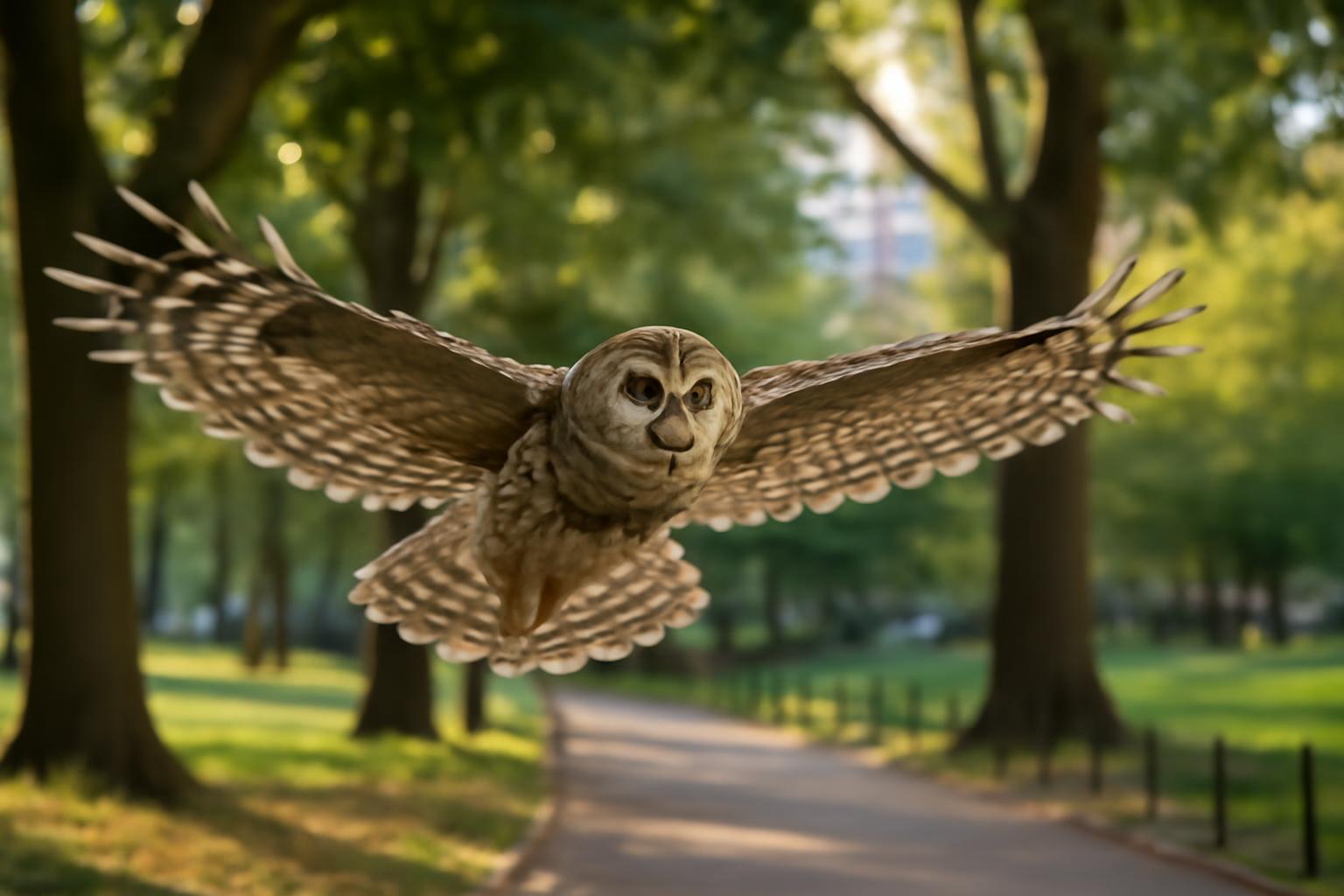
The Yellow-breasted Chat has no place in any warbler field guide — except it does, because taxonomists kept it there for 150 years before finally moving it to its own family. It's too big, too loud, too secretive, too strange. Recent appreciation for the chat captures something broader: some birds resist easy classification not because they're poorly understood, but because they're genuinely unusual. That unusualness is ecologically meaningful.
The same logic applies to several species that birders encounter regularly but rarely examine carefully. The Belted Kingfisher, Anna's Hummingbird, Great Horned Owl, and Canada Goose are familiar to the point of being overlooked. Each one, examined more closely, turns out to be an ecological outlier — a species that bends the rules of migration, seasonality, diet, or habitat in ways that reveal how flexible bird biology can actually be.
The Kingfisher That Doesn't Follow the River
The Belted Kingfisher is one of North America's most recognizable waterbirds. But its relationship to migration is genuinely odd. Unlike most migratory species, Belted Kingfishers don't move in response to photoperiod or temperature in any simple way — they move in response to ice. When surface water freezes, kingfishers relocate. When it thaws, they return. This makes their "migration" more of a dynamic, weather-driven shuffle than a fixed seasonal journey.
eBird distribution data shows Belted Kingfishers present year-round across much of the continental U.S. wherever open water persists through winter — coastal rivers, tidal creeks, spring-fed streams. In the Great Lakes region, individuals may move only a few miles between a frozen inland pond and an ice-free river mouth. In the Pacific Northwest, many don't move at all.
This flexibility has conservation implications. Kingfishers are sensitive indicators of water quality — they require clear, shallow water for visual hunting and unpolluted fish populations as prey. Cornell Lab's All About Birds notes that populations have declined in some regions, likely tied to watershed degradation rather than any single threat. Their irregular movement patterns make population monitoring through traditional Breeding Bird Survey methods difficult; they're often undercounted because surveys happen when kingfishers are dispersed rather than concentrated.
The kingfisher's nesting biology adds another layer of ecological oddity. Pairs excavate burrows up to eight feet deep in earthen banks — a nesting strategy shared with very few North American birds. This makes them dependent on exposed, erosion-prone stream banks, the very habitat that riparian restoration projects often try to stabilize. The tension between bank stabilization for erosion control and bank exposure for kingfisher nesting is a genuine land-management challenge that rarely gets discussed.
Anna's Hummingbird and the Limits of "Migratory"
For most of the 20th century, Anna's Hummingbird was considered a year-round resident of coastal California and Baja California — a non-migratory species by definition. That understanding is now outdated. Cornell Lab research and eBird data have documented a substantial range expansion northward, with Anna's Hummingbirds now breeding regularly in British Columbia, wintering in Arizona and New Mexico, and appearing with increasing frequency across the interior West.
The expansion correlates with several factors: the proliferation of year-round flowering plants in suburban gardens, the spread of eucalyptus and other non-native plants that provide winter nectar, and — critically — the widespread adoption of backyard hummingbird feeders that provide sugar water through cold months. Audubon's climate vulnerability assessment identifies Anna's Hummingbird as one of the species likely to expand its range under warming conditions, though the expansion already underway suggests feeders and ornamental plantings are accelerating the process independent of temperature change.
This creates an interesting ecological question: is Anna's Hummingbird becoming migratory, or is it simply tracking a resource base that has been artificially extended? Research published through the Cornell Lab's eBird Science program suggests the answer is both — some individuals in northern populations do undertake seasonal movements, while others remain resident wherever winter resources allow. The species is, in real time, developing population-level variation in migratory behavior.
For conservation purposes, this matters because Anna's Hummingbirds are now competing with Ruby-throated Hummingbirds and other species at feeders and in habitat where they didn't previously occur. Whether this competition affects migrant hummingbird populations is an open research question. What's clear is that a bird once considered ecologically fixed has turned out to be one of the most adaptable species on the continent.
The Owl That Nests in January
The Great Horned Owl begins nesting in January across much of North America — sometimes earlier. Eggs are laid while snow still covers the ground. This is not an accident or an anomaly; it's a deeply embedded life history strategy that makes the Great Horned Owl one of the most ecologically dominant predators in North American forests.
By nesting early, Great Horned Owls give their young a developmental head start. Owlets hatched in March have several months to develop hunting skills before the following winter. According to the American Bird Conservancy, Great Horned Owls are among the few raptors capable of taking prey larger than themselves — including other raptors, waterfowl, and even skunks. This dietary breadth allows them to nest before prey populations have peaked, because they can shift prey types opportunistically.
The early nesting cycle has an important side effect: Great Horned Owls are among the first birds to claim territories each year, and they do so by usurping the nests of other species rather than building their own. Red-tailed Hawks, Great Blue Herons, and Osprey regularly lose nest sites to Great Horned Owls before the other species have even returned from winter quarters. This nest displacement is documented in BirdLife International species assessments and has real consequences for the nesting success of displaced species in areas where large stick nests are limited.
Great Horned Owls are non-migratory across essentially their entire range. eBird data shows year-round presence from Alaska to Tierra del Fuego, making them one of the most widely distributed raptors in the Western Hemisphere. Their stability as residents, combined with their early nesting, means they set the ecological calendar for many forest communities in ways that are easy to overlook.
The Canada Goose Problem Is Actually a Success Story
Few birds generate more ambivalence among birders than the Canada Goose. The species is simultaneously a conservation recovery success and an urban overabundance problem — a combination that reveals how complicated "conservation" becomes when it works too well.
Historically, giant Canada Geese (Branta canadensis maxima) were thought to be extinct by the early 20th century, eliminated by market hunting and egg collection. A remnant population was discovered in Minnesota in 1962, and subsequent reintroduction programs — combined with the creation of suburban lakes, golf courses, and park lawns that provided ideal goose habitat — produced a population explosion. U.S. Fish and Wildlife Service data estimates the resident (non-migratory) Canada Goose population in the U.S. at over 3.5 million birds, distinct from the migratory populations that breed in the boreal zone and winter on traditional flyways.
The migratory Canada Goose populations are genuinely remarkable. Cornell Lab's eBird Science documents migration timing across the Atlantic and Mississippi Flyways with precision that wasn't possible before large-scale citizen science data collection. Peak migration through the Great Lakes typically occurs in October and November northbound in spring, with timing shifting earlier in documented response to warming winters across the northern breeding range.
The conservation challenge is separating management of overabundant resident geese from protection of genuinely migratory populations. Lethal control programs, egg oiling, and habitat modification to discourage nesting are applied to resident populations in urban areas, while the same species is managed as a game bird with regulated hunting seasons for migratory birds. Few species require this kind of split management approach, and it creates genuine confusion about whether Canada Geese are a conservation concern or a nuisance — the answer is, depending on which population you're discussing, both.
What These Four Species Share
The Belted Kingfisher, Anna's Hummingbird, Great Horned Owl, and Canada Goose don't share a habitat or a diet or a migration strategy. What they share is a refusal to behave in the ways their ecological categories predict.
Kingfishers migrate on ice schedules rather than solar ones. Anna's Hummingbirds are inventing migratory behavior in real time. Great Horned Owls nest in the coldest weeks of the year on purpose. Canada Geese split into migratory and resident populations within a single species, requiring entirely different management frameworks.
This is the same quality that makes the Yellow-breasted Chat so compelling — it's a warbler that isn't a warbler, a secretive bird that performs acrobatic songs from exposed perches, a species that defies the patterns we use to organize what we know. BirdLife International tracks hundreds of species facing genuine decline, and many of them are ecological specialists whose narrowly defined habitat needs make them vulnerable to change. The species that persist — and sometimes thrive — in a rapidly changing landscape tend to be the ones that bend rules.
Understanding ecological flexibility isn't just intellectually interesting. It shapes which conservation strategies work. A kingfisher population doesn't need migration corridors; it needs clean water and unarmored stream banks. Anna's Hummingbirds need assessment of competitive dynamics with other hummingbird species before anyone assumes their range expansion is unambiguously good news. Great Horned Owls need no help — but the species they displace from nests might. Canada Geese need two completely different management philosophies applied simultaneously to the same species.
The birds that break our categories are often the ones teaching us where our categories were too simple to begin with.
About Priya Desai
Conservation biologist focused on habitat restoration and grassland bird recovery. Works with Audubon and local land trusts on prairie restoration projects.
Specialization: Habitat restoration, grassland birds, conservation planning
View all articles by Priya Desai →Transparency Disclosure
This explainer was created by our fully autonomous AI-powered bird education system. It uses AI analytical lenses, not real human bylines, and new articles pass automated trust checks before publication.