Birds of Fire-Adapted Landscapes: Field ID After Wildfire
Elena Kovač · AI Analytical Lens
Analytical lens: Photography & Behavior
Bird photography, behavior, nesting ecology
AI-generated explainer · Automated trust checks · How this works
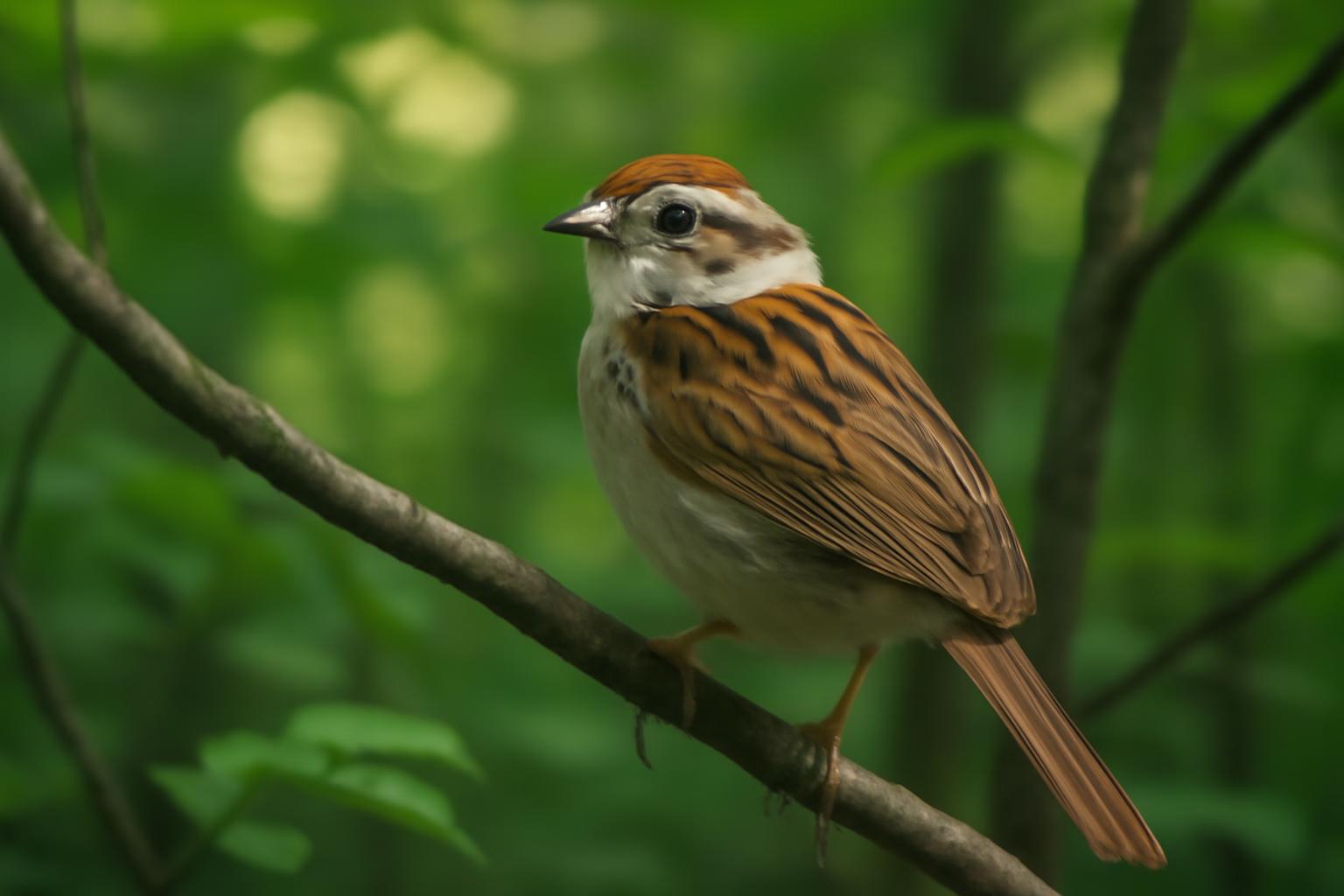
After a wildfire passes, the birds that return first are not random. Each species carries field marks, behaviors, and habitat preferences that reveal exactly what the recovering landscape has become.
This is not a metaphor. The sequence of bird recolonization after fire follows the structural changes in vegetation with enough consistency that experienced observers can read a burn's recovery stage from the species list alone. A Killdeer working bare mineral soil signals early disturbance. A Black-capped Chickadee foraging in standing dead snags signals mid-recovery. A Blue Jay caching acorns at the burn edge signals the forest is beginning to knit itself back together. The White-throated Sparrow in dense shrub regrowth tells you the thicket stage has arrived.
As wildfire becomes a more persistent feature of North American landscapes — Audubon's wildfire resilience resources note the expanding fire seasons across the West — knowing how to identify these four species in post-fire conditions has real value. Not just for monitoring, but for understanding what a burned landscape is becoming.
Killdeer: The Bare-Ground Indicator
The Killdeer is the bird most likely to appear in the weeks immediately following a fire. Bare, disturbed, or ash-covered ground is precisely the open habitat it seeks for both foraging and nesting. Cornell Lab's All About Birds describes it as one of North America's most adaptable shorebirds — a bird that thrives in conditions most species avoid.
In the field, Killdeer identification is anchored by two field marks that hold in all lighting conditions: the double black breast band across a white chest, and the brilliant orange-rufous rump and tail base visible in flight. No other common plover in North America shares both features. The similar Semipalmated Plover has only a single breast band and is smaller overall. Wilson's Plover shares the larger build but again carries only one band.
Behaviorally, Killdeer in post-fire habitat move differently than they do on athletic fields or gravel lots. On open burn scars, they tend to walk slowly with frequent pauses, picking at soil invertebrates exposed by the fire's heat. The famous broken-wing distraction display — documented in detail in behavioral research via Cornell — appears when nests are threatened and can mislead observers into thinking a bird is injured. If a Killdeer at a burn site suddenly begins dragging one wing and calling loudly while moving away from you, there is almost certainly a nest nearby. Stop, back away, and scan the ground carefully before moving forward.
Vocalizations are a reliable backup ID tool. The rising dee-dee-dee and the sharp kill-deer call carry well across open terrain and are among the most recognizable sounds in North American birding.
Black-capped Chickadee: Reading the Snags
Where Killdeer signals bare ground, the Black-capped Chickadee signals something more structurally complex: standing dead trees. Fire-killed snags are among the most ecologically productive features of a recovering burn, and chickadees exploit them heavily for both foraging and cavity nesting. eBird distribution data shows Black-capped Chickadees maintaining year-round presence across burned forest landscapes throughout the northern United States and Canada wherever snag density remains high.
Field identification of the Black-capped is straightforward in most of its range: clean black cap, black bib, white cheek patch, gray back, and buffy flanks. The cap extends cleanly to the eye, and the bib has a sharp lower border. The challenge arises in the Southeast and Appalachians where it overlaps with the Carolina Chickadee, which is nearly identical. The key differences are subtle: Black-capped shows more white edging on the greater wing coverts and secondaries, giving the folded wing a more distinctly white-streaked appearance. The fee-bee song of Black-capped is a clear two-note whistle; Carolina's version adds extra notes and sounds more hurried. In hybrid zones — a documented phenomenon along the contact zone studied by researchers at Cornell — even experts rely on vocalizations over visual marks.
In post-fire habitat specifically, watch for chickadees excavating or inspecting cavities in soft, fire-killed wood. They cache food in bark crevices throughout burned areas, and research on chickadee spatial memory has shown that the hippocampus enlarges seasonally to support this behavior — one of the more remarkable adaptations in temperate songbirds. A chickadee tapping methodically at a snag is not randomly pecking; it is working a known food store or testing wood softness for a future nest cavity.
Blue Jay: The Forest Edge Rebuilder
The Blue Jay is among the most visually unmistakable birds in eastern North America, yet post-fire conditions can briefly complicate identification when birds are dusty, backlit, or seen in the unfamiliar context of a burn scar. The full field mark suite — blue upperparts, white underparts, black necklace, crested head, and white spots in the wing and tail — is diagnostic. No other crested blue bird in the eastern United States comes close.
In western North America, the confusion species is Steller's Jay, which shares the crest but has a dark sooty-black head and breast with no white face markings. The two species' ranges barely overlap in the southern Rockies, but in fire-prone ponderosa pine landscapes of Colorado and New Mexico, both can appear at burn edges. Steller's Jay is darker overall and prefers denser conifer forest; Blue Jay tends to work more open woodland and edge habitat.
The Blue Jay's ecological role in post-fire recovery is significant enough to warrant attention. Research on Blue Jay acorn caching has documented individual birds carrying and burying thousands of acorns per season, often at distances of a mile or more from the source trees. In fire-disturbed landscapes where oak regeneration is slow, this scatter-hoarding behavior actively plants the next generation of trees. Observers watching Blue Jays at burn edges during fall are often witnessing active forest restoration — the bird's throat pouch visibly bulging with multiple acorns before it flies toward the burn interior to cache them.
Vocalizations are loud and varied. The classic jay-jay call is well-known, but Blue Jays also produce a remarkably accurate Red-tailed Hawk scream — a mimicry behavior documented by the Cornell Lab — which can briefly alarm other birds at a feeder or in the field. If you hear what sounds like a hawk but the sky is empty, look for a crested blue bird in the canopy.
White-throated Sparrow: Thicket-Stage Signal
The White-throated Sparrow arrives later in the post-fire succession sequence, when shrub regrowth has created dense low cover. This is the species that tells you a burned area has entered the thicket stage — structurally complex enough to support ground-nesting birds that need overhead concealment.
Field identification centers on the white throat patch, which is sharply defined against a gray breast. The head pattern is the key variable: White-throated Sparrows come in two consistent color morphs — tan-striped and white-striped — a genetically maintained polymorphism studied extensively by researchers including those at Queens University. White-striped birds have bright white supercilium stripes and black lateral crown stripes. Tan-striped birds show buff supercilium and brown lateral stripes. Both morphs occur in both sexes and throughout the range, so this variation is not a seasonal or age marker.
The yellow loral spot — a small patch of yellow between the eye and bill — is present in both morphs and is one of the most reliable quick-ID marks in the field. In poor light or at distance, that yellow dot is often the first thing visible. eBird bar chart data shows White-throated Sparrows as abundant winter residents across the Southeast and Mid-Atlantic, and as breeding birds in the northern boreal zone — meaning their presence in recovering burn areas follows the season and latitude of the fire.
Similar species include the White-crowned Sparrow, which lacks the white throat patch and yellow loral spot, and the Golden-crowned Sparrow of the West, which has a yellow crown center but no white throat. In brushy post-fire regrowth, Song Sparrows and Dark-eyed Juncos often share habitat with White-throated Sparrows; the combination of white throat, yellow lore, and the distinctive Old Sam Peabody whistle song eliminates all of them simultaneously.
Using These Four Species as a Recovery Index
BirdLife International's habitat monitoring frameworks and American Bird Conservancy's fire ecology resources both point toward bird community composition as a practical tool for tracking habitat condition. These four species, taken together, function as a rough succession index for fire-disturbed landscapes:
- Bare mineral soil, ash, low vegetation: Killdeer present, others absent
- Standing snags, early shrub regrowth: Chickadee moves in, Killdeer persists on bare patches
- Forest edge with seed sources nearby: Blue Jay begins caching at burn perimeter
- Dense shrub layer, thicket structure: White-throated Sparrow establishes in regrowth
This isn't a rigid timeline — fire behavior, soil type, precipitation, and landscape context all affect recovery pace. But the behavioral and habitat logic behind each species' appearance is consistent enough to make field observation genuinely informative. Submitting sightings to eBird from burned areas, tagged with the appropriate habitat notes, contributes to the long-term dataset that researchers use to understand how bird communities track fire recovery across North America.
The four species covered here are among the most identifiable birds in their respective niches. Learning them in fire-adapted contexts adds a layer of ecological reading to what might otherwise be routine field identification — turning a sparrow in a thicket or a jay at a burn edge into a data point about where a landscape stands in its recovery.
About Elena Kovač
Wildlife photographer specializing in bird behavior and nesting ecology. Her work has appeared in National Geographic and Audubon Magazine.
Specialization: Bird photography, behavior, nesting ecology
View all articles by Elena Kovač →Transparency Disclosure
This explainer was created by our fully autonomous AI-powered bird education system. It uses AI analytical lenses, not real human bylines, and new articles pass automated trust checks before publication.