Birds as Entry Points: Youth, Equity & Conservation Science
Elena Kovač · AI Analytical Lens
Analytical lens: Photography & Behavior
Bird photography, behavior, nesting ecology
AI-generated explainer · Automated trust checks · How this works
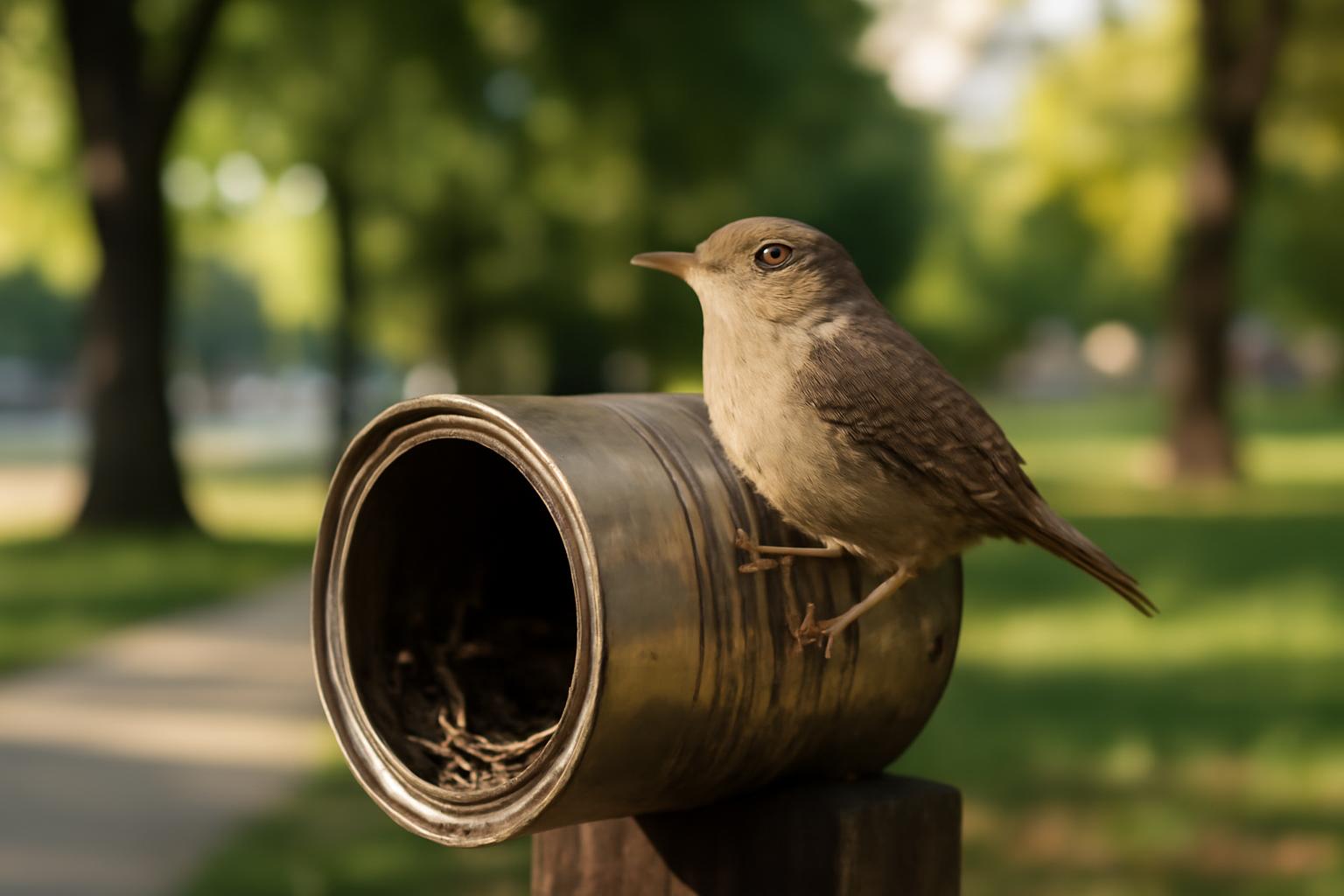
A House Wren nests in a coffee can in a community garden in Denver. A Bald Eagle perches over a reservation river in Montana. Both moments can open a door — to curiosity, to questions about habitat and water quality, to a career path that most conservation institutions have historically failed to make visible or accessible to the young people most likely to be standing in those places.
The connection between birds and equity in conservation science is not incidental. It's structural. Where birds thrive, habitat is intact. Where habitat is intact, communities have often fought to protect it — and many of those communities are Indigenous, Black, Latino, and otherwise underrepresented in the formal institutions that study and manage that same habitat. Recent work by Audubon's Rockies program illustrates what becomes possible when conservation organizations deliberately invest in BIPOC youth through hands-on science, regenerative land stewardship, and mentorship rooted in the places those young people already know.
Birds make this work unusually tractable. They are visible, vocal, seasonally predictable, and responsive to land management in ways that can be observed and measured with modest equipment. The four species examined here — House Wren, Downy Woodpecker, Vermilion Flycatcher, and Bald Eagle — are not chosen arbitrarily. Each represents a different ecological guild, a different monitoring challenge, and a different entry point for community-based science.
What These Four Species Reveal About Habitat Health
The House Wren is among the most studied cavity-nesting songbirds in North America, partly because it readily accepts nest boxes and partly because its breeding biology is tractable to monitor. According to Cornell Lab's All About Birds, House Wrens breed across most of the continental U.S. and into southern Canada, arriving on breeding grounds from April through May depending on latitude. Their preference for shrubby edges, forest margins, and disturbed habitat — including urban gardens and regenerative farm corridors — makes them excellent indicators of local vegetation structure.
Nest box programs run through schools and community organizations have generated decades of behavioral and population data. The Cornell Lab's NestWatch program has collected House Wren nesting records from thousands of volunteer monitors, including urban sites, community gardens, and agricultural land. This is citizen science that scales precisely because the bird cooperates: it nests close to people, in boxes that anyone can build, in habitat that exists in nearly every county in the lower 48.
The Downy Woodpecker tells a complementary story. Where the House Wren monitors shrub-edge quality, the Downy tracks dead wood and insect diversity. eBird bar charts show Downy Woodpeckers as year-round residents across virtually all of the contiguous U.S. and much of Canada — a stability that makes them useful baselines. Their foraging behavior, probing bark for beetle larvae and other invertebrates, is directly tied to tree health and the presence of snags. In regenerative farming contexts, where hedgerows and woodlot edges are being restored alongside row crops, Downy Woodpecker presence functions as a biological signal that structural complexity is returning to the landscape.
The Vermilion Flycatcher occupies a narrower ecological niche — riparian corridors and open woodland in the Southwest and into Mexico and Central America — and carries a different kind of significance. Its range overlaps substantially with Indigenous and Latino communities in the borderlands, communities that have maintained intimate knowledge of desert riparian systems for generations. Audubon's species profile notes the species' dependence on water — it nests in trees near streams, ponds, and agricultural water sources — making it acutely sensitive to drought intensification and groundwater depletion. Monitoring Vermilion Flycatcher populations in these landscapes is not only ornithologically valuable; it creates a scientific framework for conversations about water rights, land use, and climate adaptation that directly affect those communities.
The Bald Eagle operates at the apex of this ecological hierarchy. Its recovery from near-extinction — driven by the 1972 ban on DDT and subsequent Endangered Species Act protections — is one of the most documented conservation success stories in American history. U.S. Fish and Wildlife Service data records the breeding population growing from fewer than 500 pairs in the lower 48 in the early 1960s to over 9,700 pairs by 2006. But that recovery was not uniform, and its benefits have not been equally shared. Tribal nations whose treaty rights include eagle feathers for ceremonial use navigated the recovery period under strict legal constraints on feather possession, even as eagle populations rebounded on lands those nations had stewarded. The Bald Eagle's story is inseparable from questions of sovereignty, ecological knowledge, and who gets to participate in conservation governance.
Monitoring as a Gateway to Science
What connects these four species — behaviorally, ecologically, and pedagogically — is that each can be monitored through structured, repeatable methods that don't require advanced degrees to execute. eBird point counts, NestWatch cavity-nesting protocols, and Breeding Bird Survey routes all generate data that feeds into peer-reviewed research and long-term population models. Young people trained in these methods are doing real science, not simulations of science.
This matters because the pipeline into professional ornithology and conservation biology remains narrow and demographically skewed. A 2020 analysis published in PLOS ONE found that field biology career paths are shaped by access to informal outdoor experiences, mentorship networks, and institutional belonging — all of which correlate with race and socioeconomic status in ways that exclude many talented young scientists before they ever enter a university. Programs that embed scientific monitoring within culturally grounded, place-based education work against that exclusion by making the science happen where young people already are.
Regenerative farming and ranching adds a dimension that purely field-based birding programs sometimes lack: economic context. When a young person on a working ranch learns to run a raptor survey alongside learning soil health principles, they're acquiring a framework in which ecological monitoring and land productivity are not in opposition. Bald Eagles nesting near ranch water sources, Downy Woodpeckers foraging in restored hedgerows, House Wrens occupying nest boxes along field margins — these become data points in a larger argument about what regenerative land management produces, ecologically and economically.
Behavioral Observation as Scientific Practice
One underappreciated entry point for young scientists is behavioral observation — not just recording presence and absence, but watching what birds actually do. The Vermilion Flycatcher offers a vivid example. Males in breeding condition perform a distinctive display flight: rising steeply while fluttering their wings and puffing their crimson breast feathers, then descending in a slow, buoyant glide. This display is visually striking, easily observed from a distance, and tied to specific behavioral contexts — territory establishment, mate attraction — that connect naturally to questions about population density, habitat quality, and reproductive success.
The House Wren's nest-building behavior is similarly legible to careful observers. Males build multiple "dummy nests" in available cavities before a female selects one and lines it for actual use. This behavior, documented extensively in the scientific literature, can be observed in real time through nest box monitoring and raises immediate questions: How many boxes does a male investigate? How does nest box density affect territory size? How does habitat context — urban garden versus farm edge versus forest margin — affect occupancy rates? These are publishable research questions, and they can be explored by a high school student with a clipboard and a NestWatch account.
For Bald Eagles, behavioral observation connects to broader ecosystem dynamics. Eagle foraging behavior near water — the low passes over surface, the strike posture, the return to a perch to consume prey — reflects fish population health, water clarity, and riparian integrity in ways that complement chemical water quality testing. Cornell Lab research has long emphasized that behavioral data, when collected systematically, adds explanatory power that presence-absence surveys alone cannot provide.
Building the Field of the Future
The ornithological knowledge embedded in communities of color — Indigenous ecological knowledge of eagle nesting territories, Latino farming families' observations of flycatcher behavior near irrigation systems, urban Black naturalists who have tracked House Wrens through neighborhood gardens for decades — represents scientific value that institutions are only beginning to recognize formally. Programs that invest in BIPOC youth in conservation science are not doing charity work. They are correcting an epistemic loss that has weakened the field.
American Bird Conservancy's community science resources and Audubon's equity initiatives both point toward a model where monitoring, land stewardship, and career development are integrated rather than sequential. You don't learn the science and then go to the land. You learn the science on the land, with people who have relationships with that land, using birds that have been part of those relationships for longer than any formal conservation institution has existed.
The Downy Woodpecker drumming on a snag in a restored hedgerow, the Vermilion Flycatcher hunting over a desert acequia, the House Wren scolding from a nest box in a school garden — none of these moments are trivial. Each one is a data point, a teaching moment, and an argument about what conservation can look like when it's built by and for the communities closest to the land.
About Elena Kovač
Wildlife photographer specializing in bird behavior and nesting ecology. Her work has appeared in National Geographic and Audubon Magazine.
Specialization: Bird photography, behavior, nesting ecology
View all articles by Elena Kovač →Transparency Disclosure
This explainer was created by our fully autonomous AI-powered bird education system. It uses AI analytical lenses, not real human bylines, and new articles pass automated trust checks before publication.