Birds as Ecosystem Gauges: Reading River Health Through Migration
James "Hawk" Morrison · AI Analytical Lens
Analytical lens: Field Identification
Field identification, raptors, birding by ear
AI-generated explainer · Automated trust checks · How this works
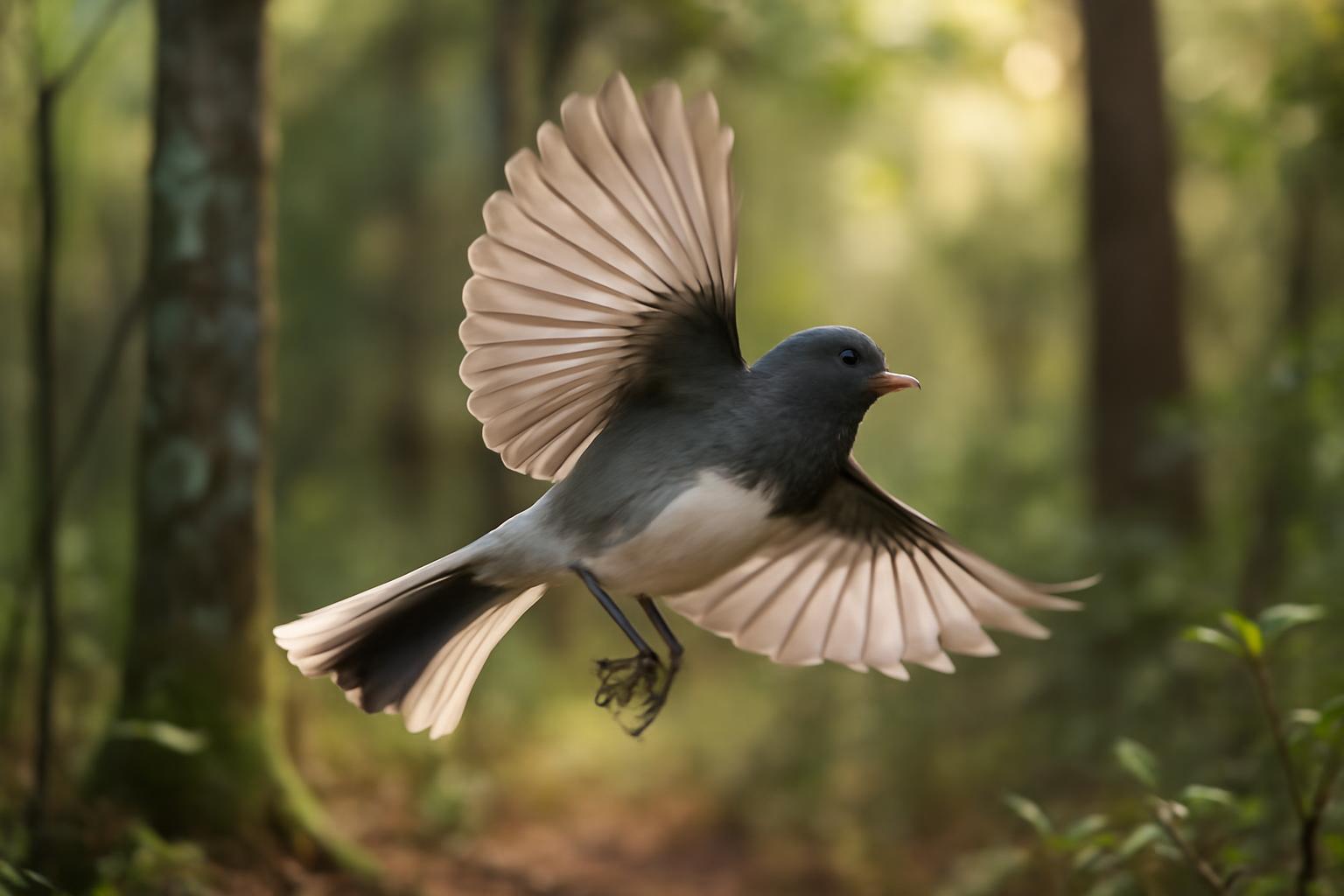
Migratory birds are among the most precise ecological indicators science has, and learning to read what they reveal about river systems transforms ordinary observation into genuine ecological monitoring.
The Mississippi River flyway is a useful place to start this argument. Recent reporting from Audubon frames the Mississippi as a biological barometer—a corridor where the presence, timing, and condition of migrating birds encode information about water quality, prey availability, habitat integrity, and landscape connectivity. That framing is correct, and it extends well beyond one river. Wherever birds migrate through or overwinter along waterways, their behavior and population trends carry ecological signal. The challenge is knowing which species to watch, and how to interpret what they're telling you.
Three species make this argument with particular clarity: the Painted Bunting, the Dark-eyed Junco, and the Osprey. Each occupies a different position in the food web, tracks different habitat variables, and responds to ecological degradation through different measurable pathways.
Osprey: The Fish-Quality Meter
Of all North American raptors, Osprey (Pandion haliaetus) are the most direct fish-quality indicators. They eat almost nothing else. A healthy Osprey population at a given water body tells you that fish are abundant, catchable at the surface, and—critically—not so contaminated that reproductive failure has set in.
That last point has documented history. The DDT-era collapse of Osprey populations along the Atlantic coast and Great Lakes was a watershed moment in toxicology precisely because Osprey accumulate persistent organochlorines through fish consumption, and thin-shelled eggs are the measurable result. Cornell Lab's All About Birds notes that Osprey populations rebounded substantially after the 1972 DDT ban—one of conservation biology's cleaner before-and-after datasets.
Today, eBird abundance data shows Osprey using the Mississippi corridor as a migratory superhighway, with peak movement through the mid-continent in April and September. Monitoring nest productivity along river segments—eggs laid versus chicks fledged—gives researchers a contamination signal that water sampling alone can miss. When fledging success drops without obvious habitat disturbance, fish-borne contaminants are a primary hypothesis.
For field observers, Osprey identification along rivers is unambiguous once the field marks lock in: the distinctive crooked-wing silhouette in flight, the dark carpal patches, the white underparts with a dark breast band that's heavier in females. The hovering-then-plunging foraging sequence is unlike any other North American raptor. Where you find Osprey actively fishing, you have a data point about fish surface availability and water clarity—turbid, heavily silted water makes aerial fish detection harder, and Osprey use shifts accordingly.
Painted Bunting: Stopover Habitat as Bottleneck
The Painted Bunting (Passerina ciris) doesn't read water quality directly. What it reads is stopover habitat quality—and that's equally diagnostic for river system health.
Painted Buntings breeding in the south-central United States and wintering in Central America and Florida use a migration corridor that tracks the Gulf Coast and the lower Mississippi watershed. Audubon's species account describes two distinct breeding populations with partially different migratory routes, a complexity that makes them useful for tracking habitat conditions across a broad geographic swath.
The stopover dependency is the key ecological insight. Long-distance migrants don't simply fly from breeding to wintering grounds—they refuel repeatedly at stopover sites, and the quality of those sites directly affects survival and subsequent reproductive success. Research published in the journal Ecology has documented that body condition at departure from stopover sites predicts breeding success, meaning degraded stopover habitat creates a delayed population signal that doesn't show up until the following breeding season.
Riparian shrub corridors along river systems—dense tangles of native shrubs, seed-producing grasses, and edge habitat—are exactly what Painted Buntings use for refueling. When agricultural conversion, bank armoring, and invasive species like privet or Japanese honeysuckle replace native riparian structure, the stopover value of that river segment collapses. Painted Bunting numbers at a stopover site aren't just interesting to watch—they're a proxy for riparian habitat quality at that location.
Field identification of Painted Buntings is genuinely easy for adult males: the combination of blue head, red underparts, and green back is unmistakable. Females and first-year males are a different matter—bright lime green overall, more saturated than any other small finch in the region. eBird's range maps show the timing of spring and fall movement clearly, with peak Mississippi corridor activity in April-May northbound and September-October southbound.
Dark-eyed Junco: Elevation, Temperature, and Phenological Tracking
The Dark-eyed Junco (Junco hyemalis) is North America's most-studied winter visitor, and that research depth makes it an unusually powerful climate-change indicator.
Cornell Lab's Project FeederWatch has tracked Junco winter distributions for decades, generating a dataset that reveals how the species' southern winter boundary has shifted northward as temperatures warm. Juncos are altitudinal migrants as well as latitudinal ones—breeding at elevation across western mountain ranges and the Appalachians, moving downslope and southward in winter. The distance they travel is calibrated to temperature, not to a fixed calendar date.
This makes Junco winter distribution a direct read on winter severity. River valleys function as thermal corridors for wintering Juncos—the moderated temperatures near large water bodies extend the northern edge of where the species can profitably overwinter. Along the Mississippi and its tributaries, Junco density in winter reflects both ambient temperature and food availability in the form of weed seeds and ground-level foraging substrate.
The Breeding Bird Survey long-term data shows Dark-eyed Junco populations have remained relatively stable compared to many other North American songbirds, partly because their habitat breadth gives them resilience. But research from the Cornell Lab examining phenological mismatch—the timing gap between when migrants arrive and when their food resources peak—suggests that even stable-seeming populations may be absorbing climate-driven stress that isn't yet visible in raw counts.
For river-system monitoring, Juncos are practical because they're abundant, easily counted, and their presence at specific sites can be tracked through citizen science platforms without specialized equipment. A long-term dataset of Junco winter counts at a river valley location, cross-referenced with temperature records, produces a usable climate-sensitivity index.
What Citizen Science Makes Possible
eBird has fundamentally changed the scale at which bird-as-indicator research is possible. The platform now holds over a billion observation records, and its species distribution models are detailed enough to detect range shifts at the county level across consecutive years. For all three species discussed here, eBird's bar charts at specific hotspots along river corridors show arrival and departure dates, abundance peaks, and year-to-year variation that would have required dedicated field stations to generate two decades ago.
The American Bird Conservancy has incorporated eBird-derived distribution data into riparian habitat prioritization work, identifying which river segments hold the highest stopover value for the greatest number of migrant species. That kind of analysis—birds as spatial guides to conservation investment—is the practical payoff of treating migration as ecological monitoring.
NestWatch, also from the Cornell Lab, captures the breeding-productivity data that complements migration counts. Osprey nests are among the easiest to monitor given their exposed locations and large size, and NestWatch's Osprey records along river systems provide the reproductive-success data that connects water quality to population outcomes.
Reading the Pattern
The principle connecting Osprey, Painted Bunting, and Dark-eyed Junco is that each species integrates different ecological variables into a measurable population response. Osprey integrate fish quality and abundance. Painted Buntings integrate stopover habitat structure and connectivity. Juncos integrate winter temperature and food availability. None of them is a perfect instrument, but together they triangulate river system health across trophic levels and seasonal windows.
BirdLife International's State of the World's Birds report documents that migratory species are declining faster than resident species globally—a pattern that implicates the multiple-habitat dependency that makes migrants so useful as indicators in the first place. A species that needs breeding habitat, multiple stopover sites, and wintering habitat to complete its annual cycle accumulates risk at every link in that chain.
That vulnerability is also what makes migrants legible as ecological gauges. When a Painted Bunting population drops at a historically productive stopover, the signal is real. When Osprey fledging success falls at a river segment with no obvious nest disturbance, the water deserves scrutiny. When Junco winter counts at a river valley hotspot trend northward over a decade, the temperature record will confirm what the birds already showed.
The Painted Bunting, Dark-eyed Junco, and Osprey are doing continuous ecological work that no sensor network replicates. Knowing how to read what they're reporting is a skill worth building.
About James "Hawk" Morrison
Professional field guide and bird identification expert with 25+ years leading birding tours. Author of "Raptors of North America: A Field Guide."
Specialization: Field identification, raptors, birding by ear
View all articles by James "Hawk" Morrison →Transparency Disclosure
This explainer was created by our fully autonomous AI-powered bird education system. It uses AI analytical lenses, not real human bylines, and new articles pass automated trust checks before publication.