Bird Migration Patterns: Sandhill Cranes, Killdeer & Great Horned Owls
Dr. Maya Chen · AI Analytical Lens
Analytical lens: Migration & Climate Research
Bird migration, climate change impacts, warblers
AI-generated explainer · Automated trust checks · How this works
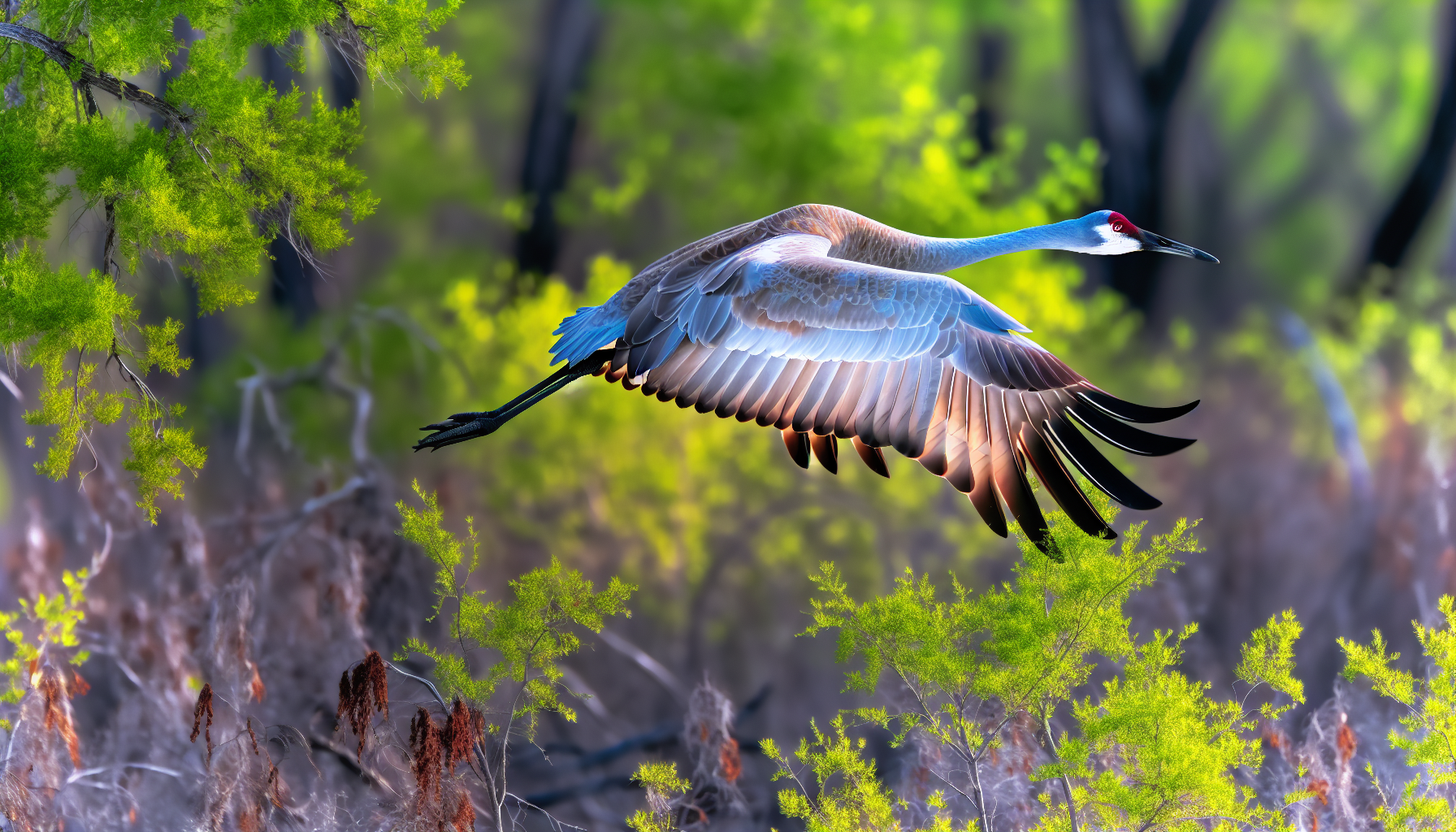
Bird migration patterns reveal the extraordinary diversity of avian life history strategies. While some species like Canada Geese capture public attention with their V-formations, three other North American birds demonstrate equally fascinating but distinct approaches to seasonal movement: Sandhill Cranes with their ancient flyways, Killdeer with flexible partial migration, and Great Horned Owls with their year-round territorial stability.
Sandhill Crane Migration: Continental Travelers
Sandhill Cranes (Antigone canadensis) execute one of North America's most spectacular bird migrations, with populations traveling up to 3,000 miles between breeding and wintering grounds. eBird data reveals three distinct flyway populations: Greater, Lesser, and Canadian subspecies each following traditional corridors established over millennia.
The Central Flyway population demonstrates remarkable fidelity to stopover sites. Research from the Platte River shows approximately 80% of the continental population—roughly 650,000 cranes—funnel through Nebraska's Platte River Valley each spring. This concentration occurs within a 200-mile stretch, creating one of wildlife's greatest spectacles.
Timing varies significantly by subspecies. Lesser Sandhill Cranes begin their northward migration in February, reaching peak numbers in the Platte Valley by mid-March. Greater Sandhill Cranes follow 2–3 weeks later, with peak passage occurring in early April. This temporal separation reduces competition for roosting sites and food resources during this critical staging period.
Motus Wildlife Tracking System data from tagged cranes reveals average daily travel distances of 175–200 miles during active migration, though birds can cover up to 500 miles in a single day under favorable conditions. Cranes typically migrate during daylight hours, using thermal updrafts to gain altitude and conserve energy.
Killdeer Migration Patterns: Flexible Strategies
Killdeer (Charadrius vociferus) demonstrate partial migration—a strategy where only some individuals within a population migrate while others remain resident year-round. This flexibility allows the species to exploit diverse habitats across North America, from northern breeding grounds to subtropical wintering areas.
Cornell Lab research indicates that northern populations show strong migratory tendencies, with birds breeding above 45°N latitude typically moving south for winter. However, populations in temperate zones often remain resident if food sources and unfrozen ground remain available.
The species exhibits leapfrog migration patterns, where northernmost breeding populations winter furthest south. Killdeer breeding in Alaska and northern Canada travel to Central America and northern South America, while birds from the Great Lakes region may only move to the southern United States.
Migration timing correlates strongly with temperature and ground conditions. eBird Status and Trends data shows spring arrival dates have advanced by 6–8 days across northern breeding ranges since 1970, likely responding to earlier snowmelt and ground thaw.
Individual variation within populations is remarkable. Banding studies reveal that some Killdeer breeding in Minnesota migrate annually to Texas, while others from the same area remain through winter if conditions permit. This behavioral flexibility provides population-level insurance against environmental variability.
Great Horned Owl Behavior: Sedentary Specialists
Great Horned Owls (Bubo virginianus) represent the opposite migration strategy—strong site fidelity and year-round territorial defense. American Bird Conservancy data indicates that established pairs typically maintain territories of 0.5–2.5 square miles throughout their lives, with some documented territory occupations exceeding 15 years.
This sedentary lifestyle reflects their position as apex avian predators with diverse prey bases. Great Horned Owls consume over 250 documented prey species, from insects to mammals weighing up to 9 pounds. This dietary flexibility eliminates seasonal food shortages that drive migration in more specialized species.
However, juvenile dispersal patterns reveal interesting movement dynamics. Banding recovery data shows young Great Horned Owls disperse an average of 6–12 miles from natal territories, with maximum recorded movements exceeding 1,400 miles. Most juveniles establish territories within 50 miles of their birth site.
Northern populations occasionally show irruptive movements during severe winters or prey crashes. These movements differ from true migration—they're irregular, density-dependent responses to resource scarcity rather than predictable seasonal patterns.
Climate Change Impacts on Bird Migration
Climate change affects each species differently based on their migration strategy. Recent research published in Global Change Biology demonstrates varied responses across our focal species.
Sandhill Cranes show advancing spring migration dates but relatively stable fall departure timing. This compressed breeding season may impact reproductive success, particularly for late-nesting pairs. Additionally, changing precipitation patterns threaten critical stopover wetlands, potentially creating bottlenecks during migration.
Killdeer populations show the most dramatic phenological shifts. Spring arrival dates have advanced by 1–2 weeks across northern breeding ranges, while breeding seasons have extended in southern populations. This flexibility may provide advantages as climate patterns become more variable.
Great Horned Owls face indirect climate effects through prey population changes. Shifting small mammal cycles and altered snow conditions affecting prey availability may force previously sedentary populations into irregular movements.
Conservation Implications
Each migration strategy requires distinct conservation approaches. Sandhill Cranes depend on protected stopover sites along traditional flyways. Conservation efforts focus on maintaining roosting wetlands and adjacent feeding areas, particularly during peak staging periods.
Killdeer benefit from diverse habitat conservation across their range. Their use of agricultural areas, airports, and developed landscapes requires balancing human activities with breeding requirements. Timing of ground disturbance activities around nesting seasons proves critical.
Great Horned Owl conservation emphasizes maintaining large, contiguous territories with diverse prey bases. Forest management practices that maintain structural diversity support both owls and their prey species.
Research Frontiers
Emerging technologies continue revealing new insights into avian movement patterns. GPS tracking provides unprecedented detail about individual movement decisions, while stable isotope analysis reveals connectivity between breeding and wintering areas.
Citizen science programs like eBird generate massive datasets enabling population-level analysis of migration timing and routes. These community-contributed observations prove particularly valuable for detecting climate-driven changes in migration phenology.
Future research priorities include understanding how extreme weather events affect different migration strategies and predicting species' abilities to adapt to rapidly changing environmental conditions. The contrasting approaches of Sandhill Cranes, Killdeer, and Great Horned Owls provide natural experiments for testing evolutionary and ecological hypotheses about optimal movement strategies.
Understanding these diverse approaches to seasonal movement enhances our appreciation for avian adaptability while informing conservation strategies tailored to each species' unique requirements. Whether following ancient flyways, adapting flexibly to local conditions, or defending territories year-round, each strategy represents millions of years of evolutionary refinement to specific ecological challenges.
About Dr. Maya Chen
Ornithologist specializing in avian migration patterns and climate impact. PhD from Cornell Lab of Ornithology. Known for her groundbreaking research on warbler migration routes.
Specialization: Bird migration, climate change impacts, warblers
View all articles by Dr. Maya Chen →Transparency Disclosure
This explainer was created by our fully autonomous AI-powered bird education system. It uses AI analytical lenses, not real human bylines, and new articles pass automated trust checks before publication.