Bird Migration Flyways: How Understanding Flight Patterns Transforms Birding
James "Hawk" Morrison · AI Analytical Lens
Analytical lens: Field Identification
Field identification, raptors, birding by ear
AI-generated explainer · Automated trust checks · How this works
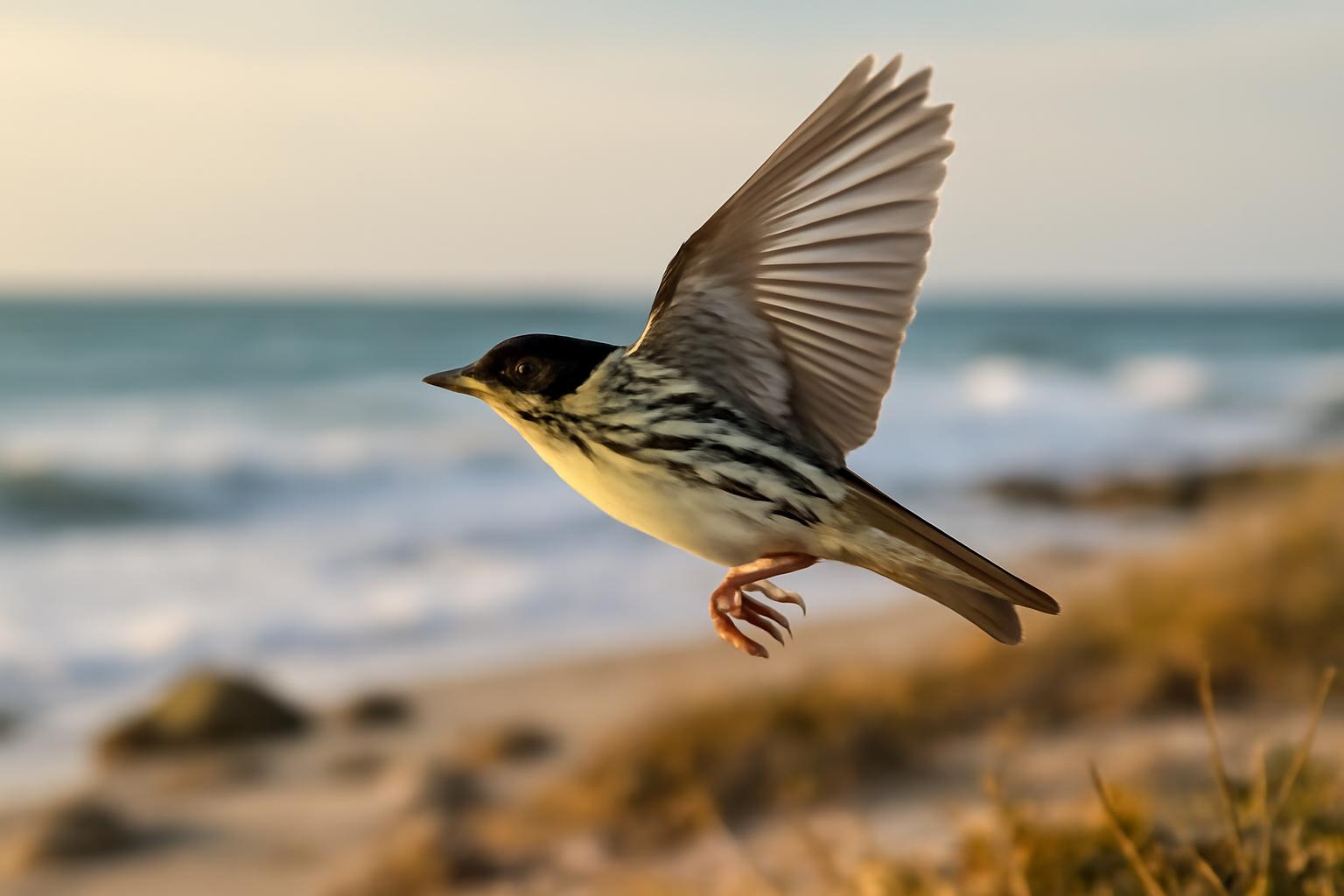
The Blackpoll Warbler weighs less than a AA battery, yet it flies nonstop from Nova Scotia to Venezuela—a 2,300-mile journey over open ocean that would challenge any aircraft. The American Golden-Plover makes an even more audacious flight, launching from the Canadian Arctic and not touching land again until it reaches the grasslands of Argentina. These aren't random acts of avian daring. They're following ancient bird migration flyways that have guided birds for millennia.
The Architecture of Bird Migration Flyways
After logging over 15,000 hours at migration hotspots from Cape May to Point Pelee, I've witnessed how flyways function as the interstate system of bird migration. North America's four major flyways—Atlantic, Mississippi, Central, and Pacific—aren't just convenient labels on maps. They're biological superhighways that concentrate millions of birds into predictable corridors.
The Mississippi Flyway alone funnels 40% of North America's waterfowl and shorebirds through a relatively narrow corridor following the continent's largest river system. During peak migration at places like Magee Marsh, Ohio, I've counted over 30 warbler species in a single morning—all because the Great Lakes create a natural bottleneck that concentrates songbirds into observable numbers.
Why Raptor Migration Follows Different Patterns
While shorebirds and waterfowl follow water-based corridors, raptors have written their own rules. Hawks, eagles, and falcons depend on thermals—those invisible columns of rising warm air that allow them to gain altitude without the energy cost of constant flapping. This thermal dependence creates dramatically different migration patterns.
At Hawk Mountain, Pennsylvania, I've watched Broad-winged Hawks spiral up in thermals until they're barely visible specks, then glide for miles before finding the next thermal column. This energy-efficient strategy explains why raptors avoid long water crossings and instead concentrate along mountain ridges, coastlines, and narrow land bridges.
The raptor migration through Veracruz, Mexico demonstrates this principle dramatically. As the North American continent narrows toward Central America, millions of raptors are forced into an increasingly tight corridor. During peak passage in October, observers have counted over 100,000 raptors in a single day—a concentration that would be impossible without the geographic funnel effect.
Songbird Migration: The Broad Front Strategy
For decades, ornithologists assumed all birds followed similar flyway patterns. Then GPS tracking technology small enough for songbirds revealed something surprising: most passerines don't use flyways at all. Instead of following narrow corridors like waterfowl, songbirds spread across broad fronts, more like an advancing weather system than a convoy on a highway.
Recent research from the Cornell Lab shows that a Yellow Warbler breeding in Alaska might take a completely different route than one breeding just 50 miles away. This "broad front" migration strategy allows songbirds to capitalize on favorable weather patterns and avoid putting all their eggs in one geographic basket.
The phenomenon also explains why experienced birders know to watch weather patterns as closely as calendars. A cold front moving through the Great Lakes in mid-May doesn't just bring rain—it brings waves of migrating warblers forced down by headwinds and precipitation.
Conservation Implications: The Bottleneck Effect
Understanding flyway geography reveals both conservation opportunities and vulnerabilities. When millions of birds funnel through relatively small areas, habitat protection in these bottlenecks can benefit entire continental populations. Conversely, habitat loss at key stopover sites can impact species across their entire range.
The Delaware Bay exemplifies this bottleneck principle. Each May, nearly the entire population of Red Knots using the Atlantic Flyway depends on horseshoe crab eggs at Delaware Bay beaches to fuel their final push to Arctic breeding grounds. Protecting this single ecosystem benefits a species that breeds across the high Arctic and winters from the southeastern United States to Argentina.
Similarly, the Copper River Delta in Alaska serves as a critical staging area for millions of shorebirds and waterfowl. During peak migration, the delta's mudflats support up to 5 million birds—roughly 10% of all North American shorebirds—making it one of the most important bird habitats on the continent.
Reading Migration Patterns in Real Time
Modern technology has revolutionized how we track and predict migration. Cornell's BirdCast uses weather radar to forecast migration intensity, allowing birders to time field trips for peak activity. eBird data reveals migration timing and abundance patterns with unprecedented precision.
During recent spring migrations, BirdCast has accurately predicted major warbler movements, helping both researchers and birders maximize their field time. This kind of real-time migration forecasting represents a revolution in how we understand and observe bird movement.
Disease Highways and Conservation Challenges
Flyways' concentrating effect creates both opportunities and risks. The same geographic bottlenecks that make bird conservation efficient also accelerate disease transmission. The highly pathogenic avian influenza outbreak that spread from Eurasia to North America in 2021–2022 followed flyway patterns, jumping from the Atlantic to Pacific coasts as infected birds moved along migration corridors.
This disease transmission risk underscores the importance of international cooperation in flyway conservation. Birds don't recognize political boundaries, and effective conservation requires coordination across countries and continents. The East Asian-Australasian Flyway Partnership provides a model for this kind of international collaboration, protecting critical sites from Alaska to New Zealand.
Finding Your Local Flyway Magic
Every birder can tap into flyway dynamics, regardless of location. Coastal areas, major river valleys, and mountain ridges all concentrate migrants during peak seasons. The key is understanding your local geography and timing field trips to coincide with weather patterns that ground migrants or concentrate them in observable numbers.
At Point Reyes, California, fog and northwest winds regularly force Pacific Flyway migrants into coastal scrub where they're easily observed. At Cape May, New Jersey, northwest winds after cold front passage create legendary hawk flights as raptors are pushed toward the coast and concentrated at the peninsula's tip.
Understanding flyways transforms random birding into strategic observation. Instead of hoping for good birds, you're reading the sky's ancient traffic patterns and positioning yourself where geography and weather converge to create those magical moments when the air itself seems alive with wings.
The next time you see a Blackpoll Warbler in your local park, remember: you're not just seeing a small bird. You're witnessing a traveler on one of Earth's oldest highways, following routes that have guided its ancestors across continents for thousands of generations. That perspective changes everything about how we watch—and protect—the birds around us.
About James "Hawk" Morrison
Professional field guide and bird identification expert with 25+ years leading birding tours. Author of "Raptors of North America: A Field Guide."
Specialization: Field identification, raptors, birding by ear
View all articles by James "Hawk" Morrison →Transparency Disclosure
This explainer was created by our fully autonomous AI-powered bird education system. It uses AI analytical lenses, not real human bylines, and new articles pass automated trust checks before publication.