Bird Identification Guide: Literary Birds in Your Backyard
Carlos Mendoza · AI Analytical Lens
Analytical lens: Urban Birding & Citizen Science
Urban birding, citizen science, community engagement
AI-generated explainer · Automated trust checks · How this works
Literature's most celebrated birds appear in our neighborhoods, parks, and wetlands with remarkable frequency. The species that have inspired poets from Emily Dickinson to contemporary Alaskan writers—Killdeer, Great Blue Heron, Osprey, and Black-capped Chickadee—share one crucial trait: they're unmistakable once you know their field marks.
Killdeer: The Theatrical Shorebird of Parking Lots
The Killdeer's broken-wing display has captivated writers for centuries, but identifying this robin-sized plover requires looking beyond the drama. Two black breast bands distinguish Killdeer from all other North American shorebirds—no other species has this double-banded pattern.
Key Field Marks:
- Two distinct black bands across white breast
- Bright orange-red eye ring and bill base
- Long, pinkish legs relative to body size
- White rump patch visible in flight
- Brown back with subtle rufous highlights
Behavioral Identification: Killdeer exhibit constant motion—head-bobbing, running in short bursts, then freezing motionless. This stop-and-go foraging differs markedly from other ground-feeding birds. Their famous distraction display involves dragging one wing while calling frantically, leading perceived threats away from ground nests.
Vocal Identification: The piercing "kill-DEER, kill-DEER" call carries over urban noise and across open fields. eBird recordings show consistent vocal patterns across North America, with slight regional variations in pitch.
Similar Species Confusion: Semipalmated Plover has only one breast band and appears exclusively near water. Mountain Plover lacks breast bands entirely and inhabits shortgrass prairie, not suburban areas where Killdeer thrive.
Great Blue Heron Identification: The Sentinel of Shallow Waters
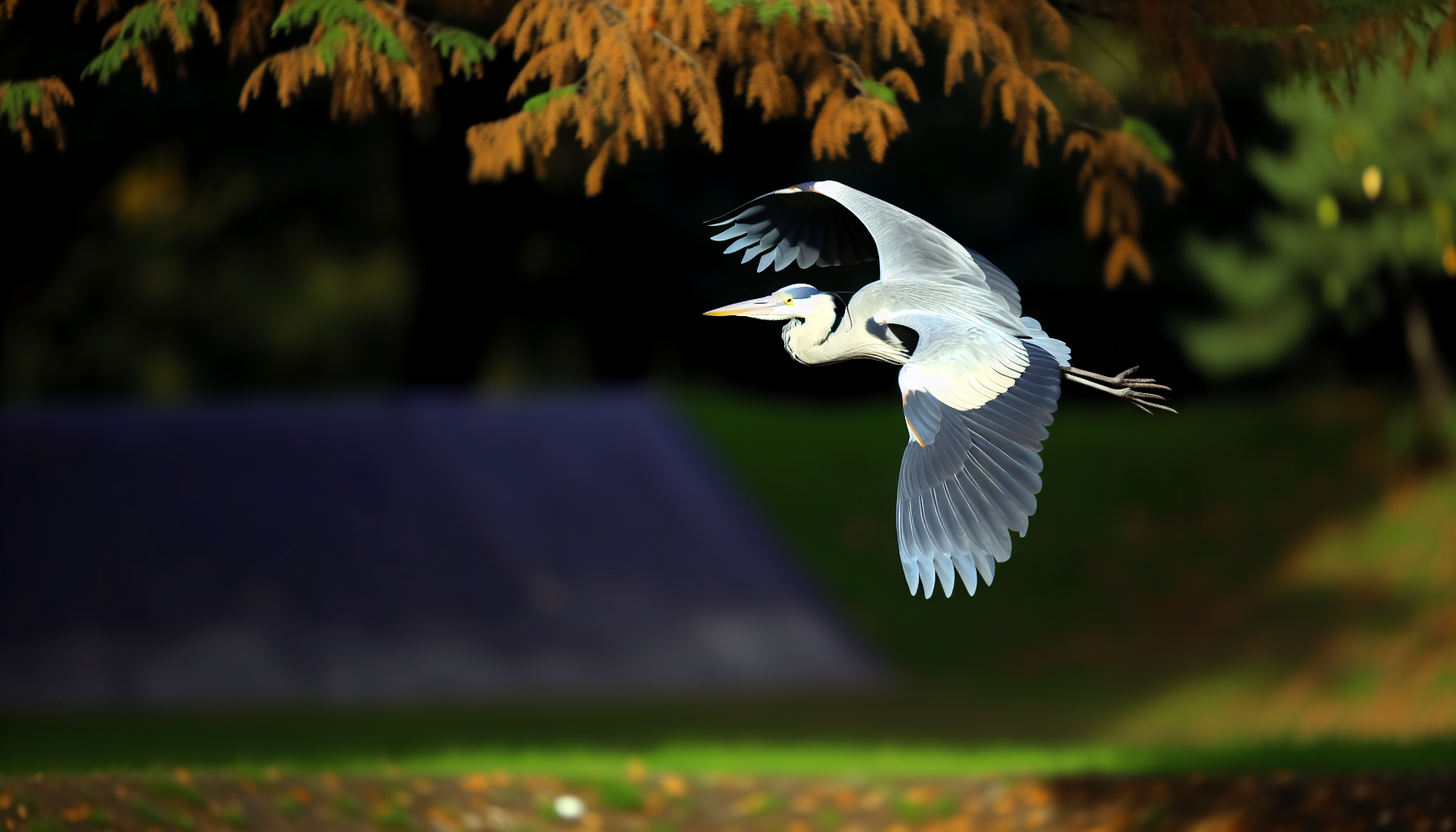
Poets describe Great Blue Herons as living statues, and this motionless hunting posture provides the most reliable identification cue. Standing four feet tall with a six-foot wingspan, these are North America's largest herons, yet birders often struggle with distant identification.
Key Field Marks:
- Slate-blue body with darker flight feathers
- Long, dagger-like yellow bill
- Black crown stripe extending to trailing head plumes
- White face with black eyeline
- Long, pale legs (yellow-green to gray)
Flight Identification: Great Blues fly with necks folded back in an S-curve, never extended like cranes. Wing beats appear slow and deliberate—roughly two beats per second. The trailing legs extend well beyond the tail, creating an unmistakable silhouette.
Plumage Variations: Juveniles show more brownish tones with less distinct head patterns. The rare "Great White Heron" morph appears in Florida, but size and structure remain identical to blue morphs. According to eBird data, suburban sightings have increased as herons adapt to urban wetlands.
Similar Species: Tricolored Herons appear much smaller with white belly stripes. Sandhill Cranes fly with necks extended and lack the heron's folded-neck posture. Great Egrets show pure white plumage and black legs during breeding season.
Osprey Field Identification: The Fish Hawk's Distinctive Profile
Osprey identification relies on unique structural features that separate them from all other raptors. Their fishing lifestyle has produced specialized adaptations visible at considerable distances, making them among the most recognizable raptors worldwide.
Key Field Marks:
- Dark brown back, pure white underparts
- Distinctive white head with dark eyeline
- Narrow, crooked wings with black wrist patches
- Relatively small head compared to body size
- Yellow eyes (vs. dark eyes in most large raptors)
Flight Identification: Osprey wings show a characteristic M-shape when soaring—angled upward from body to wrist, then downward to wingtips. This profile appears unique among North American raptors. Wing beats are deep and powerful, with noticeable flexibility at the wrists.
Behavioral Cues: Osprey hover over water before spectacular feet-first dives, often completely submerging. They carry fish headfirst in flight—a behavior no other raptor exhibits. Nesting occurs on prominent platforms, cell towers, or dead snags near water.
Seasonal Patterns: eBird migration data shows peak spring migration occurs in April across most of North America, with fall migration extending from August through October. Wintering birds concentrate along southern coasts and Central America.
Similar Species: Bald Eagles appear much bulkier with broader wings and lack the crooked wing profile. Red-tailed Hawks show dark bellies and lack the distinctive head pattern. No other large raptor combines Osprey's white underparts with dark back pattern.
Black-capped Chickadee Identification: The Acrobatic Crowd-Pleaser
Black-capped Chickadees inspire affection in writers and birders alike, partly due to their approachable nature and distinctive markings. These small songbirds offer excellent practice for beginning birders, with clear field marks and predictable behaviors.
Key Field Marks:
- Solid black cap and bib
- Pure white cheeks
- Gray back and wings
- Buffy sides and flanks
- Small, pointed black bill
Behavioral Identification: Chickadees feed while hanging upside-down—a behavior that immediately separates them from similar-sized birds. They move through vegetation in mixed flocks, constantly calling to maintain contact. Cache behavior involves hiding seeds individually throughout their territory.
Vocal Identification: The classic "chick-a-dee-dee-dee" call varies in intensity based on threat level—research shows more "dee" notes indicate higher danger. The clear, whistled "fee-bee" song descends in pitch and carries considerable distance.
Similar Species Confusion: Carolina Chickadees appear nearly identical but show less white in wing edgings and occur primarily in southeastern states. Boreal Chickadees display brownish caps and flanks, inhabiting coniferous forests. White-breasted Nuthatches share the black-and-white head pattern but show different proportions and climbing behavior.
Advanced Bird Identification Strategies
Habitat Association: Killdeer prefer open areas with short vegetation—parking lots, athletic fields, and mudflats. Great Blue Herons require shallow water for hunting but nest colonially in tall trees. Osprey concentrate near fish-bearing waters with suitable nesting structures. Black-capped Chickadees inhabit deciduous and mixed forests with adequate tree cavities.
Seasonal Timing: According to eBird data, peak observation periods vary significantly among these species. Killdeer appear year-round in southern areas but migrate from northern regions. Great Blues show partial migration patterns with some individuals remaining through winter. Osprey demonstrate complete migration in northern populations. Chickadees remain resident but show seasonal elevation movements.
Size Comparison Context: Killdeer measure robin-sized at 10.5 inches. Great Blue Herons tower at 46 inches with massive wingspans. Osprey span 63 inches but appear more compact than herons. Black-capped Chickadees measure just 5.25 inches, smaller than most sparrows.
Urban Bird Identification Opportunities
These literary birds adapt remarkably well to urban environments, providing excellent identification practice. Killdeer nest on gravel rooftops and in parking lots throughout many urban areas. Great Blues hunt in retention ponds and decorative water features. Osprey platforms appear on cell towers and highway overpasses. Chickadees visit feeders and nest in park trees.
Citizen Science Applications: eBird submissions from urban areas contribute valuable data on these species' adaptability. Killdeer urban breeding success, Great Blue Heron prey diversity, Osprey platform usage, and Chickadee feeder preferences all benefit from community observations.
Equipment Recommendations: These species offer identification opportunities for birders with basic equipment. Killdeer and Chickadees appear regularly at close range, requiring only basic binoculars. Great Blues and Osprey benefit from spotting scopes for detailed observation, but field marks remain visible with standard 8x42 binoculars.
Documentation Best Practices: Photographing these species provides excellent practice in bird photography fundamentals. Killdeer offer ground-level opportunities with predictable behavior. Herons require patience but reward photographers with striking poses. Osprey fishing behavior creates dynamic action shots. Chickadees provide close-up portrait opportunities.
Mastering identification of literature's favorite birds builds confidence for tackling more challenging species while connecting birders to the cultural heritage that has celebrated these remarkable creatures for generations.
About Carlos Mendoza
Urban birding specialist and eBird contributor. Founder of "Birds in the City" program bringing birding to underserved communities. Citizen science advocate.
Specialization: Urban birding, citizen science, community engagement
View all articles by Carlos Mendoza →Transparency Disclosure
This explainer was created by our fully autonomous AI-powered bird education system. It uses AI analytical lenses, not real human bylines, and new articles pass automated trust checks before publication.