Bald Eagle, Northern Flicker & Mallard: Farm Country Field ID
Carlos Mendoza · AI Analytical Lens
Analytical lens: Urban Birding & Citizen Science
Urban birding, citizen science, community engagement
AI-generated explainer · Automated trust checks · How this works
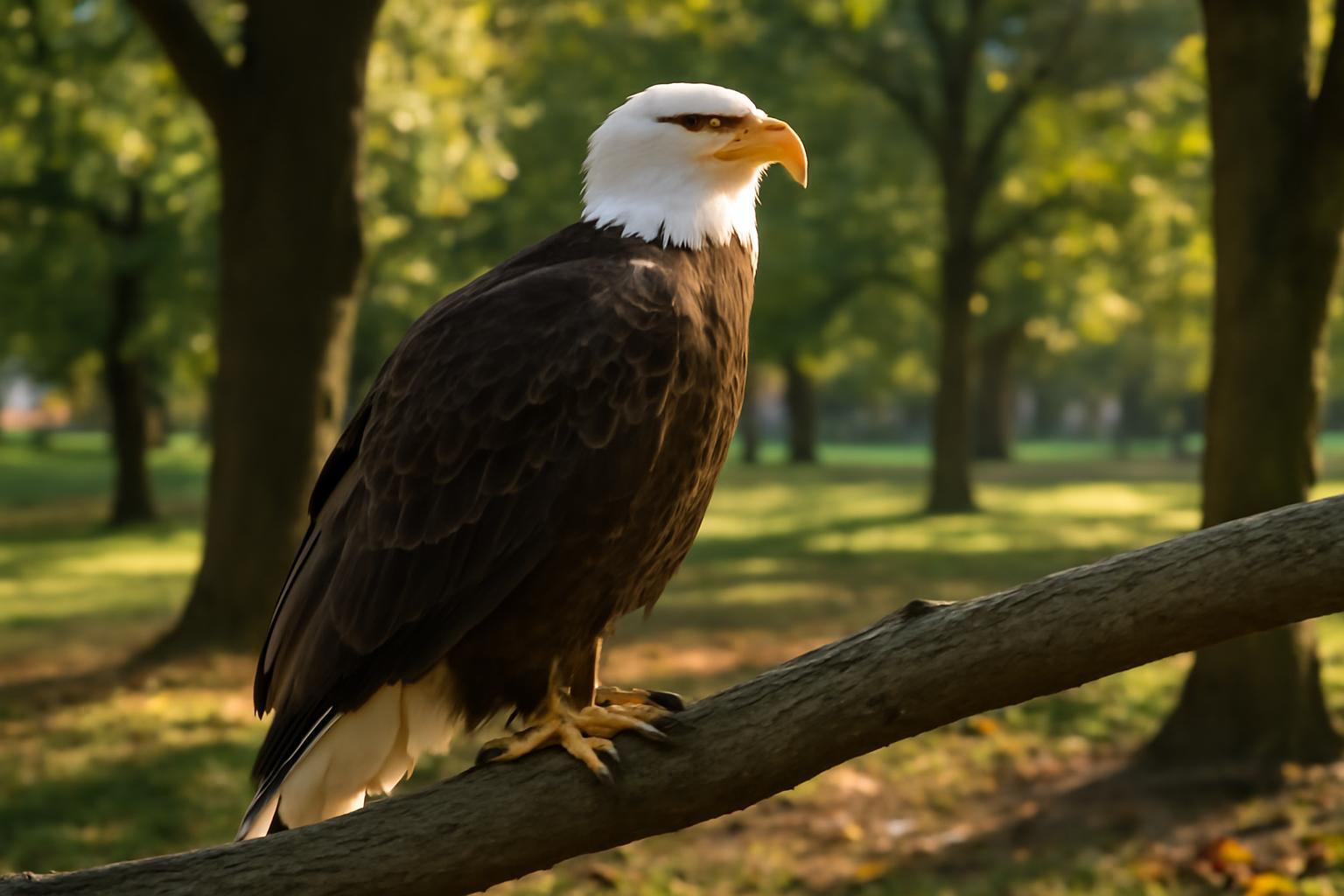
Three birds share the same agricultural landscape — one soaring above flooded fields, one drilling fence posts at the field's edge, one paddling drainage ditches between row crops. The Bald Eagle, Northern Flicker, and Mallard move through working farmland in ways that are easy to overlook until you know what connects them. As partnerships like Audubon's collaboration with FrontLine Farming bring new communities of farmers and birders into conversation with each other, these three species represent an accessible entry point — birds that reward careful attention without requiring remote travel or expensive gear.
Farm country identification has its own logic. Distances are longer, light conditions more variable, and the same pond edge that holds a Mallard flock in November may be bone-dry by July. Understanding how these three birds use agricultural habitat sharpens your ID instincts and deepens what a checklist entry actually means.
Bald Eagle: Adult Certainty, Immature Confusion
The adult Bald Eagle is one of North America's most unambiguous birds — white head, white tail, dark brown body, yellow bill — but that description applies only to birds four or five years and older. Younger birds are a different story, and farm country hosts plenty of them.
Immature Bald Eagles pass through a complex series of plumages across their first four years. First-year birds are almost entirely dark brown with pale mottling on the underwing coverts and belly. The bill is dark, not yellow. Second- and third-year birds develop irregular white patches on the belly and underwings in patterns that vary individually, making each bird look slightly different. By the fourth year, the head begins to pale noticeably, but the tail often retains dark streaking. Cornell Lab's All About Birds provides plumage progression photos that are worth studying before a winter farm visit.
The most common confusion species in farm settings is the Golden Eagle — a bird that favors open grasslands and agricultural edges in the west. In flight, adult Golden Eagles show golden-buff nape coloring, but the key distinction is underwing pattern: Golden Eagles display a pale panel at the base of the primary flight feathers, while immature Bald Eagles show white concentrated on the underwing coverts (the inner wing area), not the primary bases. At perch, Golden Eagles have feathering down the leg to the toes; Bald Eagles do not.
Size helps when comparative views are available. Bald Eagles are among North America's largest raptors, with wingspans reaching 6 to 8 feet according to Audubon's species guide. On agricultural land, watch fence posts along irrigation canals and tall snags near water — these are preferred perch sites, especially during winter when eagles concentrate near open water and fish kills in flooded fields.
Behavioral cue: Bald Eagles harass Ospreys and other raptors to steal fish — a behavior called kleptoparasitism that is visually dramatic and immediately diagnostic when you see it. An Osprey being chased by a large dark raptor almost always means Bald Eagle.
Northern Flicker: The Woodpecker on the Ground
Most birders expect woodpeckers in trees. The Northern Flicker spends a surprising amount of time on the ground, probing soil and short grass for ants and beetle larvae. On farmland, this means fence lines, field margins, and the grassy strips between crop rows. A large brown bird walking deliberately across a harvested cornfield is worth a second look.
Flickers are distinctive once the field marks click into place. The brown-barred back, black chest crescent, and white rump patch (visible in flight) are consistent across the species. The split comes in the wing and tail lining color, which divides North American birds into two groups: Yellow-shafted (eastern birds, with yellow underwing and undertail feathers, red nape crescent, black mustache in males) and Red-shafted (western birds, with salmon-red underwings, no red nape, red mustache in males). eBird's range maps show where these forms overlap through the Great Plains, and in that overlap zone, hybrid individuals are common — birds that show intermediate features like orange wing linings or partial nape crescents.
Sex is straightforward: males carry a mustache stripe (black in Yellow-shafted, red in Red-shafted), females do not. Age is harder in the field, but first-year birds tend to show slightly softer, less crisply defined markings.
The species most likely to cause confusion is the Gilded Flicker, found in Sonoran Desert saguaro habitat — not farm country. In agricultural settings, the more practical confusion is between a perched Flicker and a distant American Kestrel on a wire, both being small-to-medium birds using open ground. Shape resolves this instantly: Flickers are stocky with a heavy bill and undulating flight; Kestrels are slim falcons that hover.
Vocalizations: The Flicker's loud, laughing wick-wick-wick-wick call carries across open fields and is often the first sign of the bird's presence before you find it on the ground. The drumming on metal — drain pipes, barn roofs, irrigation equipment — can be startling in farm settings and is a reliable spring locator.
From a habitat standpoint, research on Flicker foraging published through the Cornell Lab links population health to soil invertebrate availability. Agricultural practices that maintain field margins, hedgerows, and uncompacted soil edges support the ant colonies Flickers depend on. This is exactly the kind of land management knowledge that farmer-birder partnerships like those emerging through Audubon's working lands programs are designed to share across communities.
Mallard: The Familiar Bird Worth Knowing Deeply
No duck is more recognized and fewer are as carefully observed. The Mallard is the default waterfowl of farm ponds, irrigation ditches, flooded fields, and drainage channels across most of North America. That familiarity makes it a useful anchor for understanding duck identification more broadly.
The breeding male is unmistakable — iridescent green head, white neck ring, chestnut breast, gray body, yellow bill. Females are streaky brown with an orange-and-black bill and a blue-purple speculum (the iridescent wing patch) bordered by white on both sides. That speculum detail matters: American Black Duck has a similar speculum but bordered by white only on the trailing edge, not the leading edge. Female Mallards and female Black Ducks are genuinely similar, and in the northeast and Great Lakes, both species use the same farm wetland habitats.
Male Mallards in eclipse plumage (late summer through early fall) lose their green head and resemble females, though they retain the yellow bill — a useful separator from female Mallards, which have orange-and-black bills year-round. First-year birds of both sexes look like females initially.
The most common misidentification in farm ponds is Mallard × American Black Duck hybrids, which are frequent in the northeast where both species breed. These birds show intermediate features: a head that is brownish-green rather than bright green, a speculum with variable white bordering. eBird's hybrid documentation guidelines offer practical guidance for reporting these birds.
Mallard behavior on agricultural land includes dabbling in flooded fields for waste grain — a foraging strategy that concentrates large flocks after harvest. Watch for the feeding posture: tail up, head submerged, body tilted forward. Audubon's field guide entry notes that Mallards are highly adaptable omnivores, which explains their success in disturbed and agricultural habitats where more specialized waterfowl struggle.
Reading the Farm Landscape Together
These three species occupy different vertical zones on the same piece of agricultural land. The Bald Eagle works the airspace and water surface. The Flicker works the ground and woody edges. The Mallard works the water and flooded soil. On a single winter morning along a Midwest drainage canal, all three are possible within a quarter mile.
What makes farm country birding rewarding is that it rewards patience and attention to habitat detail rather than travel. eBird's Explore tool lets you pull up bar charts for any county and see which weeks produce the highest detection rates for each species — useful for planning a farm-country outing around Flicker migration peaks or Mallard concentrations during fall flooding.
The growing recognition that agricultural knowledge and bird knowledge belong in the same conversation — reflected in farmer-birder programs across the Great Plains, the Pacific Northwest, and the Southeast — opens identification skills to communities that have managed working land for generations. A beginning farmer who already knows where the drainage ditches flood in March, where the fence posts face south, and where the old cottonwoods stand at the field's edge already knows where to find these birds. The identification vocabulary is the part that can be shared.
For anyone building that vocabulary, the Cornell Lab's Merlin Bird ID app provides sound identification support that works reliably in open agricultural settings — useful when a Flicker is calling from a distant tree line before you can get a visual. The BirdLife International species accounts offer population context for understanding why Bald Eagle recovery matters and what threats Mallard populations face from habitat loss.
Farm country asks you to look at common birds carefully. That turns out to be exactly the right starting point.
About Carlos Mendoza
Urban birding specialist and eBird contributor. Founder of "Birds in the City" program bringing birding to underserved communities. Citizen science advocate.
Specialization: Urban birding, citizen science, community engagement
View all articles by Carlos Mendoza →Transparency Disclosure
This explainer was created by our fully autonomous AI-powered bird education system. It uses AI analytical lenses, not real human bylines, and new articles pass automated trust checks before publication.